

Commentary
Judy Dempsey
{
  "authors": [
    "Judy Dempsey"
  ],
  "type": "legacyinthemedia",
  "centerAffiliationAll": "",
  "centers": [
    "Carnegie Endowment for International Peace",
    "Carnegie Europe"
  ],
  "collections": [
    "Turkey’s Transformation",
    "Transatlantic Cooperation"
  ],
  "englishNewsletterAll": "",
  "nonEnglishNewsletterAll": "",
  "primaryCenter": "Carnegie Europe",
  "programAffiliation": "",
  "programs": [],
  "projects": [],
  "regions": [
    "Middle East",
    "Europe",
    "North America",
    "Türkiye"
  ],
  "topics": [
    "Foreign Policy"
  ]
}
Source: Getty
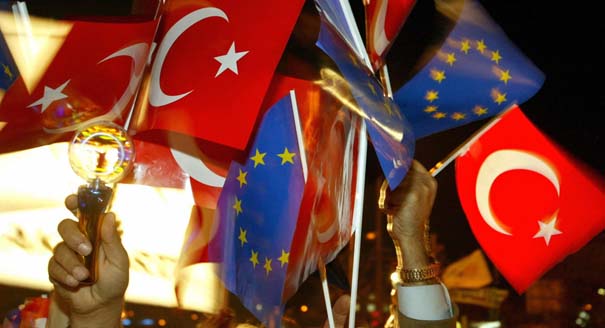
Unlike Europe, the Obama administration seems genuinely interested in responding to Turkey’s new ambitions.
Source: Munich Calling

On sixty-two pages, it debunks a common-held view that the changes taking place in Turkey are bad for the EU, bad for NATO, bad for the U.S. and bad for secular Turks. Instead, Albright and her colleagues give a pragmatic analysis on how to deal with a Turkey that is undergoing profound changes. Those changes will not only affect Turkey’s society, the region, its ties to the European Union but especially its relationship with the United States.
The argument is that Turkey is coming out of its shell, the first time for many decades. Under foreign minister Ahmet Davutoglu, but clearly encouraged by Prime Minister Recep Tayyip Erdogan and his Justice and Development Party, Turkey has gained a self confidence that has encouraged it to redefine its foreign policy.The essence of that foreign policy is that Turkey wants “zero problems” with its neighbors. Mr. Davutoglu has no illusions about how ambitious his goal is, especially given what is happening now in the region. His policy has to take into account the continuing violence in Syria (and what happens afterwards), the Iranian nuclear issue and Turkey’s attempts to normalize relations with Armenia. And then there are Turkey’s strategic and economic ambitions in the Middle East and in Africa.
The United States recognizes the enormous challenges on Turkey’s doorstep. And unlike Europe, as the CFR report makes clear, the Obama administration seems genuinely interested in responding to Turkey’s new ambitions. President Barack Obama and Mr. Erdogan have had thirteen long telephone conversations during 2011, during which time the two leaders have forged a close relationship. Can anyone imagine Mr. Erdogan having such a dialogue with any of his European counterparts.
The difference to Europe’s passivity (with the exception of Great Britain) is that Washington knows that it has a major strategic interest in working together with Turkey. For one thing, as CFR makes clear, the United States needs Turkey to remain a strong and reliable flank in this part of the NATO alliance. It needs Turkey’s view about the developments unfolding in the Middle East. And it needs to understand Turkey’s strategic interests in the Caucasus and indeed in Iran.
But it is all very well understanding and appreciating Turkey’s transformation. It is another thing to reach out and do something about it which Albright and her colleagues are suggesting in their report. They propose upgrading economic, trade and investment ties. They propose working much closer with Turkey in the Middle East. They consider ways to strengthen energy ties, especially given Turkey’s ambitions to become an energy hub for gas shipped from Azerbaijan. They propose working closely on environmental issues and of course security issues.
Turkey may not yet have the status of one of Washington’s traditional European allies,” says the report. “But there are good strategic reasons for the bilateral relationship to grow and mature into a mutually beneficial partnership that can manage a complex set of security, economic, humanitarian and environmental problems,” the report adds.
And how is Europe responding to the “new” Turkey? The EU is showing little interest in trying to further the accession negotiations with Turkey -- blaming the divided island of Cyprus, the Kurdish issue and human rights abuses for the delay in accession talks. “Many European countries simply do not want Turkey in the EU and are using these arguments as an excuse,” argues the CFR report. “This has had a negative effect on the Turkish public which continues to support membership in Europe but is deeply skeptical that the EU will ever admit a large Muslim country into the fold,” argues the report.
German Chancellor Angela Merkel and most of her conservative bloc insist that Turkey be granted a “privileged partnership.” In practice, it would mean that Turkey would enjoy many of the benefits of close ties with the EU, but never have a say and voting rights, which is what membership is about. It is clear that the Merkel government is not thinking strategically about Turkey and its role in the region. Austria, the Netherlands and some other countries are also increasingly opposed to Turkey joining the European Union as they pander to far right-wing anti-immigrant and anti-Muslim parties.
But there may be one glimmer of hope. Now that France has a socialist president, perhaps Francois Hollande will move away from the dogmatic, anti-Turkish stance that his predecessor Nicolas Sarkozy had pursued. At best, that shift will not happen overnight. France regards Turkey as a major competitor in North Africa.
Still, perhaps with Britain, a staunch supporter of Turkey joining the European Union, France might slowly recognize why Europe also needs Turkey. It would mark a change and might even lead to Europe and the United States working a bit more closely together towards developing a long-term strategy towards Turkey. Turkey, in the meantime, can justly be confident about its economic growth, its expanding middle class and its new foreign policy. But then, it should also show enough confidence to stop jailing journalists and resume a dialogue with its Kurdish minority.
This article was originally published in the Munich Security Conference's Munich Calling.
1 Independent Task Force Report No. 69. U.S.-Turkey Relations. A New Partnership. Madeleine K. Albright and Stephen J. Hadley, Chairs. Steven A. Cook, Project Director. www.cfr.org/turkey/us-turkey-relations/p28139

Nonresident Senior Fellow, Carnegie Europe
Judy Dempsey is a nonresident senior fellow at Carnegie Europe
Recent Work
Judy Dempsey
Judy Dempsey
Carnegie India does not take institutional positions on public policy issues; the views represented herein are those of the author(s) and do not necessarily reflect the views of Carnegie, its staff, or its trustees.

This piece argues that India’s central challenge is not managing a single flashpoint but resolving the underlying tension between expansion and institutional coherency of the BRICS grouping.

Vrinda Sahai
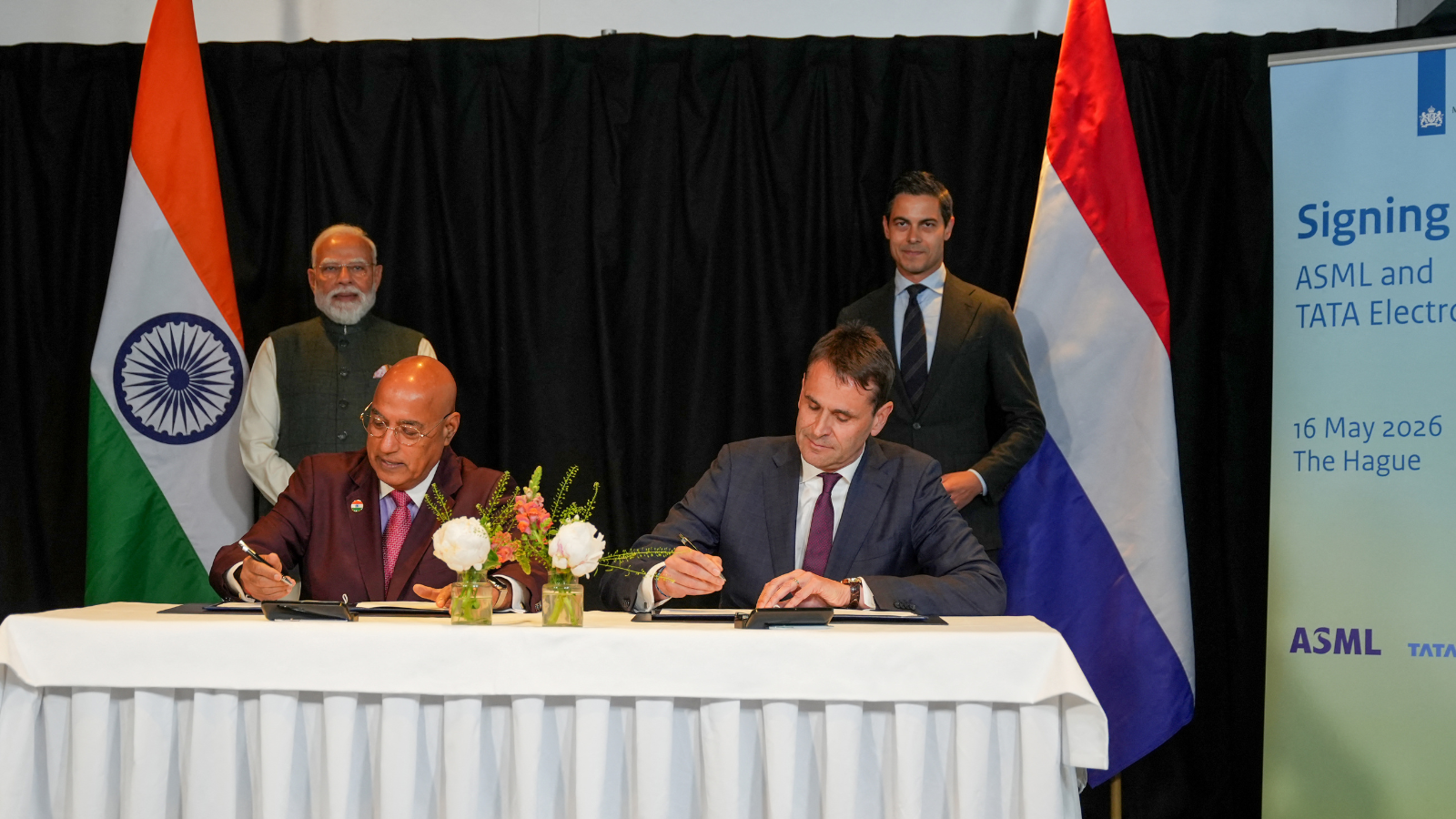
The ASML MoU with Tata Electronics is an indicator of how far the Indian semiconductor ecosystem has come. This ecosystem has been years in the making and represents real commercial logic.

Konark Bhandari

A partnership between India, a country of subcontinental size, and Africa, a continent of fifty-four countries, may seem asymmetric until one notes that both are home to nearly the same number of people—1.4 billion. This essay spells out the existing challenges to the partnership, its optimal potential, and the possible pathways to realize it over the next quarter-century.

Rajiv Bhatia

The India–EU Free Trade Agreement (FTA) is shaping up to be one of the most consequential trade negotiations, both economically and strategically. But, what’s in the agreement, what’s missing, and what will determine its success in the years ahead
Vrinda Sahai, Nicolas Köhler-Suzuki

Trump 2.0 has unsettled India’s external environment—but has not overturned its foreign policy strategy, which continues to rely on diversification, hedging, and calibrated partnerships across a fractured order.



Milan Vaishnav, ed., Sameer Lalwani, Tanvi Madan, …