

Commentary
Dmitri Trenin
{
  "authors": [
    "Dmitri Trenin"
  ],
  "type": "legacyinthemedia",
  "centerAffiliationAll": "",
  "centers": [
    "Carnegie Endowment for International Peace",
    "Carnegie China",
    "Carnegie Russia Eurasia Center"
  ],
  "collections": [
    "China’s Foreign Relations"
  ],
  "englishNewsletterAll": "",
  "nonEnglishNewsletterAll": "",
  "primaryCenter": "Carnegie Russia Eurasia Center",
  "programAffiliation": "",
  "programs": [],
  "projects": [
    "Eurasia in Transition"
  ],
  "regions": [],
  "topics": []
}
Source: Getty
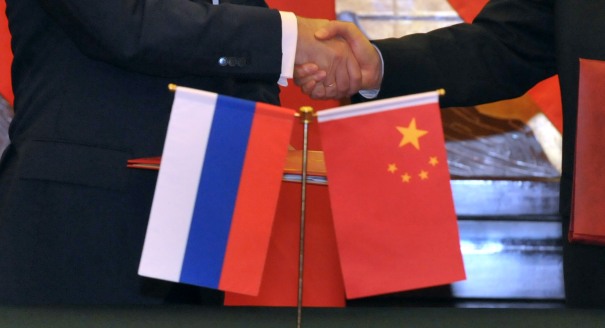
A flexible relationship, rather than an alliance, may better suit Russia and China despite their many shared interests.
Source: China Daily

Putin, of course, is not tilting toward some kind of an alliance between Moscow and Beijing. This is an idea whose time has passed. Putin is the ultimate global balancer. Russia is in the G8 - although the president of Russia can afford to skip an occasional G8 summit in the United States - and a member of BRICS; it is talking with NATO about coordinated missile defenses in Europe, while building its own in Russia and modernizing Russia's deterrent; it is supportive of the Shanghai Cooperation Organization and at the same time promoting economic and security integration with former Soviet republics in Central Asia; and it is expanding ties with China at the same time as it is upgrading cooperation with India, Vietnam and fully open to normalizing relations with Japan. This list does not suggest geopolitical promiscuity; rather, Putin's keen sense of the complexity of contemporary international relations.
To Russia, China is as important as any power in the world with the exception of the United States. China is a neighbor across an almost 4,500-kilometer border; it is Russia's largest trading partner, ahead of Germany; and it is a key geopolitical partner, from the UN Security Council where the two nations exhibit similar political philosophies to the regional settings in Central and Northeast Asia, where Moscow and Beijing have compatible geopolitical interests. Putin once said that he considered the finalization of the Sino-Russian border as his premier foreign policy achievement during his first presidency. He spoke from his head as well as from his heart. Putin has long focused on spurring the economic development of Eastern Russia, from the Urals to the Pacific, and counts on China's contribution. Putin, however, also candidly spoke of Sino-Russian competition in Central Asia, which, to him, is natural.The long border calls for good neighborliness. Russians have not forgotten that they waged a Cold War against the Chinese between 1959 and 1989, and do not want a replay of that. Not having to think of China as a potential adversary is a huge relief. Russia will not do anything to undermine the generally friendly relationship with China that exists today. The structure of bilateral economic exchanges calls for diversification of Russia's economy. Putin can hardly be happy that Russia has de facto turned itself into a raw materials supplier to China. Russian companies will need to work hard to win niches in China's non-energy sectors and they will have to demonstrate a combination of mettle and tact to compete with China in Central Asia.
Putin's visit comes at an important moment. He himself has been in power since 2000 and plans to rule for many more years, although he has to face many new challenges. Coming a few months before the 18th Congress of the Communist Party of China which will usher in a new generation of Chinese leadership, Putin's visit will aim to ensure that the Sino-Russian relations will be unaffected by Beijing's leadership change. To do so will require not just meeting China's new crop of top officials, but expanding relations and deepening trust between them and their Russian counterparts in various areas and at different levels.
Finally, the visit comes at an important moment in the evolution of the world order. As Syria is sliding ever closer to a full-blown civil war, and the situation around the Iranian nuclear program is edging toward a moment of truth, Russia and China are promoting a different approach to national sovereignty, one that does not involve intervention and the use of force. The core interests of Moscow and Beijing dovetail with the guiding principles of their foreign policies. Thus, how Syria and Iran develop in the next few months will be crucial not only for the international system, but also for the international standing of Russia and China.
Russia and China need not be allies, a more flexible relationship is much more preferable. And they need not engage in close economic integration. China can look east, to South Korea and Japan, and Russia can seek to integrate its near neighbors and engage the Europeans in the west. Putin, however, is the one Russian leader focused on the development of Siberia and the Russian Pacific coast. As Russia, in its own way, is pivoting to Asia, it is important that the three major independent strategic players in the region China, Russia and the US find a way to cooperate to construct a more durable and stable strategic environment.
Former Director, Carnegie Moscow Center
Trenin was director of the Carnegie Moscow Center from 2008 to early 2022.
Recent Work
Dmitri Trenin
Dmitri Trenin
Carnegie India does not take institutional positions on public policy issues; the views represented herein are those of the author(s) and do not necessarily reflect the views of Carnegie, its staff, or its trustees.
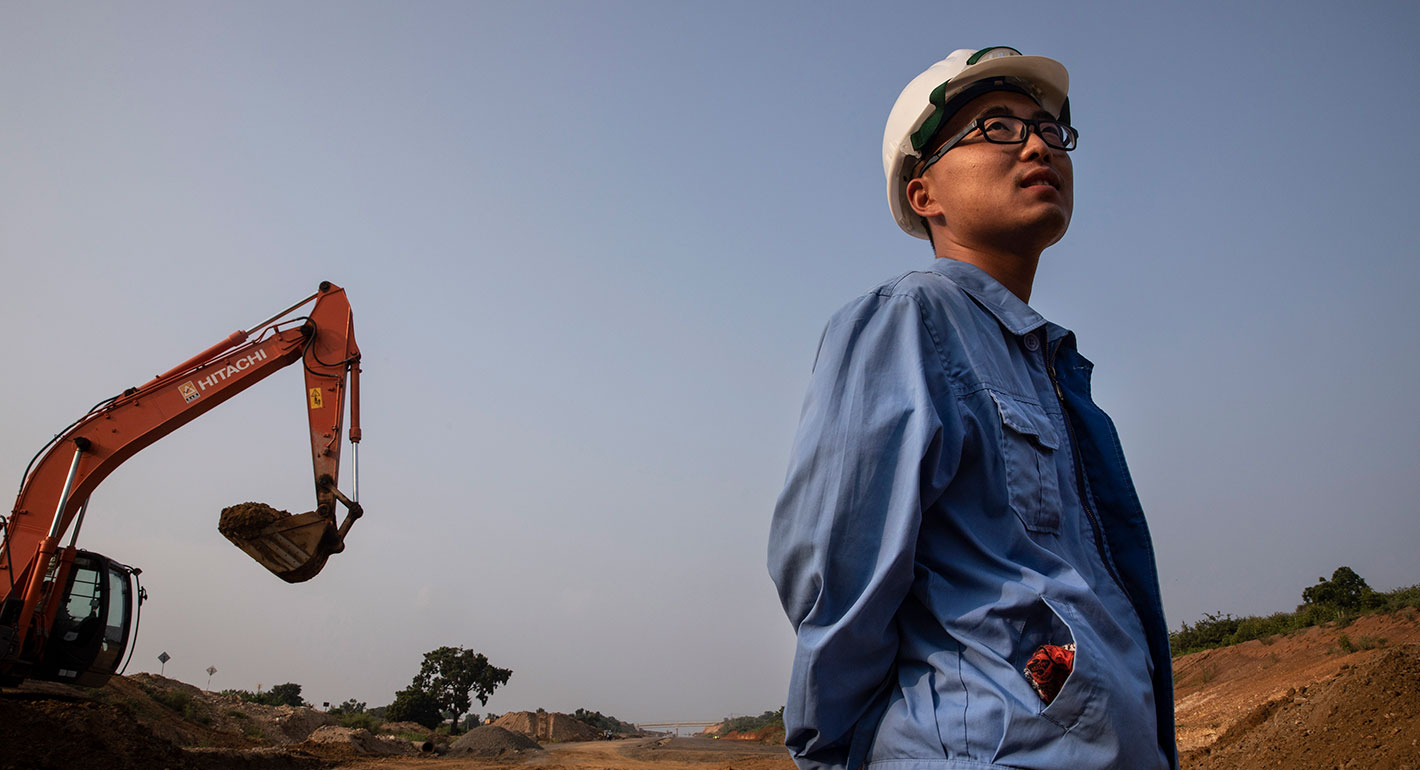
Pitched as a new Silk Road sweeping from Asia to Europe, China’s enormous Belt and Road Initiative is an ambitious, multinational infrastructure project. Experts from four Carnegie global centers explain other countries’ perspectives.


Paul Haenle, Dmitri Trenin, Alexander Gabuev, …
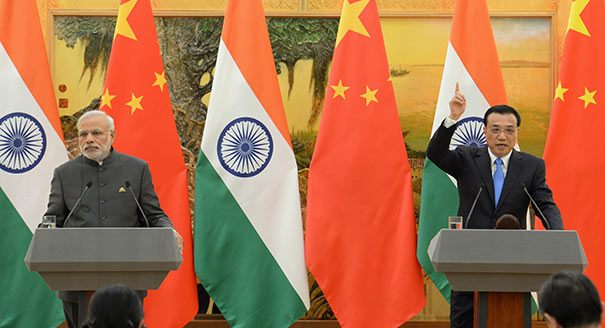
Without a return to genuine bilateralism that takes into account the interests of both parties, Beijing will find that the chasm with New Delhi continues to deepen.
C. Raja Mohan
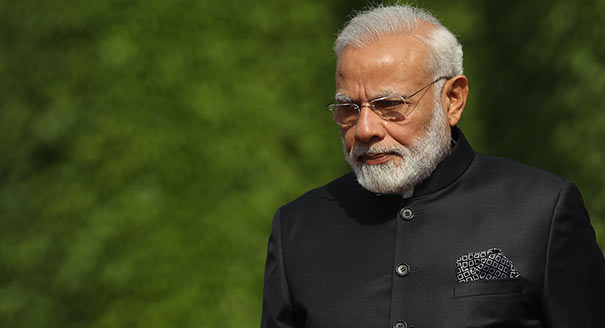
The rise of China and the turbulence in U.S. domestic politics have created great disorder, but they have also opened up room for creative Indian diplomacy in Asia.
C. Raja Mohan
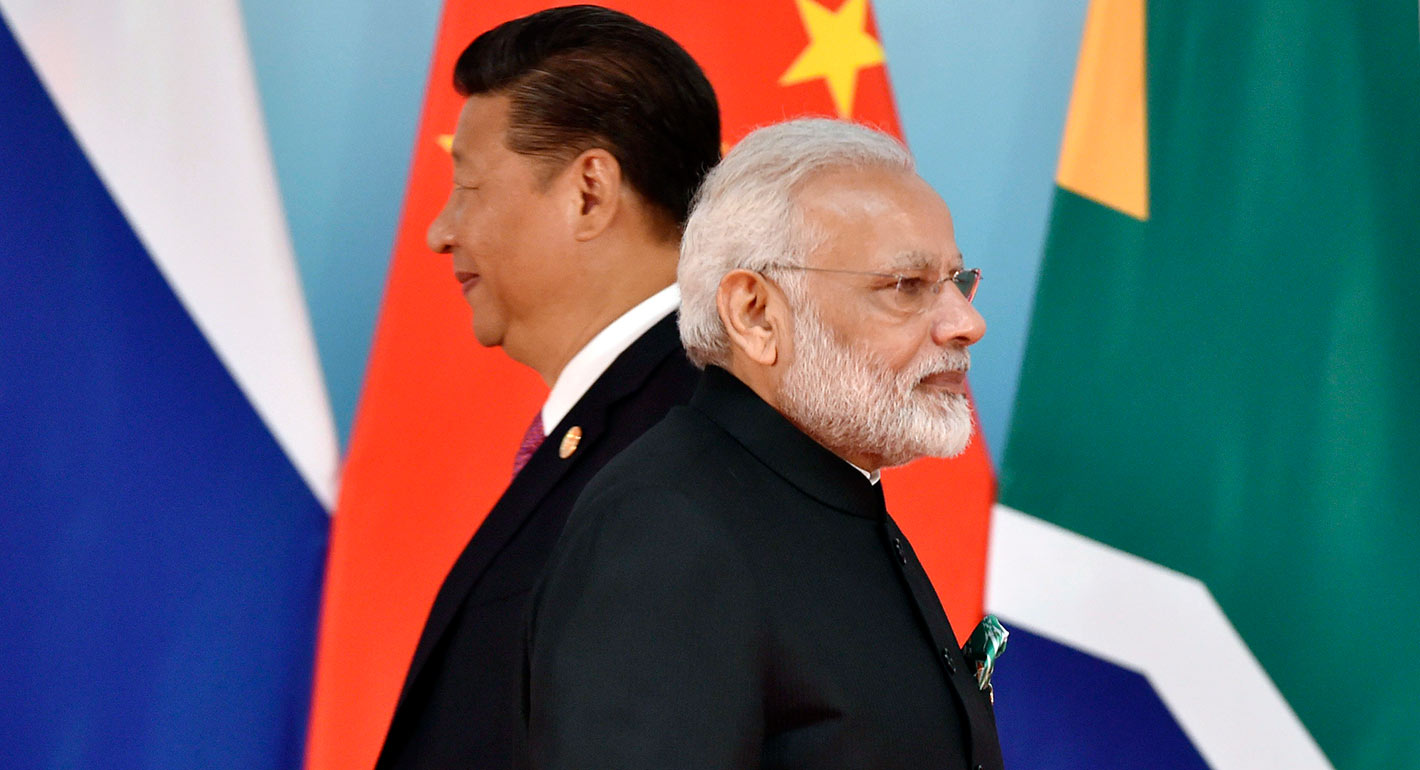
China’s rise poses a strategic challenge to India on multiple fronts. The best way for New Delhi to respond is to pursue a deeper partnership with the United States.

Rajesh Rajagopalan
New Delhi’s current challenge is not about undoing Beijing’s new economic weight in the region. It is about building on its own natural geo-economic advantages in the region.
C. Raja Mohan