

Research
- +10
Rosa Balfour, Frances Z. Brown, Yasmine Farouk, …
{
  "authors": [
    "Moisés Naím"
  ],
  "type": "legacyinthemedia",
  "centerAffiliationAll": "",
  "centers": [
    "Carnegie Endowment for International Peace",
    "Carnegie Europe"
  ],
  "collections": [],
  "englishNewsletterAll": "",
  "nonEnglishNewsletterAll": "",
  "primaryCenter": "Carnegie Endowment for International Peace",
  "programAffiliation": "",
  "programs": [],
  "projects": [],
  "regions": [
    "Western Europe",
    "Europe",
    "North America"
  ],
  "topics": [
    "Economy",
    "Trade",
    "Foreign Policy",
    "EU"
  ]
}
Source: Getty
A more competitive private sector, not fiscal austerity, is more likely to help bring long-term stability back to Spain and Italy and put them on the road to prosperity
Source: Huffington Post

In any case, the country that has now entered the intensive care unit of the financial hospital is Spain. The illnesses afflicting this patient are the result of 15 years of bad habits, and the reluctance to change a reckless economic lifestyle. As we know, there is nothing better than surviving a heart attack to stop smoking, eat more salads and exercise more. It is now obvious that if Spain had adopted a few years back the reforms that it is now putting in place much grief would have been spared. Even now, the country is still reacting with half-measures and reluctantly. The good news is that it has finally began to shed some of its bad habits -- such as, for example, hiding from the public the toxic bank portfolios accumulated during a decade or more by politicians masquerading as bankers and running their institutions to the ground.
But none of this will be enough to restore the patient's health. To bring back long-term stability and put him on the road to prosperity, Spain will need to make deeper structural changes. Uri Dadush, an economist at the Carnegie Endowment, stresses that the roots of the European crisis are not fiscal or financial. They result from the continuous loss of the international competitiveness, especially in relation to Germany, that Spain, Italy and others in Europe's periphery have suffered for more than a decade. Dadush calculates that between 1997 and 2007, the real exchange rate rose in Spain by 11 percent, and by nine percent in Italy (this means that their exports rose in price, respectively, by these proportions). Meanwhile in Germany, in the same period, the equivalent rate fell by 14 percent (that is, the prices of its exports fell in that proportion). Inevitably, this caused Spanish and Italian exports to decline and those of Germany to grow. In the decade preceding the crisis, Spain's total exports (expressed as a proportion of the total economy) fell by 3.4 percent and Italy's by one percent, while those of Germany rose by a whopping 20 percent.In spite of this, the Spanish economy grew twice as fast as that of Italy -- an economic expansion essentially driven by the construction sector. In Spain, the size of this sector went from four percent of the economy in 1995 to twelve percent in 2007. In Italy, it went from four to six percent. This, in part, explains why the Spanish banks are weaker than the Italian ones as the former are holding a mountain of bad real estate loans.
To get out of their rut, Spain and Italy have to seek new sources of economic growth. And these can only come from a private sector more able to compete in world markets. This, and not fiscal austerity or financial acrobatics, is what will ensure that the patient doesn't need to be regularly taken to the intensive care unit.
This article was originally published in the Huffington Post.

Distinguished Fellow
Moisés Naím is a distinguished fellow at the Carnegie Endowment for International Peace, a best-selling author, and an internationally syndicated columnist.
Recent Work



Rosa Balfour, Frances Z. Brown, Yasmine Farouk, …
Moisés Naím
Carnegie India does not take institutional positions on public policy issues; the views represented herein are those of the author(s) and do not necessarily reflect the views of Carnegie, its staff, or its trustees.

After the chill in ties between 2020 and 2024 that brought India–China relations to their lowest point in several decades, the two countries have engaged each other afresh. This paper argues that there are predominantly four imperatives guiding India’s approach to China, and they exist in an order of priority.

Saheb Singh Chadha

This piece argues that India’s central challenge is not managing a single flashpoint but resolving the underlying tension between expansion and institutional coherency of the BRICS grouping.

Vrinda Sahai
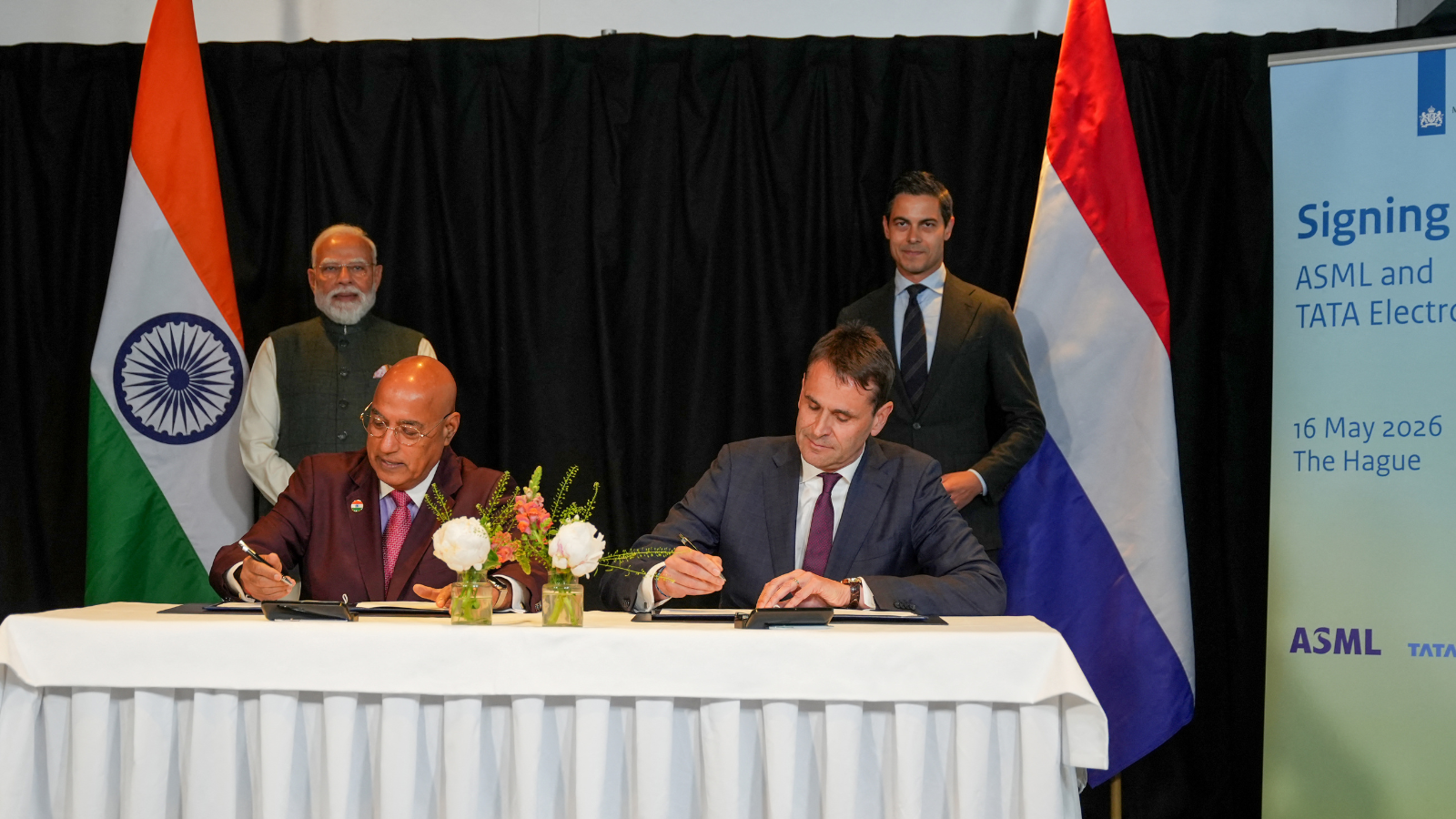
The ASML MoU with Tata Electronics is an indicator of how far the Indian semiconductor ecosystem has come. This ecosystem has been years in the making and represents real commercial logic.

Konark Bhandari

A partnership between India, a country of subcontinental size, and Africa, a continent of fifty-four countries, may seem asymmetric until one notes that both are home to nearly the same number of people—1.4 billion. This essay spells out the existing challenges to the partnership, its optimal potential, and the possible pathways to realize it over the next quarter-century.

Rajiv Bhatia

The India–EU Free Trade Agreement (FTA) is shaping up to be one of the most consequential trade negotiations, both economically and strategically. But, what’s in the agreement, what’s missing, and what will determine its success in the years ahead
Vrinda Sahai, Nicolas Köhler-Suzuki