

Article
Wang Tao
{
  "authors": [
    "Wang Tao"
  ],
  "type": "legacyinthemedia",
  "centerAffiliationAll": "",
  "centers": [
    "Carnegie Endowment for International Peace",
    "Carnegie China"
  ],
  "collections": [],
  "englishNewsletterAll": "",
  "nonEnglishNewsletterAll": "",
  "primaryCenter": "Carnegie China",
  "programAffiliation": "",
  "programs": [],
  "projects": [],
  "regions": [],
  "topics": []
}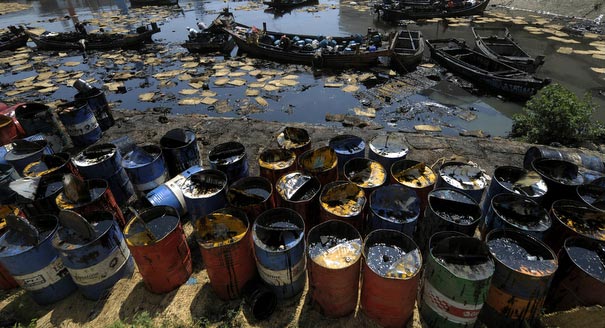
Source: Getty
The Bohai Bay oil spill serves as an example of the grave environmental risks of drilling for oil and the need for government oversight of oil companies.
Source: CCTV

The events in Bohai Bay revealed how unprepared ConocoPhillips and the Chinese government were to respond to ecological problems, Wang explained. He stated that better regulation and monitoring of oil production activities are needed, adding that when problems arise, solutions should not be left entirely up to the oil company. He also recognized that NGOs must pressure the government to assume accountability and responsibility for environmental issues. Both the oil companies and the government can learn from the events in Bohai Bay and thus avoid future environmental problems in the South China Sea, Wang concluded.
Former Nonresident Scholar, Carnegie-Tsinghua Center for Global Policy
Wang Tao was a nonresident scholar in the Energy and Climate Program based at the Carnegie–Tsinghua Center for Global Policy.
Recent Work
Wang Tao
Wang Tao, Yang Yifang
Carnegie India does not take institutional positions on public policy issues; the views represented herein are those of the author(s) and do not necessarily reflect the views of Carnegie, its staff, or its trustees.