

Research
- +10
Rosa Balfour, Frances Z. Brown, Yasmine Farouk, …
{
  "authors": [
    "Moisés Naím"
  ],
  "type": "legacyinthemedia",
  "centerAffiliationAll": "",
  "centers": [
    "Carnegie Endowment for International Peace"
  ],
  "collections": [],
  "englishNewsletterAll": "",
  "nonEnglishNewsletterAll": "",
  "primaryCenter": "Carnegie Endowment for International Peace",
  "programAffiliation": "",
  "programs": [],
  "projects": [],
  "regions": [
    "North America"
  ],
  "topics": [
    "Economy"
  ]
}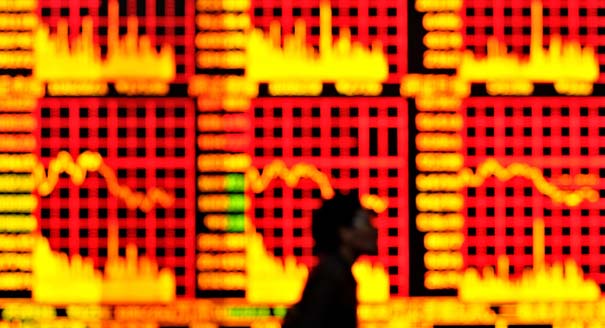
Source: Getty
As the economies of the larger emerging countries are slowing down, and some may even face a difficult economic situation that in turn breeds social and political turbulence, it is becoming less clear what it means to be the world's dominant power.
Source: El País

Will this be so? Taken together the comments of Hartcher’s readers inadvertently offer a revealing synthesis of a debate that is consuming politicians, generals and academics everywhere: Which nation will dominate the 21st century? Derek, for example, in Canberra, says: “I don't think we've got much to worry about... On paper China and India are power-houses, but most of their citizens don't even have access to sewerage or electricity. They are still basically third-world countries…” Another reader, who identifies himself as Barfiller, adds: “And let's not forget other 'emerging economy' considerations: border conflicts; water and resources rights; patents and other intellectual property; ethnic, religious and ideological differences; cultural diversity; historical arguments and wars; etc, etc. It won't be all sweetness and light for the newly developed nations.” Another reader, David, stresses the need to consider the “distribution of wealth within the populations of these countries. The difference between the 'wealth' of the average Chinese and their privileged comrades in the party is, in my opinion, an un-fillable gap (as per India). In China that's due to a deeply controlled corruption and in India, an indelibly, culturally/religiously controlled class division.” Thus, according to these opinions, China and India are countries too weakened by their poverty, their divisions and other internal problems to become the world’s leading powers.
But the problems of these rising countries are no longer exclusively their own. They affect others. Caledonia, a reader writing from Sydney, believes that the other readers fail to notice the danger that looms: “If China's economy comes crashing down, you will find yourself in an unemployment queue and feel lucky if you can get a job as toilet cleaner.”
Behind all these observations lie important assumptions about what makes a nation grow powerful enough to impose its will on others. This used to be the privilege of empires. Then it belonged to two superpowers: the United States and the Soviet Union. And after the collapse of the latter, it was fashionable to say that we were entering a unipolar era in which a single superpower, the United States, would lead the world. This perception didn’t last long. The rise of China and other countries, added to American problems, caused the unipolar idea to fall out of vogue. But if it isn’t the bipolar Soviet-American world, nor the unipolar where the US reigns alone, nor the multipolar dominated by America, Europe and a rising Asia, then what sort of world is taking shape?
In recent years, the answers to this question have been influenced by the coincidence of the economic boom of the emerging countries and the financial crisis in Europe and the US. But now, as the economies of the larger emerging countries are slowing down, and some may even face a difficult economic situation that in turn breeds social and political turbulence, and as Europe is still crippled by its crisis, the debate will shift once again. And the more the common wisdom bounces around, as to what nation will be the world’s dominant power, a surprising answer will emerge as a likely possibility: none of them.

Distinguished Fellow
Moisés Naím is a distinguished fellow at the Carnegie Endowment for International Peace, a best-selling author, and an internationally syndicated columnist.
Recent Work



Rosa Balfour, Frances Z. Brown, Yasmine Farouk, …
Moisés Naím
Carnegie India does not take institutional positions on public policy issues; the views represented herein are those of the author(s) and do not necessarily reflect the views of Carnegie, its staff, or its trustees.

On March 10, 2026, India’s Union Cabinet approved amendments to Press Note 3, a regulation that mandated government approval on all foreign direct investment (FDI) from countries sharing a land border with India. This amendment raises questions primarily about whether its stated benefits will materialize and if the risks have been adequately weighed. This piece will address the same.

Konark Bhandari

This piece examines India’s response to U.S. sanctions and tariffs, specifically assessing the immediate market consequences, such as alterations in import costs, and the broader strategic implications for India’s energy security and foreign policy orientation.

Vrinda Sahai

This paper examines the evolution of India-China economic ties from 2005 to 2025. It explores the impact of global events, bilateral political ties, and domestic policies on distinct spheres of the economic relationship.

Santosh Pai
The India-U.S. relationship currently appears buffeted between three “Ts”—TRUST, Tariffs, and Trump.
Arun K. Singh
This article argues that the geopolitical circumstances have never been more conducive, not merely for the early conclusion of the free trade agreement (FTA) between India and the EU, but also for crafting a substantive and comprehensive strategic partnership.
Mohan Kumar