

Commentary
Judy Dempsey
{
  "authors": [
    "Judy Dempsey"
  ],
  "type": "legacyinthemedia",
  "centerAffiliationAll": "",
  "centers": [
    "Carnegie Endowment for International Peace",
    "Carnegie Europe"
  ],
  "collections": [],
  "englishNewsletterAll": "",
  "nonEnglishNewsletterAll": "",
  "primaryCenter": "Carnegie Europe",
  "programAffiliation": "",
  "programs": [],
  "projects": [],
  "regions": [
    "Russia",
    "Europe"
  ],
  "topics": [
    "Foreign Policy"
  ]
}
Source: Getty
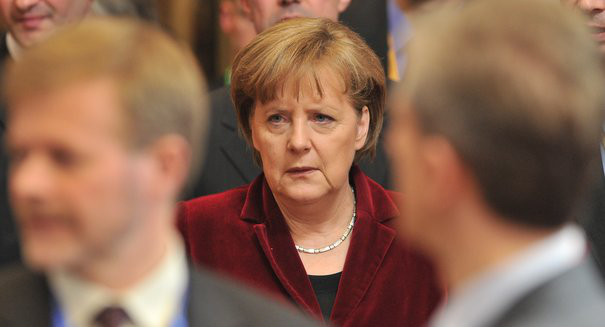
Chancellor Angela Merkel of Germany has her hands full this week, with issues concerning Moldova, France, and Greece.
Source: New York Times

Little, if anything.
Take Moldova. Ms. Merkel on Wednesday is off to this poor, corrupt and divided country on the fringe of the European Union and the Caucasus. It borders the E.U. member-state Romania.
Ms. Merkel wants to end this longtime “frozen conflict,” but without the cooperation of Vladimir Putin, the Russian president with whom Ms. Merkel does not have good relations, it is difficult to see what she can achieve — unless the lure of German investment and the European Union can shift the balance of power in Moldova.Back in Berlin, on Thursday, Ms. Merkel will have to deal with requests by President François Hollande of France to soften the conditions for Greece.
Ms. Merkel is in no position to say yes or no. Her Christian Democrats, and the public, are in no mood to give Greece more time or more money. And in any case, Ms. Merkel cannot do anything right now, as she will explain to Prime Minister Antonis Samaras of Greece, whom she will host in Berlin on Aug. 24.
As I write in my latest column, Ms. Merkel can say with full conviction that she has to wait until Sept. 12, when the country’s Constitutional Court will give its ruling on whether Germany can both ratify the fiscal pact that she negotiated with her E.U. partners and contribute to the bailout mechanism of the European Stability Mechanism.
If the court says no, then the only way Germany can forge ahead on Europe is a referendum on a new constitution. If the judges give a qualified yes, Ms. Merkel will still have a difficult job convincing her skeptical party — and the German public — that Germany must pay more.

Nonresident Senior Fellow, Carnegie Europe
Judy Dempsey is a nonresident senior fellow at Carnegie Europe
Recent Work
Judy Dempsey
Judy Dempsey
Carnegie India does not take institutional positions on public policy issues; the views represented herein are those of the author(s) and do not necessarily reflect the views of Carnegie, its staff, or its trustees.

After the chill in ties between 2020 and 2024 that brought India–China relations to their lowest point in several decades, the two countries have engaged each other afresh. This paper argues that there are predominantly four imperatives guiding India’s approach to China, and they exist in an order of priority.

Saheb Singh Chadha

This piece argues that India’s central challenge is not managing a single flashpoint but resolving the underlying tension between expansion and institutional coherency of the BRICS grouping.

Vrinda Sahai
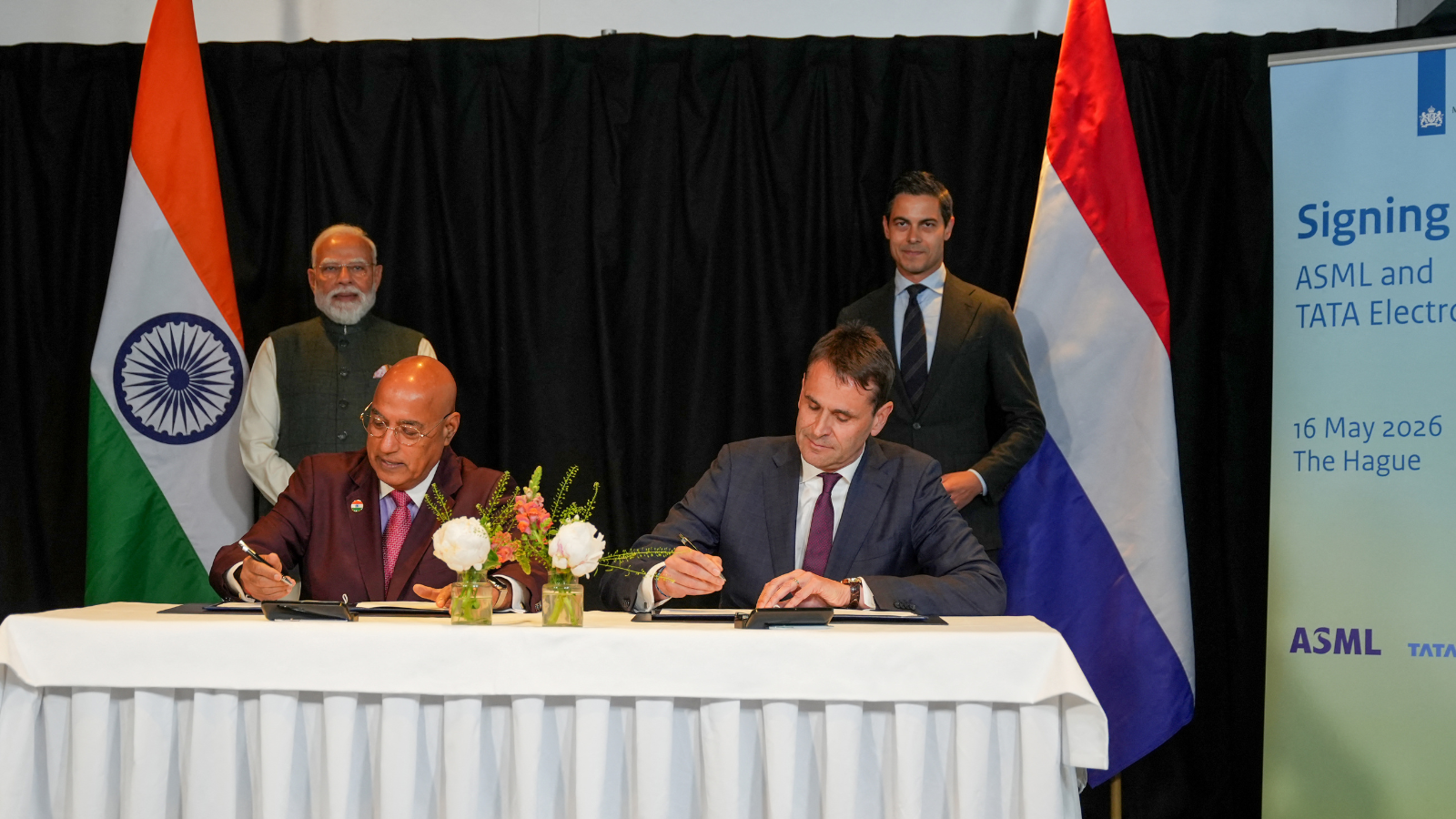
The ASML MoU with Tata Electronics is an indicator of how far the Indian semiconductor ecosystem has come. This ecosystem has been years in the making and represents real commercial logic.

Konark Bhandari

A partnership between India, a country of subcontinental size, and Africa, a continent of fifty-four countries, may seem asymmetric until one notes that both are home to nearly the same number of people—1.4 billion. This essay spells out the existing challenges to the partnership, its optimal potential, and the possible pathways to realize it over the next quarter-century.

Rajiv Bhatia

The India–EU Free Trade Agreement (FTA) is shaping up to be one of the most consequential trade negotiations, both economically and strategically. But, what’s in the agreement, what’s missing, and what will determine its success in the years ahead
Vrinda Sahai, Nicolas Köhler-Suzuki