

Paper
Ibrahim Saif, Ahmed Ghoneim
{
  "authors": [
    "Ibrahim Saif"
  ],
  "type": "legacyinthemedia",
  "centerAffiliationAll": "",
  "centers": [
    "Carnegie Endowment for International Peace",
    "Malcolm H. Kerr Carnegie Middle East Center"
  ],
  "collections": [],
  "englishNewsletterAll": "",
  "nonEnglishNewsletterAll": "",
  "primaryCenter": "Malcolm H. Kerr Carnegie Middle East Center",
  "programAffiliation": "",
  "programs": [],
  "projects": [],
  "regions": [
    "Levant",
    "Syria"
  ],
  "topics": [
    "Economy"
  ]
}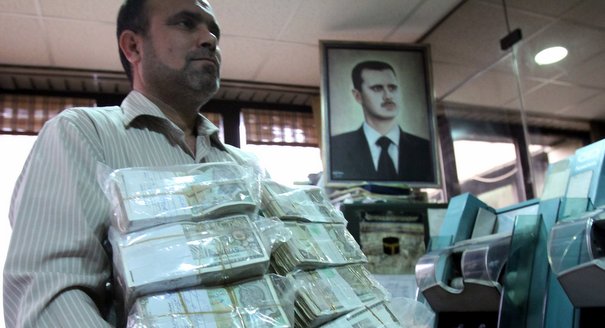
Source: Getty
While talk of a socio-economic policy for the Syrian opposition may be premature, the opposition must still offer a realistic economic plan to win over a business constituency and show that it has ambitions beyond ousting the current regime.
Source: Al-Monitor

Some argue that it is too early to talk about socio-economic policies, in light of tensions and the systematic destruction of Syrian infrastructure. The truth is that there is no reason for the main opposition forces not to develop an economic platform. A clear economic platform would deliver a straightforward message to businessmen and traders, who thus far have been neutral in the conflict. The interests of this important demographic have historically been linked to the Baath regime, regardless of their real feelings, since many businessmen and leaders in the private sector did not have any alternative but to deal with the regime and all of its disfunction. This business demographic should be the focus of the opposition, which should deliver reassuring messages clarifying plans for the upcoming era.
This new rhetoric would also deliver a message to public institutions and personnel, reassuring them that new the political forces seek to preserve these institutions — in particular, the service institutions that deal directly with the public. It would clarify that the opposition would differentiate between these institutions and political and security institutions. The latter would certainly collapse with the fall of the regime and create as much chaos as possible, just like what happened in many countries where the president was ousted in the absence of democracy.
There are understandable reasons for a delay in developing these types of policies. However, many influential actors and bodies in the regional and international arenas have started to think about the economic situation in Syria in the post-Assad era. They are considering how they can help in managing the transitional period and avoid the mistakes they made in other places around the world, where reaction time was often slow and situations became worse than they had been under an authoritarian regime, as in Iraq for example.
The first measure involves developing a number of steps to be followed in the transitional period. These will involve issues in the public and private sectors and regional and international funding institutions. Opposition political forces must make clear which type of economic system they support. Will it constitute an extension of the central authority and a semi-socialist regime? Or is it to be an economic system based on individual initiatives aimed at reducing the role of the state? What will be their priorities?
In the new phase that the Syrian crisis has entered, such planning would bring additional supporters to the side of the revolution, especially those who fear the emerging forces. It would also help in developing a strategy that might be followed by those who would like to help Syria with the transitional process.
The Syrian opposition can benefit from setting priorities in the transitional period, such as preserving public institutions and keeping competent workers at their posts. Regardless of their efficiency or reputation, these institutions must be preserved while thinking about ways to enhance their performance and develop them in the future.
The second step is to think about how public institutions should be operated, including how they will provide the necessary services of education, health and maintenance of the infrastructure. This step would help provide necessary calm in the transitional period and avoid a vacuum that could lead to chaos and the destruction of the only institutions capable of carrying out their social and educational functions.
The third step is to develop a plan to restructure public institutions that address their fundamental problems. Such a plan would require political legitimacy and a long period of time before results are visible. It would also be necessary to build local consensus over medium and long-term policies for the future.
The absence of an economic and social platform during the conflict shows that the opposition does not have an alternative for the regime at all levels. It also suggests, true or not, a weakness on the part of the opposition to manage public affairs and develop adequate policies. This absence raises doubts regarding the upcoming period. The absence of an economic platform could prevent important parties from joining the unarmed opposition groups that need all kinds of support. Finally, at the political level, developing an integrated platform to address all issues of concern to Syrian society would show that the opposition has a plan for a state and that its ambitions are not limited to ousting the current regime.
Former Senior Associate, Middle East Center
Saif is an economist specializing in the political economy of the Middle East. His research focuses on international trade and structural adjustment programs in developing countries, with emphasis on Jordan and the Middle East.
Recent Work
Ibrahim Saif, Ahmed Ghoneim
Ibrahim Saif, Muhammad Abu Rumman

On March 10, 2026, India’s Union Cabinet approved amendments to Press Note 3, a regulation that mandated government approval on all foreign direct investment (FDI) from countries sharing a land border with India. This amendment raises questions primarily about whether its stated benefits will materialize and if the risks have been adequately weighed. This piece will address the same.

Konark Bhandari

This piece examines India’s response to U.S. sanctions and tariffs, specifically assessing the immediate market consequences, such as alterations in import costs, and the broader strategic implications for India’s energy security and foreign policy orientation.

Vrinda Sahai

This paper examines the evolution of India-China economic ties from 2005 to 2025. It explores the impact of global events, bilateral political ties, and domestic policies on distinct spheres of the economic relationship.

Santosh Pai

The India-U.S. relationship currently appears buffeted between three “Ts”—TRUST, Tariffs, and Trump.

Arun K. Singh
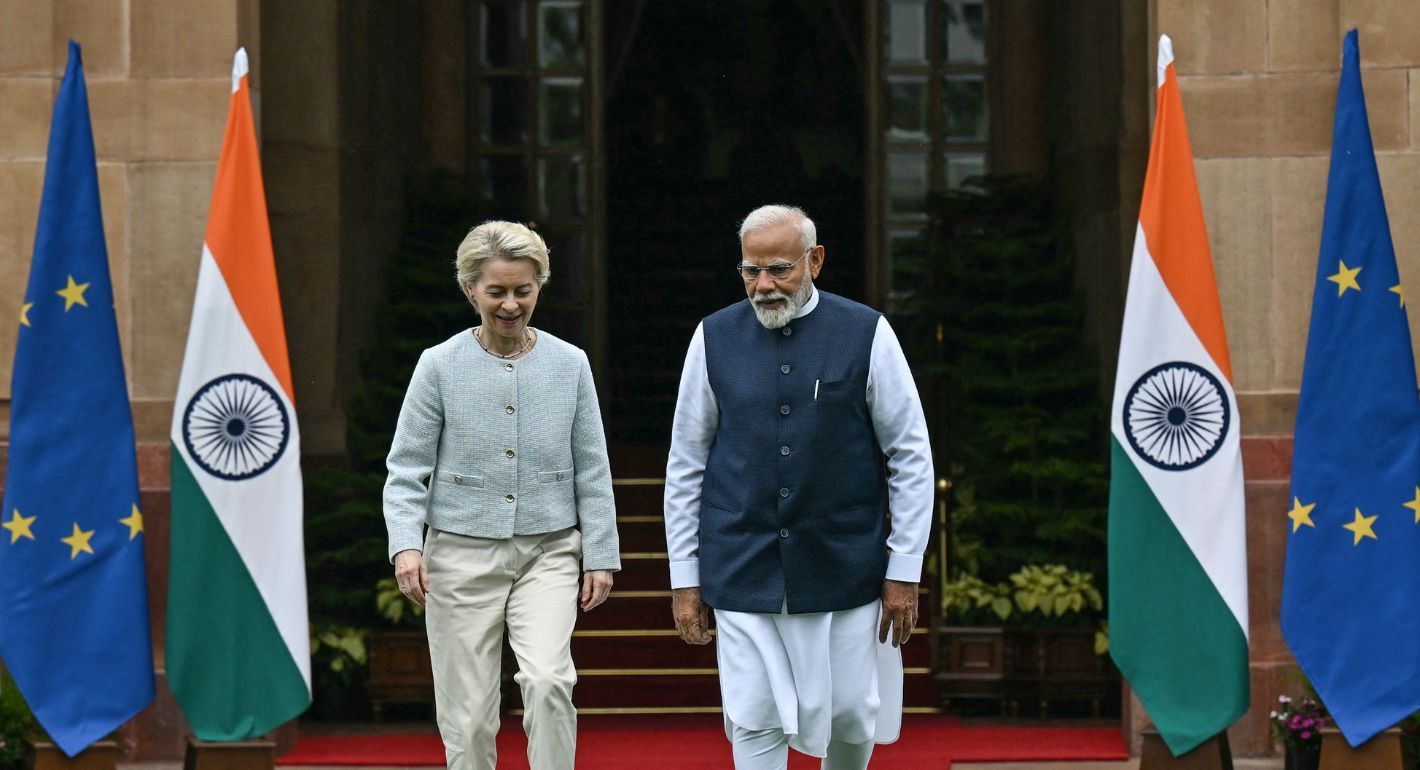
This article argues that the geopolitical circumstances have never been more conducive, not merely for the early conclusion of the free trade agreement (FTA) between India and the EU, but also for crafting a substantive and comprehensive strategic partnership.

Mohan Kumar