

Article
Stefan Lehne
{
  "authors": [
    "Stefan Lehne"
  ],
  "type": "legacyinthemedia",
  "centerAffiliationAll": "",
  "centers": [
    "Carnegie Endowment for International Peace",
    "Carnegie Europe"
  ],
  "collections": [],
  "englishNewsletterAll": "",
  "nonEnglishNewsletterAll": "",
  "primaryCenter": "Carnegie Europe",
  "programAffiliation": "",
  "programs": [],
  "projects": [],
  "regions": [
    "Europe"
  ],
  "topics": []
}
Source: Getty
The eurozone crisis is not only having a devastating effect on Europe itself but has also severely damaged European foreign policy prospects for the next decade.
Source: European Voice

The crisis has reduced Europe's standing in the world to a point where it is no longer seen as part of the solution to global problems, but as a big problem in its own right. Psychologically, it has undermined confidence and reduced ambition, while cutting the resources needed to pursue active international engagement.
Most seriously, there is a creeping ‘re-nationalisation' of foreign policy. Member states are less invested in common efforts than they were, and they tend to formulate national positions without co-ordinating with their partners. They are ever more tempted to impose their national agendas on EU policies.Unless the euro crisis can be overcome, the loss of both ambition and coherence will inevitably result in the continued marginalisation of EU foreign policy. The bigger countries, in particular the UK, France and Germany, will continue to play prominent roles, but tensions could cripple their ability to work together.
Co-operation that does take place will most likely do so outside the EU framework. Coalitions of the willing might become the normal European manner of tackling international problems. The ability of the EU to shape developments in its neighbourhood, as well as global decisions, would diminish drastically.
If the EU does succeed in overcoming the euro crisis, two scenarios seem possible. One assumes that the UK reaches some kind of durable accommodation with the EU and that, following the euro crisis, pressing external challenges will inevitably rise up the agenda again. This would not result in further far-reaching changes in the foreign-policy structures but it could mean that the reforms in the Lisbon treaty would be implemented in a more ambitious manner.
This would include strengthening the political mandate of the EU's high representative and reinforcing the European External Action Service. European defence policy could also be re-invigorated, possibly on the basis of a new division of labour between the EU and NATO. Following this trajectory, member states would maintain their identity and presence on the international scene, but foreign policy would increasingly be conducted within the framework of common EU institutions.
The second scenario assumes that the euro crisis can only be resolved through a massive deepening of integration in the eurozone. The transfer of fiscal- and economic-policy competences could be so far-reaching that it would eventually lead to the formation of a new ‘hard core' of the EU, organised on federalist principles.
Presumably, not all countries outside the eurozone would wish to join this group. The UK in particular would almost certainly stay outside. If it could not find a way to ensure that it retained influence on internal-market and external policies – or if the Eurosceptic tendencies of its public were to become unstoppable – it might leave the EU altogether.
A deepening of integration within the ‘hard core' could eventually prompt the development of a foreign and security dimension of a federal eurozone. As the entire structure would be based on federalist principles, it would be possible to develop a foreign and security policy with more efficient decision-making, a stronger strategic vision and upgraded instruments. However, the gain in punch would be paid with a loss of inclusiveness, as quite a number of EU member states would probably not participate.
Foreign policy has never been a driver of European integration. Instead, the dynamics of integration have determined the scope and reach of the EU's international policies. This relationship is likely to remain. However, while European leaders understandably focus on surviving the next onslaught of the markets, they should spare a thought for the longer-term political and security implications of their decisions. If the EU loses its war with the bond markets, foreign policy will be part of the collateral damage – and Europe's security will be diminished.

Senior Fellow, Carnegie Europe
Stefan Lehne is a senior fellow at Carnegie Europe in Brussels, where his research focuses on the post–Lisbon Treaty development of the European Union’s foreign policy, with a specific focus on relations between the EU and member states.
Recent Work
Stefan Lehne
Stefan Lehne
Carnegie India does not take institutional positions on public policy issues; the views represented herein are those of the author(s) and do not necessarily reflect the views of Carnegie, its staff, or its trustees.

The India–EU Free Trade Agreement (FTA) is shaping up to be one of the most consequential trade negotiations, both economically and strategically. But, what’s in the agreement, what’s missing, and what will determine its success in the years ahead

Vrinda Sahai, Nicolas Köhler-Suzuki
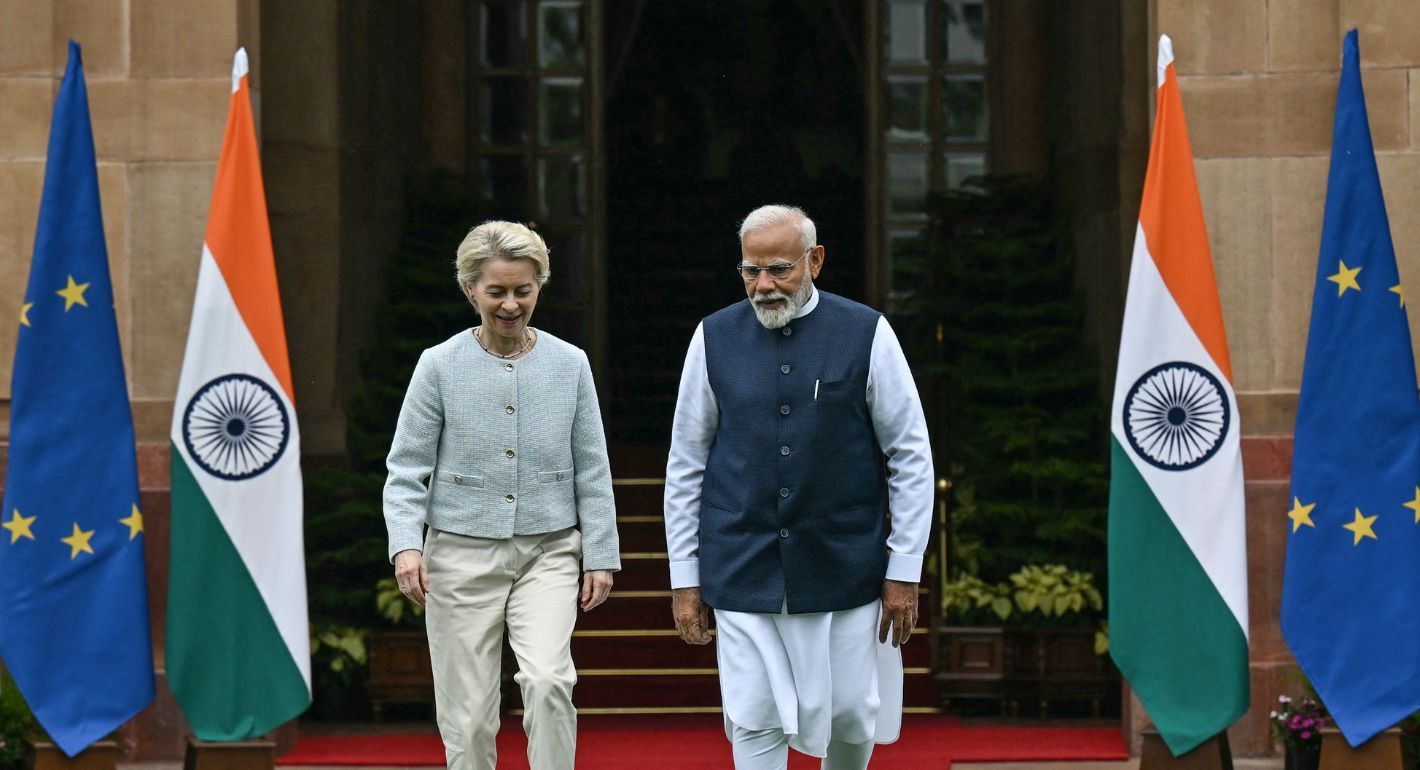
This article argues that the geopolitical circumstances have never been more conducive, not merely for the early conclusion of the free trade agreement (FTA) between India and the EU, but also for crafting a substantive and comprehensive strategic partnership.

Mohan Kumar
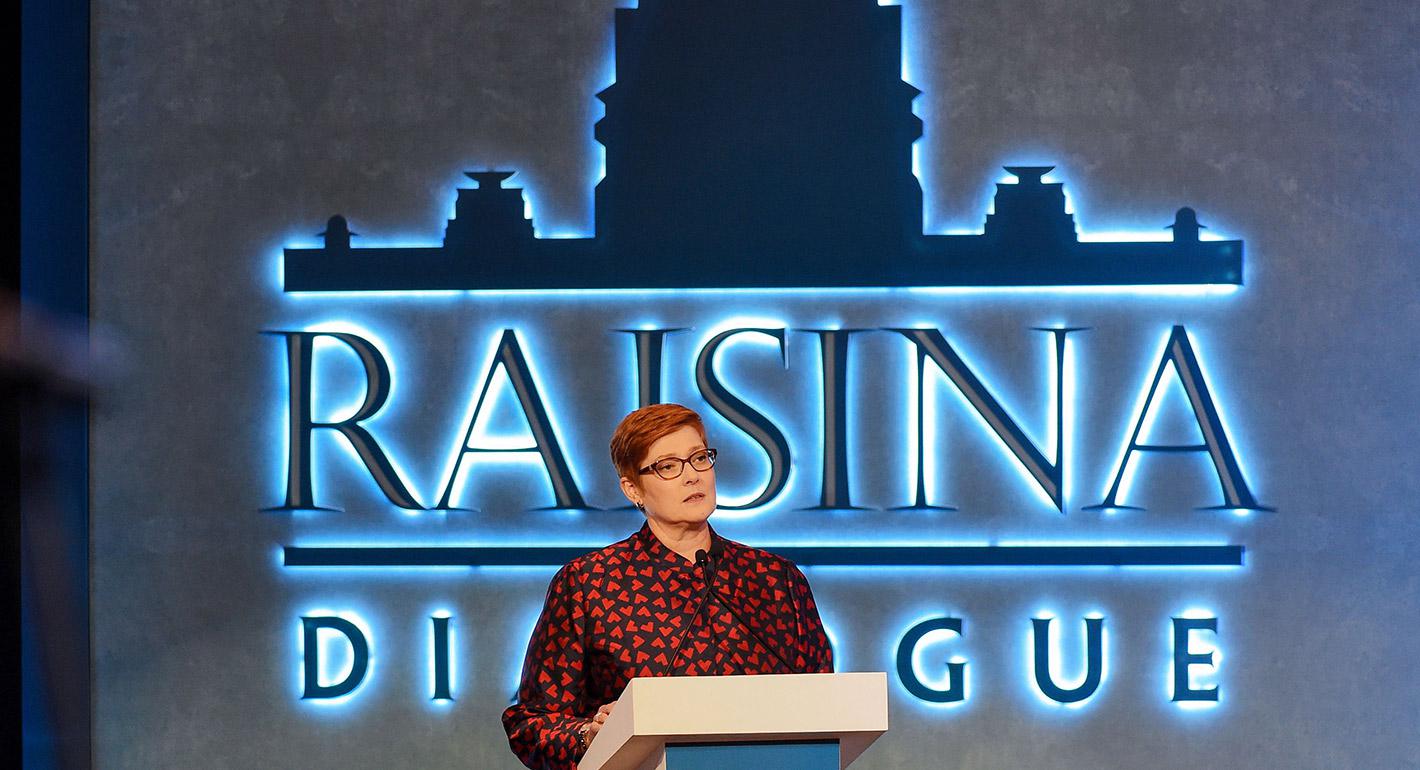
Foreign ministers from India, France, and Australia recently met (virtually) at the Raisina Dialogue, India’s flagship annual conference on geopolitics and geoeconomics. What can they get done if they work together?


Rudra Chaudhuri, Shibani Mehta

With contributors from various Central Asian nations and beyond, this issue of Seminar provides a selection of perspectives about the past, present, and future trajectory of Central Asia, and the growing role of external actors, particularly India, China, Russia, and the EU in this evolving and dynamic space.
Rhea Menon, Sharanya Rajiv, 64592
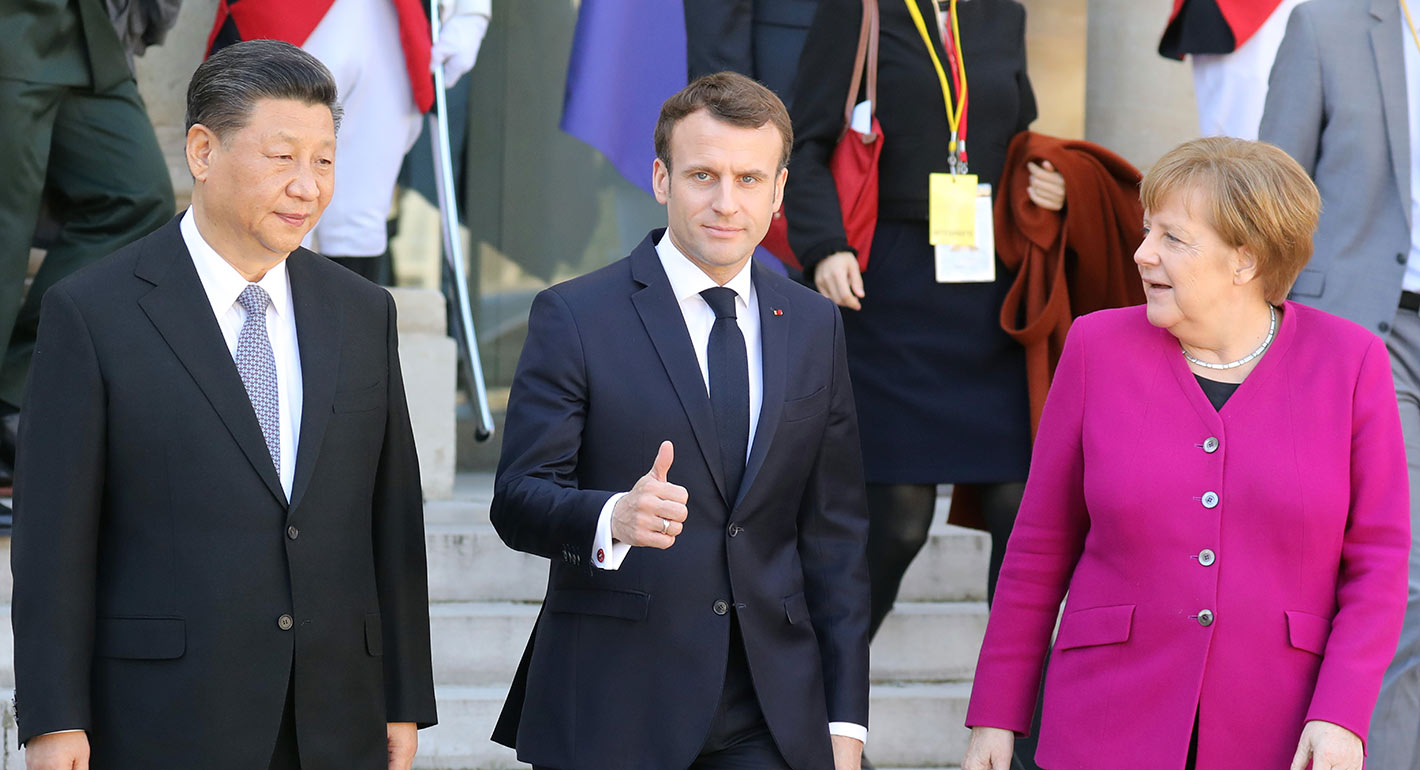
Europe’s huge stakes in the economic stability of Asia, the sea lines of communication connecting Europe and Asia through the Indo-Pacific, and threat of U.S. retrenchment may force Europe to reconsider its role in Asia. Asia needs a robust European contribution to connectivity and security.
C. Raja Mohan, John J. Vater