

In The Media
David Rothkopf
{
  "authors": [
    "David Rothkopf"
  ],
  "type": "legacyinthemedia",
  "centerAffiliationAll": "",
  "centers": [
    "Carnegie Endowment for International Peace"
  ],
  "collections": [],
  "englishNewsletterAll": "",
  "nonEnglishNewsletterAll": "",
  "primaryCenter": "Carnegie Endowment for International Peace",
  "programAffiliation": "",
  "programs": [],
  "projects": [],
  "regions": [
    "North America",
    "United States"
  ],
  "topics": [
    "Political Reform",
    "Foreign Policy"
  ]
}
Source: Getty
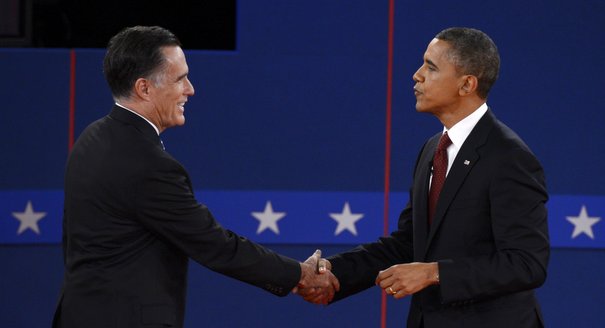
The upcoming presidential debate is the last big chance for the candidates to clarify their policies before an almost evenly divided American electorate.
Source: Foreign Policy

GM was alive. Bin Laden was dead. Game over. It all seemed so simple.
But somewhere en route to Monday night's foreign-policy debate, the conventional wisdom landed squarely on its behind. Three factors drove this unceremonious upending of pundit expectations. (Which included my own. See here for my own timely "Dewey Defeats Truman" assertion that this race was over weeks ago. It was published so close to the instant that it was no longer true that physicists have concluded the only way to produce something with a shorter half-life would require use of the linear accelerator at CERN in Switzerland.)One reason the conventional wisdom became unstuck was the president's lackluster performance in the first debate. Had Obama won the debate easily, given his lead in the polls at the time, GOP leaders might have started to distance themselves from their nominee, focus on House and Senate races, and start planning long romantic dinners with Marco Rubio or potentially even longer ones with Chris Christie with an eye to 2016. And the two remaining debates -- including the foreign-policy debate -- would have mattered less.
Another reason foreign policy and Monday's debate came to matter more was that the conventional wisdom about foreign policy not mattering in debates is one of the great indefensible canards of cable TV-grade political analysis. Forget what the polls say: Foreign policy has been centrally important to almost every election of the past 40 years in the United States. See Vietnam, Ford's Poland gaffe, the Iran hostage crisis, the centrality of Cold War victory to Reagan's "Morning in America," the end of the Cold War, the "great sucking sound," the "War on Terror," and getting out of Iraq as examples.
But the biggest reason Monday's debate is going to matter is that over the past few weeks, the tide of international events have turned against the president. At first, it seemed Mitt Romney would assist Obama in bucking that tide. Late in the summer, his Global Gaffe Tour distracted from bad news on Afghanistan, Iraq, Pakistan, the international economy, and elsewhere. When the attack in Benghazi first took place, Romney stepped on it with an ill-considered, badly timed critique that came out roughly as America was learning that its envoy to Libya and three others had been murdered. Had Romney simply remained silent, Benghazi would have been a blot on the president's record.
But turnabout is fair play. And the Obama administration returned the favor to Romney by mishandling the communications surrounding the Benghazi incident in such a way that it kept it alive. Their decision to stick to the story that the deaths resulted from protests associated with the offensive anti-Muslim video that circulated on YouTube and provoked protests elsewhere -- even after compelling evidence emerged that the attacks were anticipated and had nothing to do with the video -- kept the story alive. This opened the door to further scrutiny of embassy security or rather, the lack thereof. But it also did something much more damaging. It re-opened the issue of national security competence that the Obama administration thought was closed.
In fact, the Benghazi story proved damaging in multiple ways. First, it was not well handled, and it revealed operational errors of judgment. But next, it poked holes in two core Obama foreign-policy narratives. The first was that the Libya intervention was a success for American policy. Under the glare of the media spotlight, Libya's post-Qaddafi reality looks a lot like chaos. The Benghazi violence also underscored the roiling instability of the Middle East in the wake of the Arab Spring, resonating with continuing problems from Egypt to Syria to Yemen, and allowed the GOP to fairly ask whether Obama's response to the biggest geopolitical challenge of his time in office had been as adequate as his administration claims.
The worst consequence of Benghazi for Obama's campaign, however, was the fact that on the anniversary of 9/11, another terrorist attack took more American lives, possibly an attack that had an al Qaeda component to it. This cast in a new and unsettling light the primary foreign-policy argument Obama had to offer: He had not only killed Osama but in doing so he had made big strides in reducing the terrorist threat to America. Bin Laden may have been dead, but al Qaeda and likeminded extremists are not, and troubling stories throughout the region -- from Taliban attacks against innocents and American troops to al Qaeda activity in Yemen, infiltration in Syria, and Hezbollah drone probes of Israel -- suggested that new threats were emerging.
Benghazi was thus not just an attack on American diplomats or the United States, it also shook the foundations of Obama's argument that he was competently and safely getting America out of the Middle East.
So here we are: Not only is Romney back in the polls, not only has the foreign-policy debate gained significance because it is the last big chance for the candidates to speak directly to an almost evenly divided American electorate, but all of sudden Obama looks vulnerable on foreign policy, his supposed strength. Is he the guy who got America's public enemy No. 1, or is he a guy who just wants out of the Middle East at any cost?
Is he the author of an Obama doctrine that's more effective than anything the last GOP administration came out with, or are we now seeing hints that his approach may unleash regionwide conflagration and losses for our allies and our standing? Does he deserve credit for engineering crushing sanctions against Iran while avoiding letting the United States be drawn into another war in the region, or has he ceded the Iranians more time while bumbling diplomacy, most recently the conveniently timed but confusingly disavowed leak of "news" about "progress" on initiating direct U.S.-Iranian talks after the election.
All of a sudden, foreign policy is central to this campaign. If Romney can maintain his momentum, look statesmanlike, avoid gaffes and make the case that Obama has not, as advertised, made America safer, he can get a bounce from this debate that may give him insurmountable momentum leading up to Nov. 6. If, on the other hand, Obama can both re-establish that he kept the foreign-policy promises that he was elected to fulfill and paint Romney as an amateur whose policies are nothing more than a testosterone-addled longing for four more years of Bush-Cheney-ism, then perhaps the president can reverse the slide in his fortunes that began during that first debate.
In the end, voters may vote their wallets. But they will also do as they always do and vote character and leadership and hope for America's future. The foreign-policy debate will provide a crucible in which those aspects of the candidates will be tested, established, or undone. As a consequence, it could well prove to be one of the decisive moments in recent U.S. political history. And just because a guy who said the election was over three weeks ago said it doesn't mean it isn't true.
Former Visiting Scholar
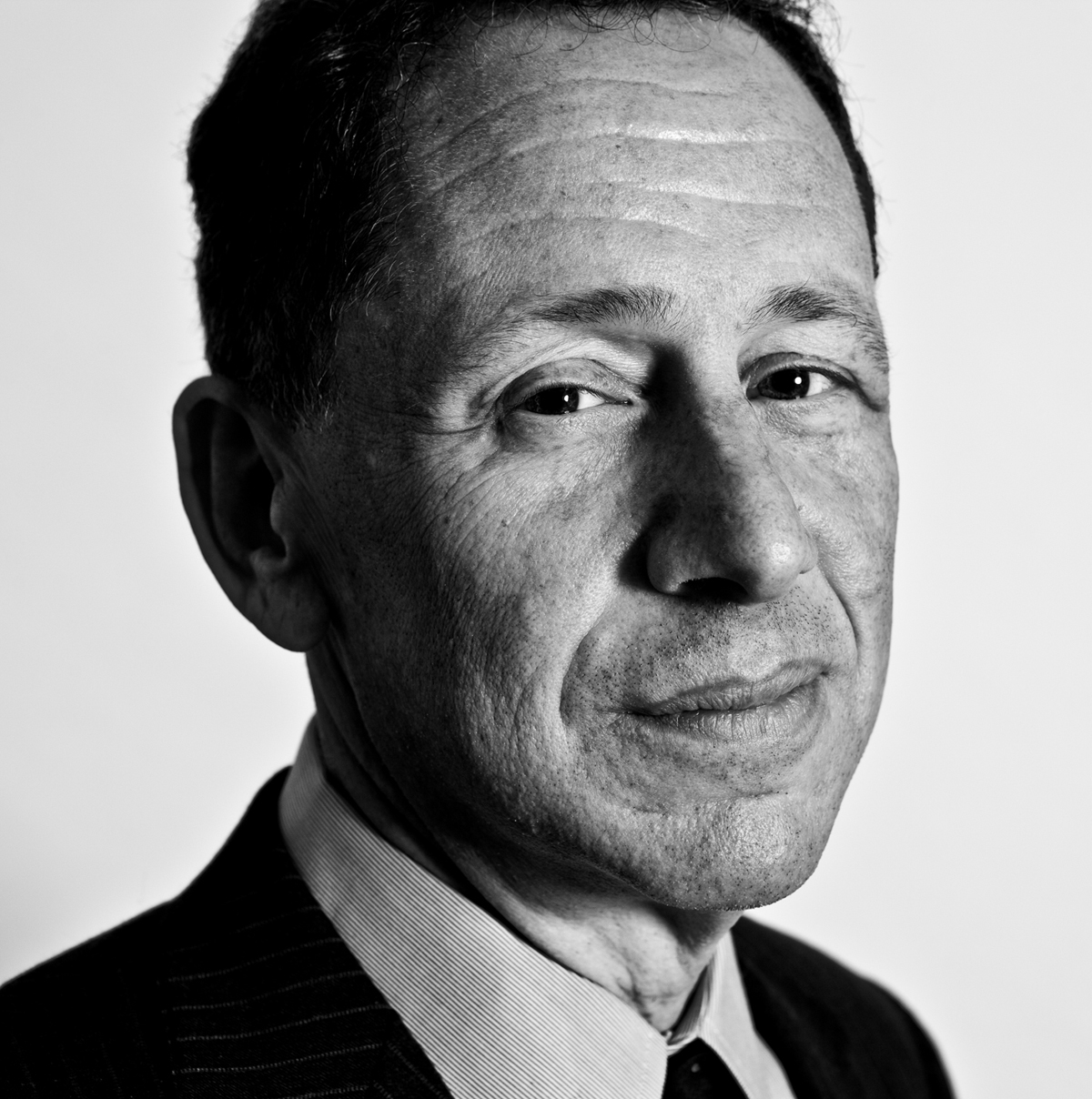
David Rothkopf was a visiting scholar at the Carnegie Endowment as well as the former CEO and editor in chief of the FP Group.
Recent Work
David Rothkopf
David Rothkopf
Carnegie India does not take institutional positions on public policy issues; the views represented herein are those of the author(s) and do not necessarily reflect the views of Carnegie, its staff, or its trustees.

How is AI reshaping space security, creating governance challenges, and where does international diplomacy stand today?


Tejas Bharadwaj, Almudena Azcárate Ortega

After the chill in ties between 2020 and 2024 that brought India–China relations to their lowest point in several decades, the two countries have engaged each other afresh. This paper argues that there are predominantly four imperatives guiding India’s approach to China, and they exist in an order of priority.

Saheb Singh Chadha

This piece argues that India’s central challenge is not managing a single flashpoint but resolving the underlying tension between expansion and institutional coherency of the BRICS grouping.

Vrinda Sahai

A partnership between India, a country of subcontinental size, and Africa, a continent of fifty-four countries, may seem asymmetric until one notes that both are home to nearly the same number of people—1.4 billion. This essay spells out the existing challenges to the partnership, its optimal potential, and the possible pathways to realize it over the next quarter-century.

Rajiv Bhatia

The U.S.–India semiconductor cooperation story is well-stocked with top-level strategic intent. What remains unresolved, however, are some underlying challenges that will determine whether the cooperation actually functions. Three such friction points stand out.

Shruti Mittal