

Commentary
Judy Dempsey
{
  "authors": [
    "Judy Dempsey"
  ],
  "type": "legacyinthemedia",
  "centerAffiliationAll": "",
  "centers": [
    "Carnegie Endowment for International Peace",
    "Carnegie Europe"
  ],
  "collections": [],
  "englishNewsletterAll": "",
  "nonEnglishNewsletterAll": "",
  "primaryCenter": "Carnegie Europe",
  "programAffiliation": "",
  "programs": [],
  "projects": [],
  "regions": [
    "Europe"
  ],
  "topics": [
    "EU"
  ]
}
Source: Getty
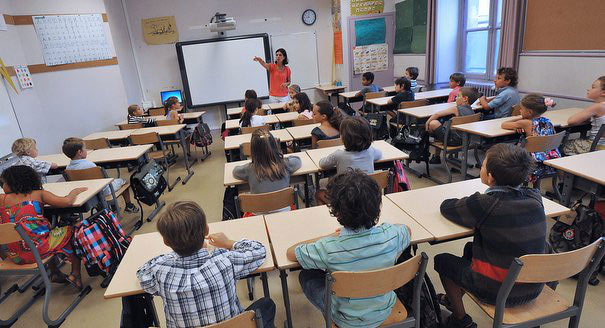
Cutbacks in education, intended to ease current budget crises in Europe, will leave the Continent's countries short of skilled work forces when its economies recover.
Source: New York Times

Governments in many countries in the European Union are cutting back so much on education that when the E.U. economy recovers, it will be difficult to sustain growth, student union leaders say. “We want governments and the E.U. to invest more in higher education, in training and in young people in general,” the union’s vice chairman, Rok Primozic, said.
“But the point we really want to make is that if European governments continue to cut back on education, they are also cutting back on skills. Don’t governments see that, because of the cutbacks, we will not emerge from the financial crisis stronger and more competitive?”Judging from a report published this month by the European Commission for Education, Culture, Multilingualism and Youth, governments see it differently. Under pressure to cut their budget deficits and make savings, 16 E.U. countries have reduced or frozen teachers’ salaries.
Salaries in Greece have been cut by 30 percent; in Ireland, by 13 percent for new teachers. Analysts said this reduces even further the incentive for young people to enter a profession that is already neither well paid nor endowed with high social status.
The European University Association, a lobbying group, argues in a new report that the cutbacks reveal a disturbing trend. “When you look at the cutbacks, a North-West/South-East pide in Europe is emerging,” said Thomas Estermann, a funding expert at the association.
In practice, this could lead to a brain drain of students and teachers from the South and the East to countries with some prospects of jobs. But as the association points out, if and when the Greek, Portuguese and Spanish economies recover, they will need well-educated work forces to sustain any growth. The most motivated and mobile, however, may already have emigrated. The uneducated, unskilled and unemployed, meanwhile, will remain behind, turning into a new underclass.
Already, more than one of every five young people in the labor force is unemployed, according to Eurostat, the European Commission’s statistics department. In Spain, youth unemployment is as high as 46.4 percent; in Greece, 44.4 percent; in Slovakia, 33.2 percent; in Lithuania, 32.9 percent; and in Portugal, 30.1 percent. By August, only three member states had youth unemployment rates lower than 10 percent: the Netherlands, Austria and Germany.
The cutbacks in education and growing youth unemployment coincide with two demographic crises facing European governments.
The first is that there are too many old teachers and not enough young people to replace them. According to a new report by the Organization for Economic Cooperation and Development, more than 40 percent of secondary school teachers in five E.U. countries — Austria, the Czech Republic, Estonia, the Netherlands and Sweden — are 50 or older. In Germany and Italy, the number is more than 50 percent.
Androulla Vassiliou, the European commissioner for education, culture, multilingualism and youth, recommended in a report that teachers be paid more. “Teachers’ remuneration and working conditions should remain a top priority in order to attract and keep the best teachers in the profession,” she said.
But as education experts point out, how is that possible when some governments are being told to impose stringent savings as a precondition for obtaining financial and banking guarantees? And where will Bulgaria and Romania, or Latvia, Lithuania and Estonia, obtain extra funding for high school teachers who, on average, earn about €9,500, or $12,250, a year, according to the European Commission?
Second, there is an even more serious demographic crisis confronting Europe as increasing numbers of people retire and fewer younger people have children. A poorly educated work force that leaves increasing numbers of young people unemployed will be unable to generate sufficient wealth to maintain Europe’s growing elderly population, according to the European University Association.
And to make matters worse, across Europe there is a growing shortage of scientists, engineers and mathematicians just as Asia (and its highly educated population) surges ahead. Industry and research centers, especially in Germany, have repeatedly warned about the need to invest in these disciplines so as to maintain competitiveness.
Yet, analysts say, most governments do not seem to realize how much decisions made now will shape their countries for the next generation.
“There is no quick fix. There can’t be,” said Mr. Primozic of the European Students’ Union. “That is why we want the E.U. to focus on the long term. The younger generation is Europe’s future.”

Nonresident Senior Fellow, Carnegie Europe
Judy Dempsey is a nonresident senior fellow at Carnegie Europe
Recent Work
Judy Dempsey
Judy Dempsey
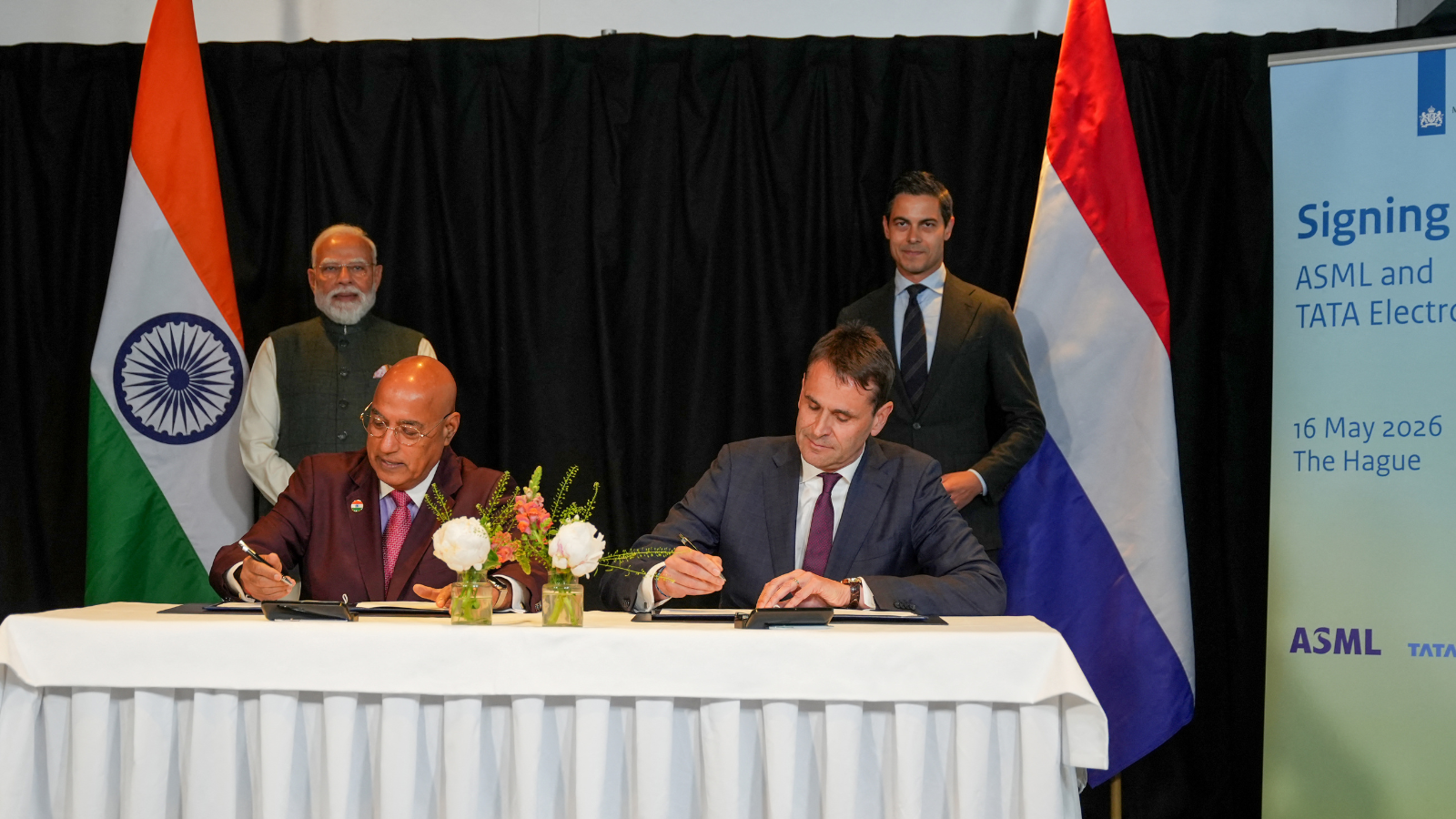
The ASML MoU with Tata Electronics is an indicator of how far the Indian semiconductor ecosystem has come. This ecosystem has been years in the making and represents real commercial logic.

Konark Bhandari

The India–EU Free Trade Agreement (FTA) is shaping up to be one of the most consequential trade negotiations, both economically and strategically. But, what’s in the agreement, what’s missing, and what will determine its success in the years ahead

Vrinda Sahai, Nicolas Köhler-Suzuki
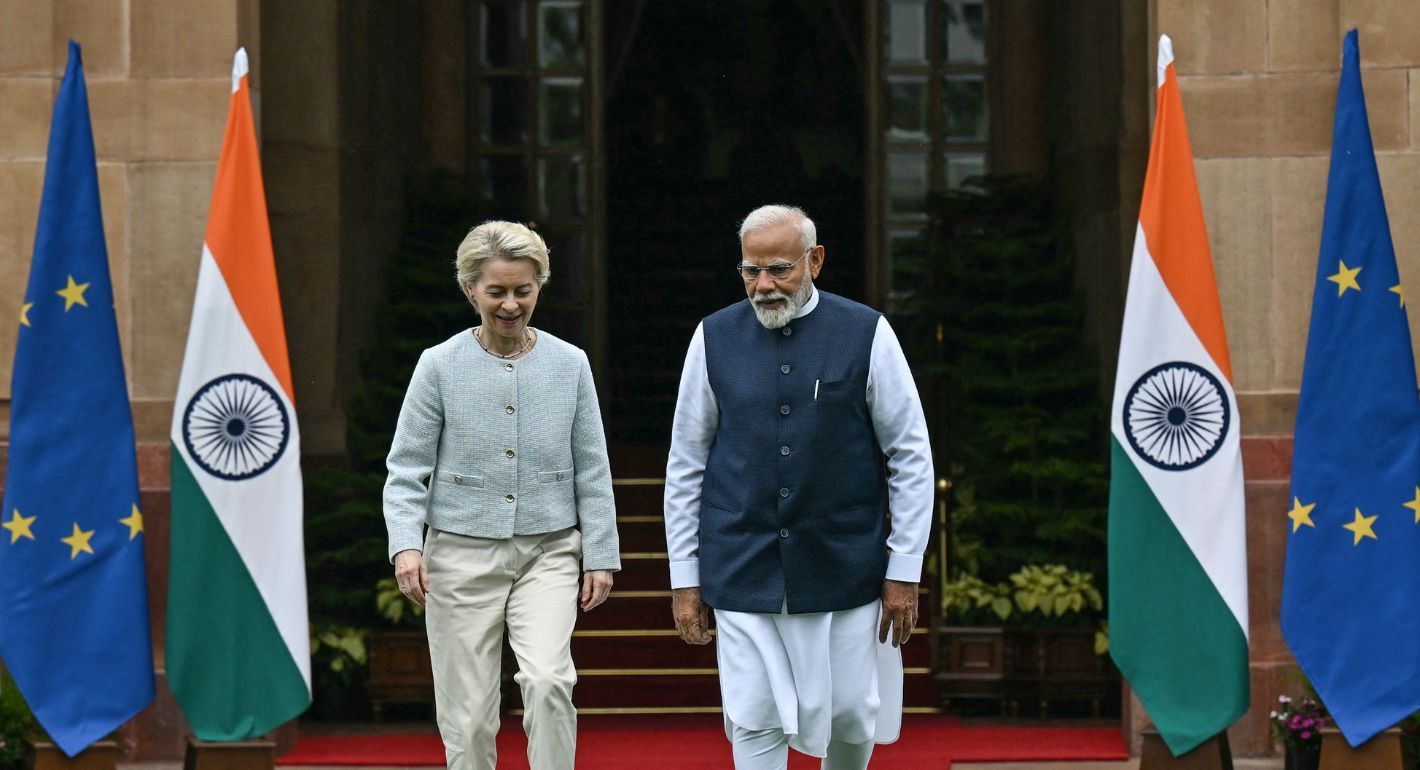
This article argues that the geopolitical circumstances have never been more conducive, not merely for the early conclusion of the free trade agreement (FTA) between India and the EU, but also for crafting a substantive and comprehensive strategic partnership.
Mohan Kumar
Foreign ministers from India, France, and Australia recently met (virtually) at the Raisina Dialogue, India’s flagship annual conference on geopolitics and geoeconomics. What can they get done if they work together?


Rudra Chaudhuri, Shibani Mehta

With contributors from various Central Asian nations and beyond, this issue of Seminar provides a selection of perspectives about the past, present, and future trajectory of Central Asia, and the growing role of external actors, particularly India, China, Russia, and the EU in this evolving and dynamic space.
Rhea Menon, Sharanya Rajiv, 64592