

Commentary
Judy Dempsey
{
  "authors": [
    "Judy Dempsey"
  ],
  "type": "legacyinthemedia",
  "centerAffiliationAll": "",
  "centers": [
    "Carnegie Endowment for International Peace",
    "Carnegie Europe",
    "Carnegie Russia Eurasia Center"
  ],
  "collections": [
    "Europe’s Eastern Neighborhood"
  ],
  "englishNewsletterAll": "",
  "nonEnglishNewsletterAll": "",
  "primaryCenter": "Carnegie Europe",
  "programAffiliation": "",
  "programs": [],
  "projects": [],
  "regions": [
    "Russia",
    "Europe"
  ],
  "topics": [
    "Foreign Policy",
    "Economy"
  ]
}
Source: Getty
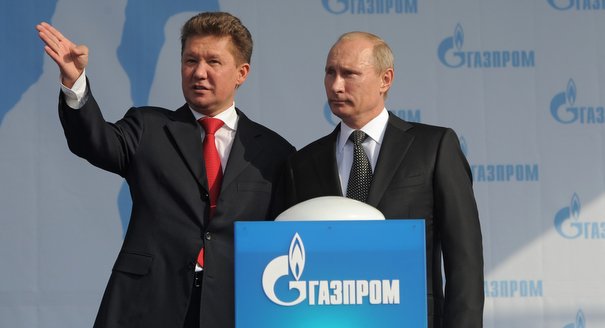
The EU's Competition Commission recently decided to investigate whether Gazprom, the Russian gas company, had hindered competition in Eastern Europe by holding back gas deliveries.
Source: New York Times

With few exceptions, the East European countries have since been dependent on Russian natural gas. They had no other option.
Pipelines, built during Soviet times, carried gas to Russia’s satellites from east to west and beyond. To this day, European energy companies have been barred from access to those pipelines, and new grids going from north to south have yet to be built.
These circumstances have given Russia considerable leeway to set gas prices for Eastern Europe. In many cases, say energy analysts, they are higher than what Gazprom charged its West European customers, even though the gas did not have to be transported as far.“Russia’s instrument of power over the region has been gas,” said Alan Riley, an energy expert and professor at City Law School, London. “Let’s see for how much longer.”
This is because the E.U.’s Competition Commission recently decided to investigate whether Gazprom had hindered competition in Eastern Europe by holding back gas deliveries and charging customers unfair prices.
The Lithuanian government led the charge against Gazprom. With a team of top legal advisers, it submitted last year a complaint to the commission. “The commission saw that our allegations about Gazprom abusing its dominant position were grounds to start proceedings against the company,” said Arunas Vinciunas, Lithuanian deputy ambassador to the European Union.
It is not the first time that East European governments have complained to the European Commission, the Union’s executive, over Gazprom. They have long claimed that Russia’s giant state-owned energy company was abusing its dominant position in their countries. But the earlier cases, analysts said, were badly prepared.
A formal E.U. investigation now under way will also include Gazprom’s practices in Bulgaria, the Czech Republic, Estonia, Hungary, Latvia, Lithuania, Poland and Slovakia.
The decision was greeted with disbelief and delight by the countries in the region.
“It is so important what Brussels is doing,” said Szymon Kardas, an expert on Russian energy at the Center for Eastern Studies in Warsaw. “This is the Competition Commission that took on Microsoft and its dominant position in Europe. It is now prepared to take on Gazprom.”
President Vladimir V. Putin has already reacted by issuing a decree aimed at protecting Gazprom’s subsidiaries based abroad.
The Kremlin claims that strategic companies like Gazprom are not subject to E.U. law because they are registered “outside the jurisdiction of the E.U. and administered by the government” of Russia.
The E.U. Competition Commission is undeterred.
“This is an investigation that concerns Gazprom, which is a company active in the E.U. single market, which sells gas in the E.U., so we are looking at the behavior of this company. This does not concern Russia,” said Antoine Colombani, the commission’s spokesman. “We are working away. There is no legal deadline for this antitrust case.”
Whatever negotiating strategy Russia adopts, the case is already having repercussions for the East Europeans, and for the European Union. The antitrust case has reinforced East Europeans’ belief in a Union whose confidence has been terribly undermined by the euro crisis.
“For a small country, it means a lot. It shows that we can defend our interests through solidarity inside the E.U.,” said Mr. Vinciunas.
Also, Eastern Europe’s bargaining position vis-à-vis Gazprom over prices and the company’s monopoly over transmission, distribution and supply could also be strengthened.
Furthermore, East Europeans are seizing the opportunity to diversify their energy sources. Plans to explore and extract shale gas are in progress. Expensive liquefied natural gas terminals to store gas imported by ship are being built, all because of Russia’s use of energy as a political tool.
The Union, for its part, could be doing more to wrest Eastern Europe more quickly from Russia’s energy grip. It is planning to build gas and electricity interconnections that will link the Baltic States and Poland to the Adriatic and Aegean Seas via several Central European countries. But they will not be completed for several more years.
Nevertheless, the East Europeans sense that Russia’s last remaining hold over them is weakening, thanks to the commission. It may also show to Moscow that however much it has been able to rely on the bigger countries like Germany to postpone any big E.U. decisions, those days can no longer be taken for granted.

Nonresident Senior Fellow, Carnegie Europe
Judy Dempsey is a nonresident senior fellow at Carnegie Europe
Recent Work
Judy Dempsey
Judy Dempsey
Carnegie India does not take institutional positions on public policy issues; the views represented herein are those of the author(s) and do not necessarily reflect the views of Carnegie, its staff, or its trustees.

This piece argues that India’s central challenge is not managing a single flashpoint but resolving the underlying tension between expansion and institutional coherency of the BRICS grouping.

Vrinda Sahai
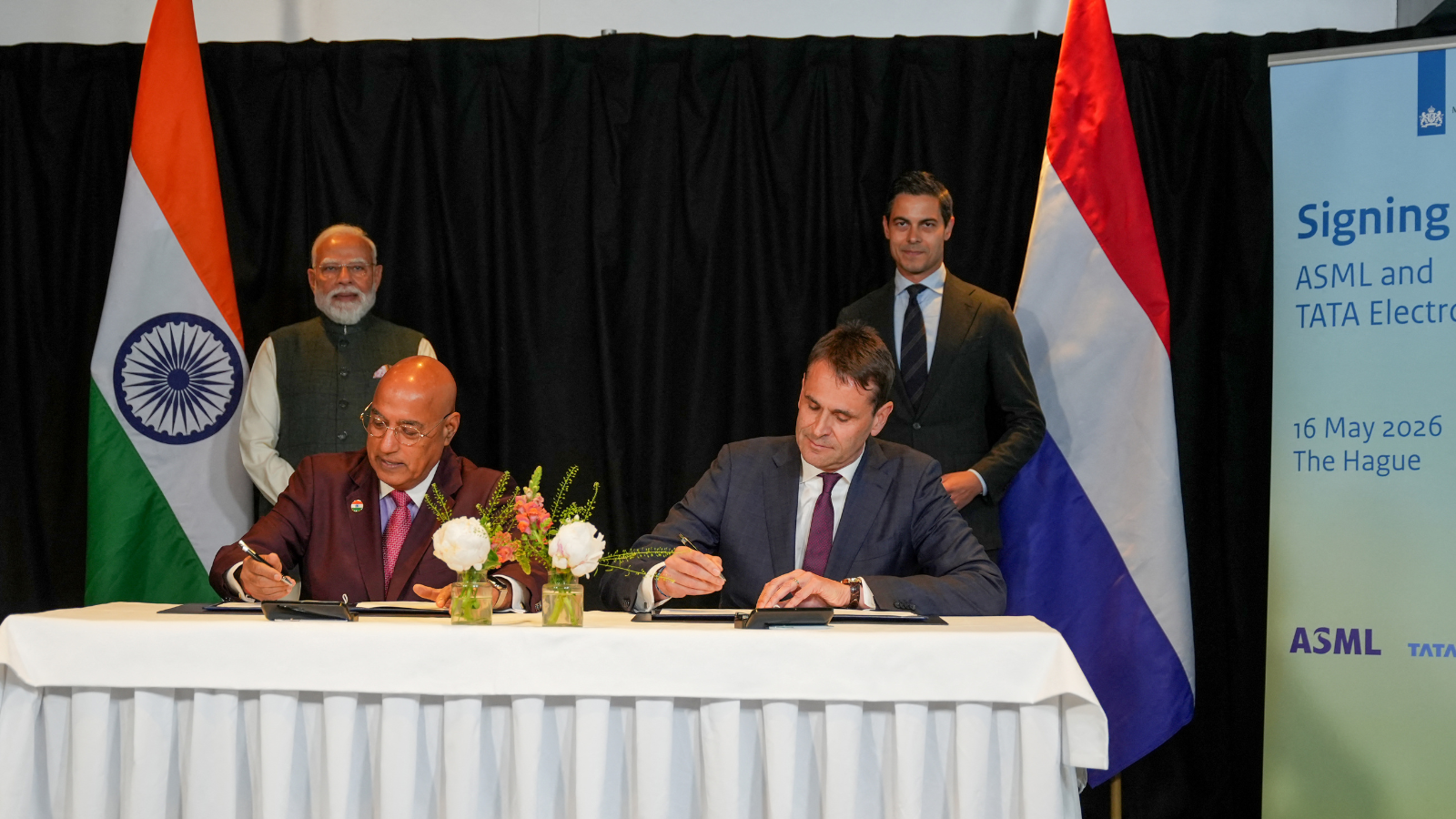
The ASML MoU with Tata Electronics is an indicator of how far the Indian semiconductor ecosystem has come. This ecosystem has been years in the making and represents real commercial logic.

Konark Bhandari

A partnership between India, a country of subcontinental size, and Africa, a continent of fifty-four countries, may seem asymmetric until one notes that both are home to nearly the same number of people—1.4 billion. This essay spells out the existing challenges to the partnership, its optimal potential, and the possible pathways to realize it over the next quarter-century.

Rajiv Bhatia

The India–EU Free Trade Agreement (FTA) is shaping up to be one of the most consequential trade negotiations, both economically and strategically. But, what’s in the agreement, what’s missing, and what will determine its success in the years ahead
Vrinda Sahai, Nicolas Köhler-Suzuki

On March 10, 2026, India’s Union Cabinet approved amendments to Press Note 3, a regulation that mandated government approval on all foreign direct investment (FDI) from countries sharing a land border with India. This amendment raises questions primarily about whether its stated benefits will materialize and if the risks have been adequately weighed. This piece will address the same.
Konark Bhandari