

Paper
James L. Schoff, Douglas E. Rake, Joshua Levy
{
  "authors": [
    "James L. Schoff"
  ],
  "type": "questionAnswer",
  "centerAffiliationAll": "dc",
  "centers": [
    "Carnegie Endowment for International Peace"
  ],
  "collections": [],
  "englishNewsletterAll": "asia",
  "nonEnglishNewsletterAll": "",
  "primaryCenter": "Carnegie Endowment for International Peace",
  "programAffiliation": "AP",
  "programs": [
    "Asia"
  ],
  "projects": [],
  "regions": [
    "East Asia",
    "South Korea",
    "North Korea"
  ],
  "topics": [
    "Foreign Policy",
    "Nuclear Policy"
  ]
}
Source: Getty
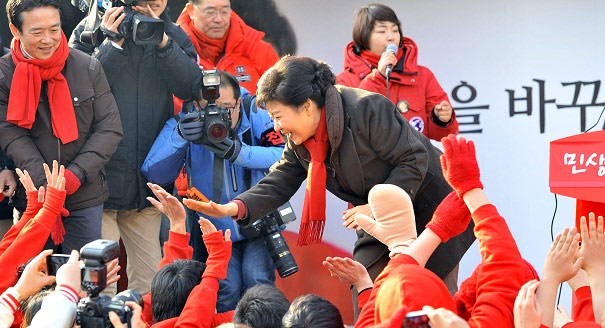
The leading candidates in South Korea’s election have been running to the middle, but they have different approaches to Seoul’s relations with North Korea and the United States.
South Koreans head to the polls this week to elect a new president just one week after the international community condemned Pyongyang for its successful rocket launch. In a Q&A, James L. Schoff previews the election and its significance for the South’s foreign policy. Schoff says the two leading candidates have been running to the middle to attract swing voters, but they still have different approaches to Seoul’s relationship with North Korea and its alliance with the United States.
The two leading candidates are Park Geun-hye of the ruling conservative party, Saenuri or New Frontier, and Moon Jae-in of the opposition Democratic United Party (DUP). Moon became the frontrunner on the left after independent candidate and popular businessman Ahn Cheol-soo dropped out of the race a few weeks ago.
After all three debates, Park is polling slightly ahead of Moon. But it is extremely close, and the race has tightened as people prepare to head to the polls on Wednesday.
A minor leftwing candidate, Lee Jung-hee, quit the race on Sunday, urging her supporters to vote for Moon. Lee attracted only around 1 percent of voters, but even that could make a difference. It is that close.
Park and Moon have marched to the middle to pick up swing voters. While there are certainly subtle differences between them, they are both generally talking about social welfare, fairer economic opportunities, and reigning in the excesses and privileges of the chaebol, conglomerates that dominate many sectors of South Korea’s economy. The candidates have been light on specific policies.
A major focus of the campaign has been the economy and the idea of economic justice or “economic democratization.” But the election is also about personality.
The left is trying to link Park to her father’s past. Her father, Park Chung-hee, seized power in 1961 and established a military dictatorship that lasted for nearly two decades. She has been forced to repudiate some of his policies.
Park has also tried to distance herself from conservative President Lee Myung-bak, currently in office. While Lee has maintained strong relations with the United States and South Korea’s economy survived the global financial crisis relatively well, his popularity keeps dropping. This is partially due to political scandals and questions of corruption, but it is also because of the widespread belief that economic growth came at the expense of economic equality.
The conservatives, meanwhile, are trying to tie Moon to former president Roh Moo-hyun. Moon served as Roh’s chief of staff and the right argues that Moon is weak on North Korea and naïve on the economy.
But even as the two candidates run to the middle, this election is still about two different ways of handling North-South relations and managing the U.S. alliance. Their approach to these issues would be quite different.
Despite the North’s rocket launch that put a satellite into orbit, I think we are going to see a major new engagement effort in 2013 regardless of who wins in South Korea. Pyongyang’s actions should certainly be condemned, but the international community is doing itself a disservice if it pushes the young leader Kim Jong Un to find another way to demonstrate his power domestically, like another nuclear test.
Applying pressure on North Korea over the last five years has been the appropriate route given the politics in Seoul and because there was no partner for peace in Pyongyang. And the North’s actions in 2010, when it shelled a South Korean island, shut the door to talks completely.
But if there is an opening to reduce the North’s provocative behavior and expand engagement, it should be explored. There may soon be an opportunity to diversify the discussion to include economic issues and cultural exchange.
Whether Park or Moon comes out on top, the political environment in Seoul will be more open to this provided that North Korea doesn’t do something worse in the next few months. The election will help determine how far and how fast this process will go.
Both will look to reengage with Pyongyang, but Moon will push things along much faster. He wants to make the relationship less dependent on reciprocity and wants to demonstrate to the North that he is serious about reconciliation.
Still, there is no indication that Moon will go so far as to put the nation at risk. The danger here is that North Korea might believe it can divide South Korea from its friends by taking steps that provoke the United States and Japan—such as long-range missile tests—while promoting North-South dialogue.
The United States, Japan, and South Korea need to stay as united as possible on policy toward North Korea.
There is the potential for ties with Japan to improve and there is no ideological hurdle that would prevent Park or Moon from reaching out to Tokyo.
But with the conservative Liberal Democratic Party’s recent victory in Japan’s parliamentary elections, it will be easier to get the relationship back on track if Park wins. Moon would face greater pressure to respond to any rhetoric coming out of Tokyo because he is already concerned about looking weak. And this could derail opportunities to tighten bilateral relations.
The United States will maintain good relations with South Korea under either a Park or Moon presidency. But I think Washington would be more comfortable with the conservative candidate, Park, as there would be more continuity.
President Obama enjoys a strong relationship with Lee Myung-bak, while Washington’s relations with the Roh Moo-hyun administration were more strained. With that said, there was a great deal accomplished during that time, with South Korea sending forces to Iraq and Afghanistan and the negotiation of the free trade agreement. This dispelled the myth that the United States could only get along with the conservatives.
Both candidates want to be a little more independent from the United States, or at least perceived to be. Neither will rush into the Trans-Pacific Partnership, a free trade initiative in the Asia-Pacific region, or other U.S.-led initiatives.
But Washington will need to make less of an adjustment with Park. While Park has indicated that she will take a more conciliatory approach with North Korea, the United States is comfortable that Park will increase engagement at a slower pace. Under Park, the free trade agreement will be trumpeted and it will be easier to negotiate a new agreement on host-nation support for U.S. military forces.
Moon has talked about the importance of the U.S. alliance, saying it is critical to maintain. But the left has also attacked the free trade agreement and will push the tempo of engaging Pyongyang faster than Washington may be comfortable with.
The United States should use the vision statement of 2009 as the basis for bilateral relations going forward. This should not just be seen as a product of the presidents of the time, but used as a pillar for deepening the relationship. Washington has effectively used similar seminal documents in its relationship with Japan, but this kind of continuity has been missing in ties with Seoul. This is a good vision to build on regardless of who wins South Korea’s election.

Former Senior Fellow, Asia Program
James L. Schoff was a senior fellow in the Carnegie Asia Program. His research focuses on U.S.-Japan relations and regional engagement, Japanese technology innovation, and regional trade and security dynamics.
Recent Work
James L. Schoff, Douglas E. Rake, Joshua Levy
James L. Schoff
Carnegie India does not take institutional positions on public policy issues; the views represented herein are those of the author(s) and do not necessarily reflect the views of Carnegie, its staff, or its trustees.

This piece examines India’s response to U.S. sanctions and tariffs, specifically assessing the immediate market consequences, such as alterations in import costs, and the broader strategic implications for India’s energy security and foreign policy orientation.

Vrinda Sahai
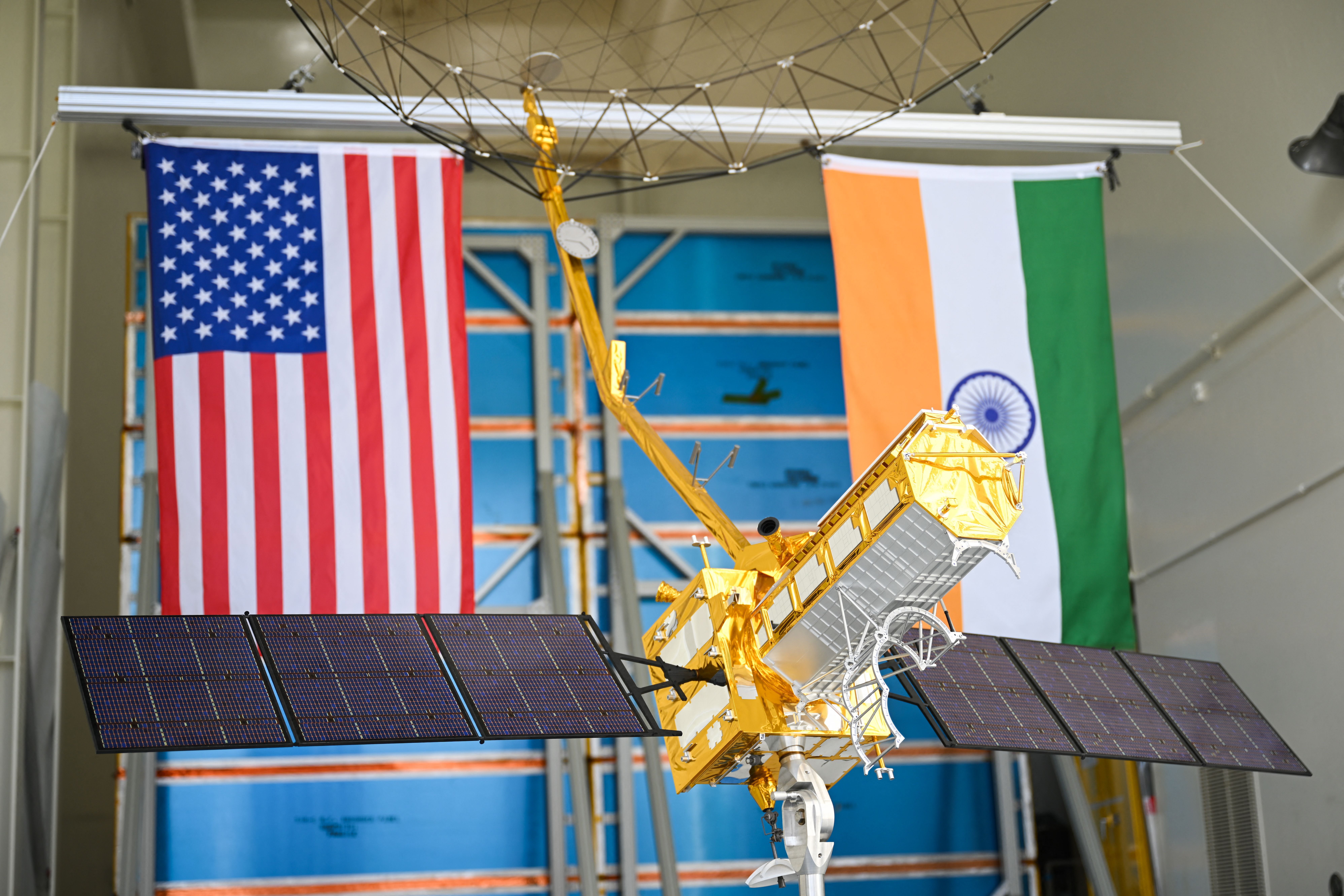
On July 30, 2025, the United States announced 25 percent tariffs on Indian goods. While diplomatic tensions simmered on the trade front, a cosmic calm prevailed at the Sriharikota launch range. Officials from NASA and ISRO were preparing to launch an engineering marvel into space—the NASA-ISRO Synthetic Aperture Radar (NISAR), marking a significant milestone in the India-U.S. bilateral partnership.

Tejas Bharadwaj
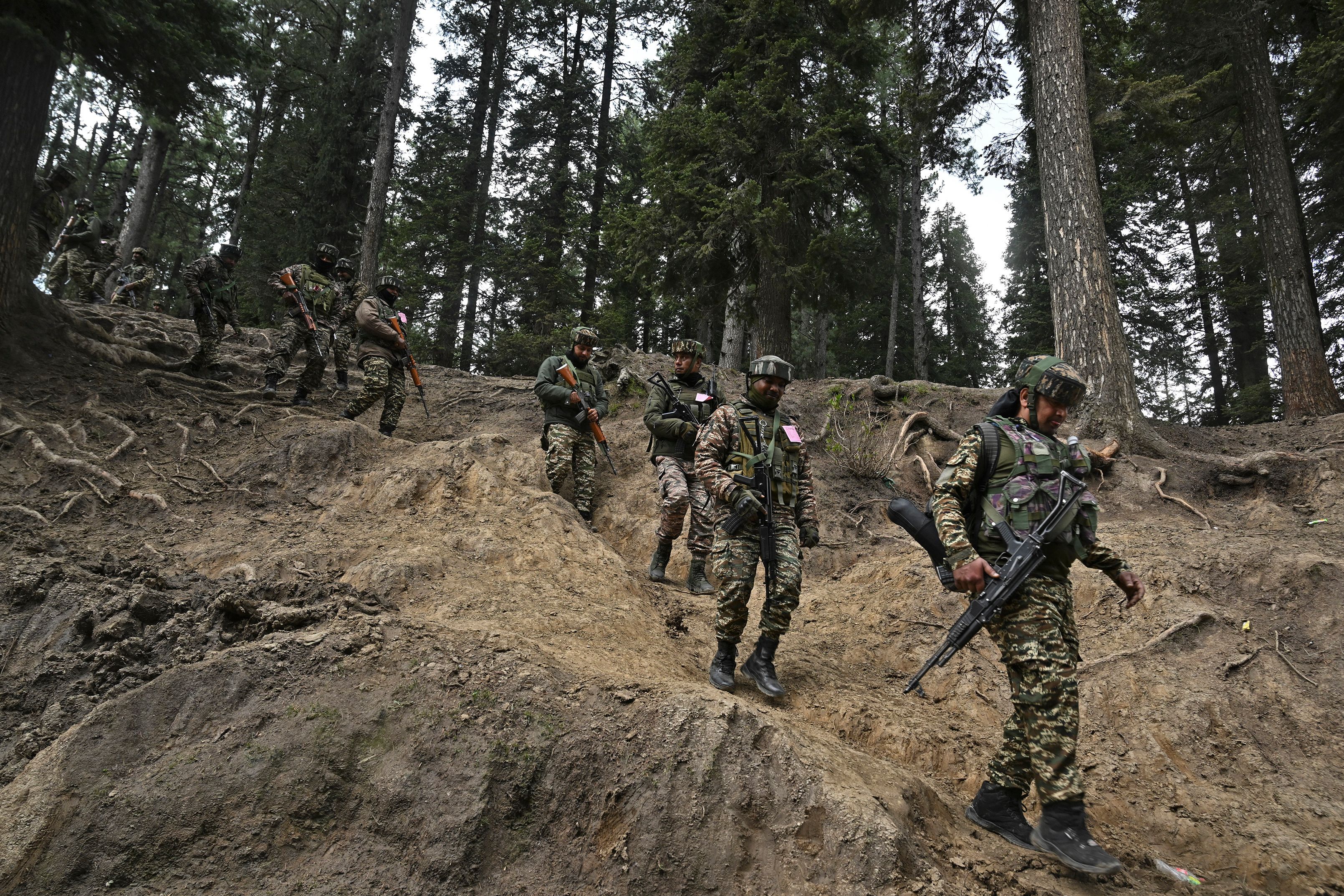
On May 7, 2025, between 1:05 and 1:30 a.m. (IST), airstrikes carried out by the Indian Air Force hit nine locations inside Pakistan and Pakistan occupied Kashmir (PoK). It was codenamed Operation Sindoor.

Rudra Chaudhuri
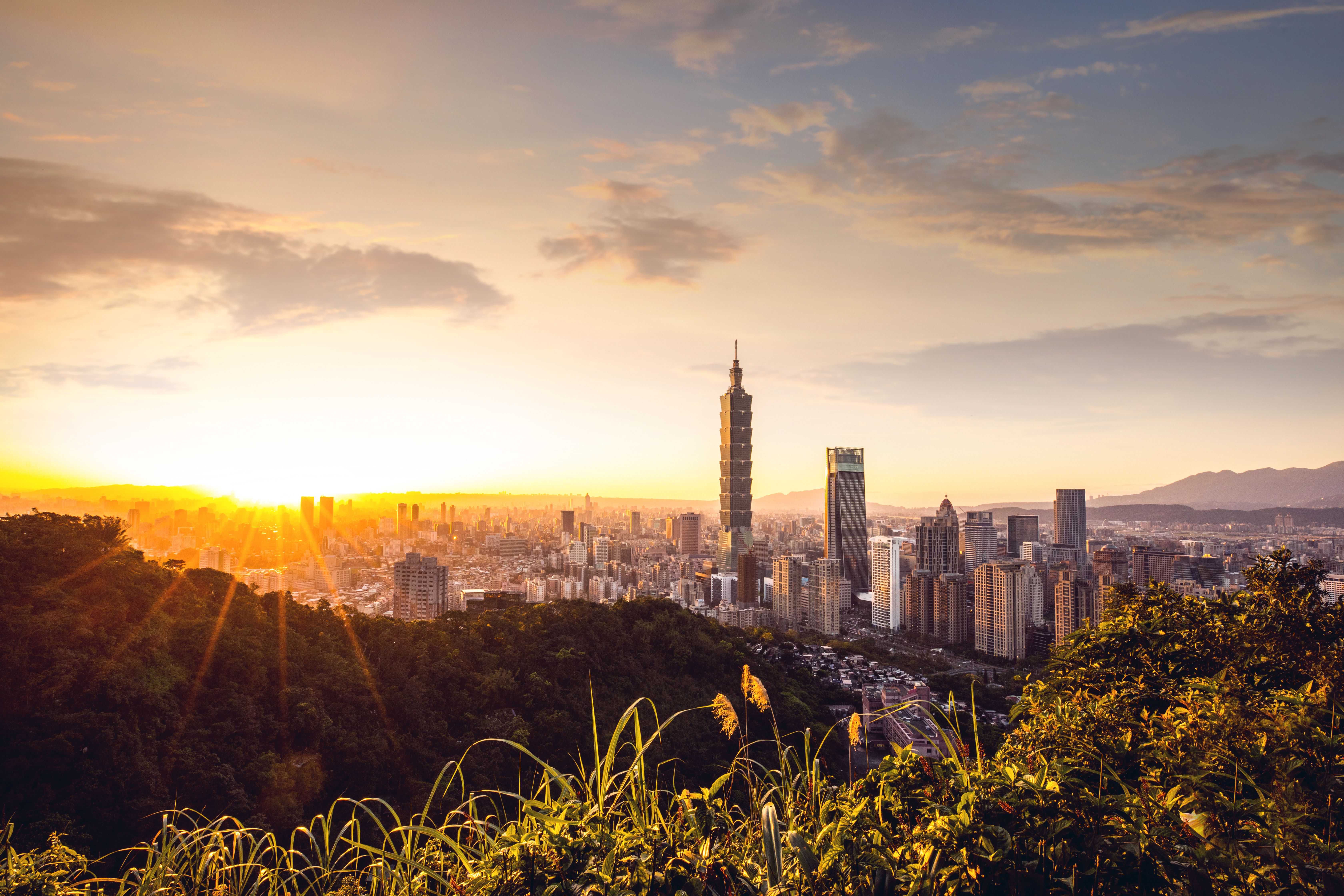
This compendium brings together three essays by scholars who participated in Carnegie India's Security Studies Dialogue in 2024, each examining a different aspect of China’s policies. Drawing on their expertise and research, the authors offer fresh perspectives on key geopolitical challenges.
Vijay Gokhale, Suyash Desai, Amit Kumar, …

As part of the TRUST initiative, leaders of the two countries committed to building trusted and resilient supply chains, including for semiconductors and critical minerals. India and the United States have made steady progress in this area over the years. This essay explores the takeaways from discussions on semiconductor supply chains that took place at Carnegie India’s 9th Global Technology Summit.

Konark Bhandari