

Paper
David Burwell
{
  "authors": [
    "David Burwell"
  ],
  "type": "legacyinthemedia",
  "centerAffiliationAll": "dc",
  "centers": [
    "Carnegie Endowment for International Peace"
  ],
  "collections": [],
  "englishNewsletterAll": "ctw",
  "nonEnglishNewsletterAll": "",
  "primaryCenter": "Carnegie Endowment for International Peace",
  "programAffiliation": "SCP",
  "programs": [
    "Sustainability, Climate, and Geopolitics"
  ],
  "projects": [],
  "regions": [
    "North America",
    "United States"
  ],
  "topics": [
    "Climate Change"
  ]
}
Source: Getty
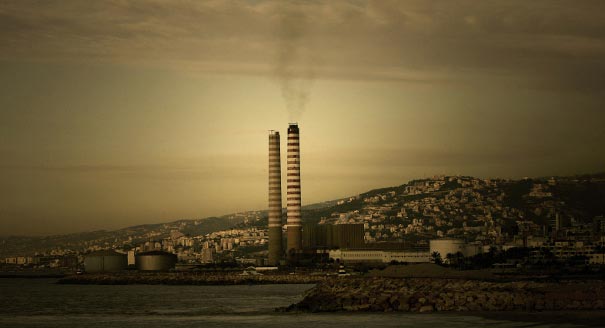
Today's impasse in energy and cliamte policy in the United States presents an opportunity for presidental leadership as unconventional energy geographies shift to North America.
Source: E&E TV

David Burwell: It's great to be here.
Monica Trauzzi: David, you've written a new piece along with Deborah Gordon on the challenges to managing the unconventional oil and gas bonanza. Why do you believe that Presidential leadership is key here when much of what needs to happen needs to come out of the legislative branch, where we're seeing a whole lot of partisanship right now?
David Burwell: Well, I think there is a strong opportunity for Presidential leadership, because of the impasse we do have in energy and climate policy here in the United States. And it's much better to do it in a time of energy abundance, when we have time to be self-reflective, than, you know, when we're in a panic, as opposed to a trance. And, you know, we want energy, and we'll get it any way we can. So that's the time now when we have the blessing of these new energy resources for the President to take a leadership role in energy policy and climate policy.
Monica Trauzzi: So what then would you consider the President's greatest opportunity on energy during his second term?
David Burwell: Well, number one is to have a self-reflective, proactive energy policy. He can establish both and integrate energy concerns and climate concerns. The opportunities for the United States with this energy abundance are tremendous. It's great for our, you know, economic competitiveness. It's great for our trade balances. It projects our power in the world with energy abundance. So it's a good time for the President to directly establish a national energy and a climate policy, because there are conflicts between the two.
Monica Trauzzi: And let's talk about that climate piece. This is central to the discussion. You're talking about a transparent carbon pricing structure that advances national energy, economic, and climate security. The US has been unsuccessful at trying to move forward with cap and trade, carbon tax. What makes you think that something different might happen over the next four years?
David Burwell: I think it's because there is an imperative now because of the oil and the energy abundance, that we have to have this policy. The downside of oil and abundance and, oil and gas abundance is great volatility in the markets. You know, energy booms always tend to be followed quite soon by their evil twin, which is, you know, the energy bust. So you have panic, trance. You have volatile markets which can destroy our investments in alternative energy, for example, and can cause disruptions in the market. So now is a good time to establish a carbon price for energy.
Monica Trauzzi: MIT recently reported that the entire natural gas system was driving up methane emissions. So is there an effective way to tap into all of our US domestic energy resources, which are rapidly being discovered, while still protecting the climate? Can you do both?
David Burwell: Yeah. You definitely can do both, and you're correct that each of these resources has opportunities and challenges. And natural gas, for example, the fugitive emissions problem which was pointed out in the MIT study, is a problem. Also, if you're, you know, for protecting the climate, while natural gas is displacing coal, it's also so cheap that it's displacing nuclear, which is a zero carbon source of energy. So another reason for having a carbon price is to be able to stabilize the market, set a particular price on carbon, and that's another good point, that the oils that are coming on, these unconventional oils, are, vary greatly in carbon intensity. Some of them from, you know, the northern parts of Canada, for example, can have emissions that are in their total life cycle, you know, greater than coal. So, and some of them are very light, more like natural gas.
Monica Trauzzi: So would that then mean that setting that carbon pricing structure would take some of these unconventional sources out of the running, that they wouldn't be able to be developed because there's a price on carbon?
David Burwell: All right. I mean, I think we do have to prioritize. We're so, you know, blessed with this abundance that it's time to prioritize which of these fossil fuels we use, and then also which type of alternative energies we promote. And the carbon intensity of some of these has to be addressed. We do in fact now globally have enough fossil fuels to vastly exceed the ability of the atmosphere to absorb the carbon, so we have to make some choices about which fuels we use, which fuels we, what uses we put them to. There are noncombustible uses of fossil fuels. And then which we, you know, hold in reserve for the far future.
Monica Trauzzi: So this is not about Keystone, but there is a political element here when we talk about something like the Keystone proposal. Do we explore all these different sources, oil sands, shale gas, despite the fact that there could be some long-term consequences on the environment? So on Keystone specifically, oil sands, what's the future there?
David Burwell: Well, that's a very interesting question, and, you know, the Keystone question, permit issue has to be based on what's in the national interest. And so we have both the energy interest and we have the climate interest and we have the impacts on, you know, the locations where the pipeline goes through. Our report is not about Keystone. Our report is about, you know, these new energy sources generally, and the need to look very closely at both the carbon intensity of these fuels and how they're used and distributed. And it is possible to select different uses. Petrochemicals, for example, the industry is, takes a lot of oils, but they don't combust them, so that's good. That industry itself, which had moved offshore, is coming back. So those issues should all be discussed, we think, in the question of where we source our fossil fuels and how we use them.
Monica Trauzzi: All right. We'll end it right there. Thank you for coming on the show. Nice to see you.
David Burwell: Thank you.
Monica Trauzzi: And thanks for watching. We'll see you back here tomorrow.
Former Nonresident Senior Fellow, Energy and Climate Program
Burwell focused on the intersection between energy, transportation, and climate issues, as well as policies and practice reforms to reduce global dependence on fossil fuels.
Recent Work
David Burwell
David Burwell
Carnegie India does not take institutional positions on public policy issues; the views represented herein are those of the author(s) and do not necessarily reflect the views of Carnegie, its staff, or its trustees.

How is AI reshaping space security, creating governance challenges, and where does international diplomacy stand today?


Tejas Bharadwaj, Almudena Azcárate Ortega

The U.S.–India semiconductor cooperation story is well-stocked with top-level strategic intent. What remains unresolved, however, are some underlying challenges that will determine whether the cooperation actually functions. Three such friction points stand out.

Shruti Mittal

India and the United States are close to concluding a Reciprocal Defense Procurement Agreement (RDPA) that will allow firms from the two countries to sell to each other’s defense establishments more easily. While this may not remedy the specific grievances both sides may have regarding larger bilateral issues, an RDPA could restore some momentum, following the trade deal announcement.

Konark Bhandari

On the last day of the India AI Impact Summit, India signed Pax Silica, a U.S.-led declaration seemingly focused on semiconductors. While India’s accession to the same was not entirely unforeseen, becoming a signatory nation this quickly was not on the cards either.
Konark Bhandari

This piece examines India’s response to U.S. sanctions and tariffs, specifically assessing the immediate market consequences, such as alterations in import costs, and the broader strategic implications for India’s energy security and foreign policy orientation.

Vrinda Sahai