

Article
Deborah Gordon, Stephen D. Ziman
{
  "authors": [
    "Deborah Gordon"
  ],
  "type": "legacyinthemedia",
  "centerAffiliationAll": "dc",
  "centers": [
    "Carnegie Endowment for International Peace"
  ],
  "collections": [],
  "englishNewsletterAll": "ctw",
  "nonEnglishNewsletterAll": "",
  "primaryCenter": "Carnegie Endowment for International Peace",
  "programAffiliation": "SCP",
  "programs": [
    "Sustainability, Climate, and Geopolitics"
  ],
  "projects": [
    "Carnegie Oil Initiative"
  ],
  "regions": [
    "North America",
    "United States"
  ],
  "topics": [
    "Climate Change"
  ]
}
Source: Getty
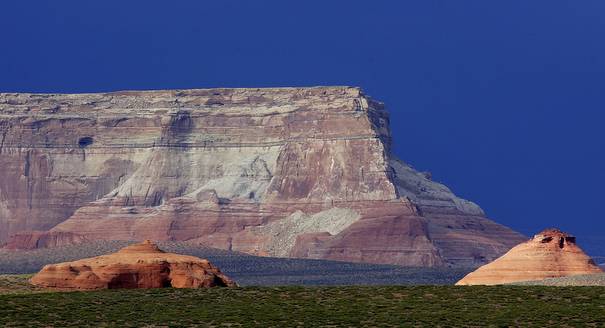
The climate conditions in the western United States should serve as a reminder that it is best to be deliberate and prudent on unconventional oil development their larger implications are fully understood.
Source: Huffington Post

It has been well-documented that the western states of the U.S. are a prominent source of three unconventional oil types -- oil shale, oil sands, and shale oil. Oil shales (kerogen) are high-carbon, energy-intensive, and expensive immature oil sources. Oil sands (bitumen) are extra-heavy, coal-like, ancient oil sources. Tight shale oils are conventional lighter crudes trapped in rocks and extracted through new techniques of hydraulic fracturing and horizontal drilling.
After decades of declining production, these unconventional oils led to the U.S. experiencing its third consecutive year of oil production growth in 2011. U.S. and Canadian oil production combined are projected to increase by 3 million barrels per day (MBD) by 2016, reaching 12 MBD and surpassing the previous record of 11 MBD set in 1973. The Energy Information Administration projects that, by 2035, oil production in the U.S and Canada could soar as high as 20 MBD.Western Lands, both in the Rocky Mountain and High Plains states, could be an increasingly active area for these oil drilling and production activities. Four plays feature prominently on public and private lands: tight oils from Niobrara play in the central Rockies, which spans Colorado, Nebraska, and Wyoming; oil sands and oil shales in the Uinta Basin from Utah into western Colorado; various oils flowing into the Rocky Mountain region from the Williston Basin tight oil, which includes the Bakken formation that stretches from the Dakotas, into Montana, and northwest into Saskatchewan; and interplay between the Williston and the agglomeration of other oil plays in the Central Rockies and up into Alberta.
By 2016, the Williston alone is projected to be pumping 1.4 MBD while the Niobara could be one-third these rates. If producers continue to unlock these and other oil resources, production growthcould accelerate even faster. In the absence of national climate policy and other sound state and regional guidance, decisionmaking by energy companies will retain its focus on profit, indifferent to carbon dioxide emissions and inhospitable climate conditions.
The climate implications of these high-carbon oils have not been fully assessed or adequately addressed. For example, in the November 2012, Environmental Impact Statement for developing oil shale and oil sand resources on Western public lands, the Bureau of Land Management concluded that, while "activities associated with oil shale and tar sands development would contribute to overall atmospheric greenhouse gas emissions, it is not possible at this time to predict either the specifics of those emissions, or how they might result in specific climate change related impacts."
In the context of optimism about North America's newfound oil potential, climate change concerns must be an important factor in policymaking. This is part of the dynamic with the Keystone XL pipeline, where there is pressure from industry for government permitting and private investment to be expedited that would risk locking in massive carbon emissions over the long term. When it comes to Western Lands' oil development, there is also discussion about delegating authority to the state-level, but, especially in a region under stress -- as is the case with this drought-afflicted region -- federal oversight for complex and far-reaching resource management remains crucial.
The fact that climate impacts are not adequately addressed as part of requisite environmental reviews underscores that the connection between oil development and climate change must be overseen at a higher level -- through a new national energy policy. The climate conditions on Western Lands should serve as a reminder that it is best to be deliberate and prudent on unconventional oil development until Americans have reflected on the larger implications of their actions, especially on public land where the government has greater control and primary responsibility.
Important choices need to be made in the area of unconventional oils in order to ensure resource exploitation on Western Lands doesn't lead to a host of regional climate impacts. Farm failures, water shortages, reduced crop yields, strained family budgets, and safety concerns on Western Lands are a harbinger of what could be ahead. Against this backdrop is it in the national interest to fast-track federal leasing on public lands, minimize policy oversight on private lands, or permit massive infrastructure investments that lock-in resource development patterns?
The array of new oils vying for market position in the United States, Canada and worldwide, offer new opportunities. They also require informed and strategic new policies to guide oil development and use. Limiting use of oils with the largest climate impact is critical. Doing so will require a full understanding of the particular characteristics of an expanding slate of oils, their emerging extraction and processing techniques, and shifting co-product yields.
Regulations will be important to standardize best practices and mandate efficient use. But effective mechanisms for pricing carbon will be required to monetize the trade-offs as to which oils to produce and which should remain in the ground, as well as how to use all oils most efficiently.
The article originally appeared in the Huffington Post on December 12, 2012.

Former Director and Senior Fellow, Energy and Climate Program
Gordon was director of Carnegie’s Energy and Climate Program, where her research focuses on oil and climate change issues in North America and globally.
Recent Work
Deborah Gordon, Stephen D. Ziman
Deborah Gordon, Smriti Kumble, David Livingston
Carnegie India does not take institutional positions on public policy issues; the views represented herein are those of the author(s) and do not necessarily reflect the views of Carnegie, its staff, or its trustees.

The U.S.–India semiconductor cooperation story is well-stocked with top-level strategic intent. What remains unresolved, however, are some underlying challenges that will determine whether the cooperation actually functions. Three such friction points stand out.

Shruti Mittal

India and the United States are close to concluding a Reciprocal Defense Procurement Agreement (RDPA) that will allow firms from the two countries to sell to each other’s defense establishments more easily. While this may not remedy the specific grievances both sides may have regarding larger bilateral issues, an RDPA could restore some momentum, following the trade deal announcement.

Konark Bhandari

On the last day of the India AI Impact Summit, India signed Pax Silica, a U.S.-led declaration seemingly focused on semiconductors. While India’s accession to the same was not entirely unforeseen, becoming a signatory nation this quickly was not on the cards either.
Konark Bhandari

This piece examines India’s response to U.S. sanctions and tariffs, specifically assessing the immediate market consequences, such as alterations in import costs, and the broader strategic implications for India’s energy security and foreign policy orientation.

Vrinda Sahai

On July 30, 2025, the United States announced 25 percent tariffs on Indian goods. While diplomatic tensions simmered on the trade front, a cosmic calm prevailed at the Sriharikota launch range. Officials from NASA and ISRO were preparing to launch an engineering marvel into space—the NASA-ISRO Synthetic Aperture Radar (NISAR), marking a significant milestone in the India-U.S. bilateral partnership.

Tejas Bharadwaj