

Commentary
Dmitri Trenin
{
  "authors": [
    "Dmitri Trenin"
  ],
  "type": "legacyinthemedia",
  "centerAffiliationAll": "",
  "centers": [
    "Carnegie Endowment for International Peace",
    "Carnegie Russia Eurasia Center"
  ],
  "collections": [],
  "englishNewsletterAll": "",
  "nonEnglishNewsletterAll": "",
  "primaryCenter": "Carnegie Russia Eurasia Center",
  "programAffiliation": "",
  "programs": [],
  "projects": [],
  "regions": [
    "North America",
    "United States",
    "Russia"
  ],
  "topics": [
    "Foreign Policy"
  ]
}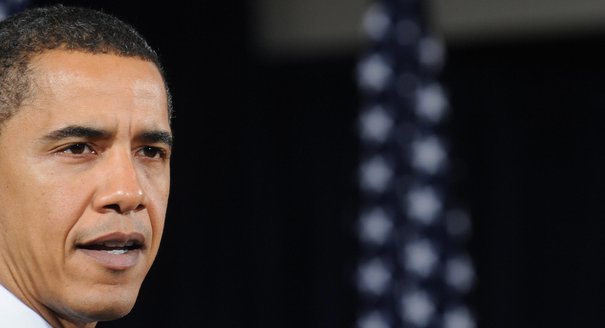
Source: Getty
Washington ignores Russia’s obsession with the United States at its own peril.
Source: Foreign Policy

In 2012, this seemingly sensible approach failed spectacularly. The election year changed more than just the atmospherics of U.S.-Russian relations, and the change is a lasting one. This is due to something virtually unprecedented: the invasion of the exclusive world of U.S.-Russian diplomacy by Russian domestic politics. The only other time this has happened was in 1917. With the elections in both countries over, this invasion is turning into a permanent occupation, with disciplined diplomats being joined in the field by assorted groups of politicians and political activists with their special agendas. This makes both the substance and the structure of bilateral relations unrecognizable.
It all began with the flawed Duma election in December 2011, in which the opposition accused the Kremlin of vote-rigging. This sparked mass protests in Russia and provoked Vladimir Putin to publicly accuse the U.S. State Department of interfering in Russian politics. Some of Putin's supporters even suspected Michael McFaul, the newly appointed U.S. ambassador to Russia, of having a hidden agenda to promote a "Russian Spring." When Putin was celebrating his victory at the polls in March 2012, there were tears in his eyes. The Russian leader apparently believed he had just triumphed not only over his domestic opponents, but, more importantly, their "American paymasters."The Obama administration was mildly shocked but took this in stride. It did not retaliate over McFaul's harassment in Moscow. It simply took note of the new Russian legislation branding foreign-funded NGOs as "foreign agents" and accepted Moscow's decision to terminate long-standing U.S. assistance programs, under both the Agency for International Development and the Nunn-Lugar Cooperative Threat Reduction initiative. There was some anti-Russian rhetoric in the U.S. presidential campaign, but it came from Republican candidate Mitt Romney, who used it to attack Obama's reset with Russia. The Democrats defended their record, and portrayed Romney as lost in a time warp.
Then came the Magnitsky Act, which barred officials implicated in the detention and death of corporate lawyer Sergey Magnitsky from entering the United States or keeping assets there. The act also kept the list of proscribed persons open, allowing the United States to add nearly any Russian official described as a human rights offender. Its drafters must have been genuinely concerned about justice and human rights in Russia and believed that their legislation would help. The majority of senators and members of Congress who supported the bill, however, did so out of sheer indifference toward relations with Russia. The Kremlin made it clear it would retaliate, but the Hill was not impressed.
In most cases, legislation singling out a particular state for punishment would mobilize those who care about relations with that country -- to make sure that support for human rights does not adversely affect U.S. national interests. But, in the Magnitsky case, Russia was revealed as fair game for all those who want to make a point for free. To believe that the Magnitsky Act will help is to believe that the higher the tensions in Russia and between Washington and Moscow, the sooner the end of the Russian autocracy. This is a huge gamble.
The anti-Magnitsky act passed by the Russian parliament in December 2012, which further restricted already battered Russian NGOs and ended the two-decades-long practice of allowing Americans to adopt Russian orphans, reflected the opposite attitude. Instead of indifference, it showed obsession with the United States, its role in the world, and its impact on Russia. Challenged by urban protesters representing the modernizing element in Russian society, the Kremlin and its allies visibly moved toward traditionalism and conservatism. The official patriotism that the more active members of this camp promote is now based on anti-Americanism. Contemporary Russian anti-Americanism is not a product of the anti-Magnitsky law, but it was greatly magnified by it. The moderates are running for cover.
The political situation in Russia remains fluid. The recent awakening that enabled Russian society to drive domestic change has empowered very different forces, from libertarians to fundamentalists. As they strive to promote widely diverging visions of Russia's future, they will all appeal to the United States. Liberals believe that the West, and the United States in particular, can at minimum "lead by example" and be a model for Russia. Some among them hope that Western pressure on Russian elites -- in the form of the Magnitsky Act -- can do what domestic opposition cannot: make Russian rulers respect Russian law. Conservatives and traditionalists, by contrast, are seeking to turn the United States into a bogeyman, and make their liberal and socialist opponents look unpatriotic by association. Strikingly, attitudes toward the United States have become a great divide in Russia's domestic politics.
In the future, the groups in Congress that initiated the Magnitsky Act are likely to capitalize on their success and demand that the sanctioned persons' lists be made public and expanded. Continued general indifference toward relations with Russia and the disastrous public image of the Russian state and its leaders would facilitate that task. In response, the Russian Duma may come up with another asymmetrical measure, designed to hurt U.S. interests as hard as it can. When defending U.S.-Russian relations on either end appears too politically costly, the action-counteraction logic may eventually spin the relationship out of control.
Indifference and obsession are notoriously difficult to marry, but this combination is the new essence of U.S.-Russian relations. Of course, diplomats will not sit idle. Washington and Moscow have their lists of issues where cooperation is both desirable and possible. It has to be noted that, throughout 2012, the transit of supplies across Russia to Afghanistan was never in danger. Russia remains part of the international non-proliferation effort with regard to both Iran and North Korea. President Putin may decide not to skip this year's G-8 summit as he did the last one at Camp David, and President Obama will probably travel to St. Petersburg for next September's G-20. However, all this will be of secondary importance. With Russian politics having massively invaded U.S.-Russian relations, the United States has become a major issue in Russian politics.
Ironically, this may go unnoticed in the United States, where Russia has slipped below the radar screen as a country in steady and inexorable decline. Washington no longer sees Moscow as an indispensable partner, as it did four years ago when the Obama team was figuring out how to deal with Afghanistan, Iraq, and Iran. On a wide range of issues of prime importance to U.S. foreign policy, Russia is either irrelevant or irritating, or both. Russian domestic developments, despite the Kremlin's fantasies, are of little or no concern to U.S. policymakers. As a result, there is a temptation, intensely felt by the architects of the reset, to simply ignore Russia and walk past it. Of course, diplomatic routine will not stop, but there is waning interest for real engagement.
"Strategic indifference" may indeed become the new normal in U.S. policy towards Russia, and it may have its merits. It needs to be remembered, however, that such an approach does not mean Washington can have no policy toward Moscow. True, as the Obama administration enters its second term, Russia is not central to U.S. concerns and is not a particularly promising partner. However, as an independent player with some power, its moves on the international stage are not without consequence in a long list of arenas, from Asia-Pacific to Afghanistan to the Arctic; from natural resources to nuclear weapons; and from climate change to cyber. Looking into the future, it is also a country undergoing a thrilling domestic shift, especially at the level of society -- even if the prevailing stereotype is that of an immutable, though shrinking mass, destined for inevitable decline. And the United States needs to be aware of its larger-than-life role inside Russia, and be careful about handling itself there. Indifference may be okay, but it still requires a strategy.
Former Director, Carnegie Moscow Center
Trenin was director of the Carnegie Moscow Center from 2008 to early 2022.
Recent Work
Dmitri Trenin
Dmitri Trenin
Carnegie India does not take institutional positions on public policy issues; the views represented herein are those of the author(s) and do not necessarily reflect the views of Carnegie, its staff, or its trustees.

This piece argues that India’s central challenge is not managing a single flashpoint but resolving the underlying tension between expansion and institutional coherency of the BRICS grouping.

Vrinda Sahai

A partnership between India, a country of subcontinental size, and Africa, a continent of fifty-four countries, may seem asymmetric until one notes that both are home to nearly the same number of people—1.4 billion. This essay spells out the existing challenges to the partnership, its optimal potential, and the possible pathways to realize it over the next quarter-century.

Rajiv Bhatia

The U.S.–India semiconductor cooperation story is well-stocked with top-level strategic intent. What remains unresolved, however, are some underlying challenges that will determine whether the cooperation actually functions. Three such friction points stand out.

Shruti Mittal

The India–EU Free Trade Agreement (FTA) is shaping up to be one of the most consequential trade negotiations, both economically and strategically. But, what’s in the agreement, what’s missing, and what will determine its success in the years ahead
Vrinda Sahai, Nicolas Köhler-Suzuki
Trump 2.0 has unsettled India’s external environment—but has not overturned its foreign policy strategy, which continues to rely on diversification, hedging, and calibrated partnerships across a fractured order.



Milan Vaishnav, ed., Sameer Lalwani, Tanvi Madan, …