

Paper
James L. Schoff, Douglas E. Rake, Joshua Levy
{
  "authors": [
    "James L. Schoff"
  ],
  "type": "legacyinthemedia",
  "centerAffiliationAll": "dc",
  "centers": [
    "Carnegie Endowment for International Peace"
  ],
  "collections": [],
  "englishNewsletterAll": "asia",
  "nonEnglishNewsletterAll": "",
  "primaryCenter": "Carnegie Endowment for International Peace",
  "programAffiliation": "AP",
  "programs": [
    "Asia"
  ],
  "projects": [],
  "regions": [
    "North America",
    "United States",
    "East Asia",
    "China",
    "Japan"
  ],
  "topics": [
    "Foreign Policy"
  ]
}
Source: Getty
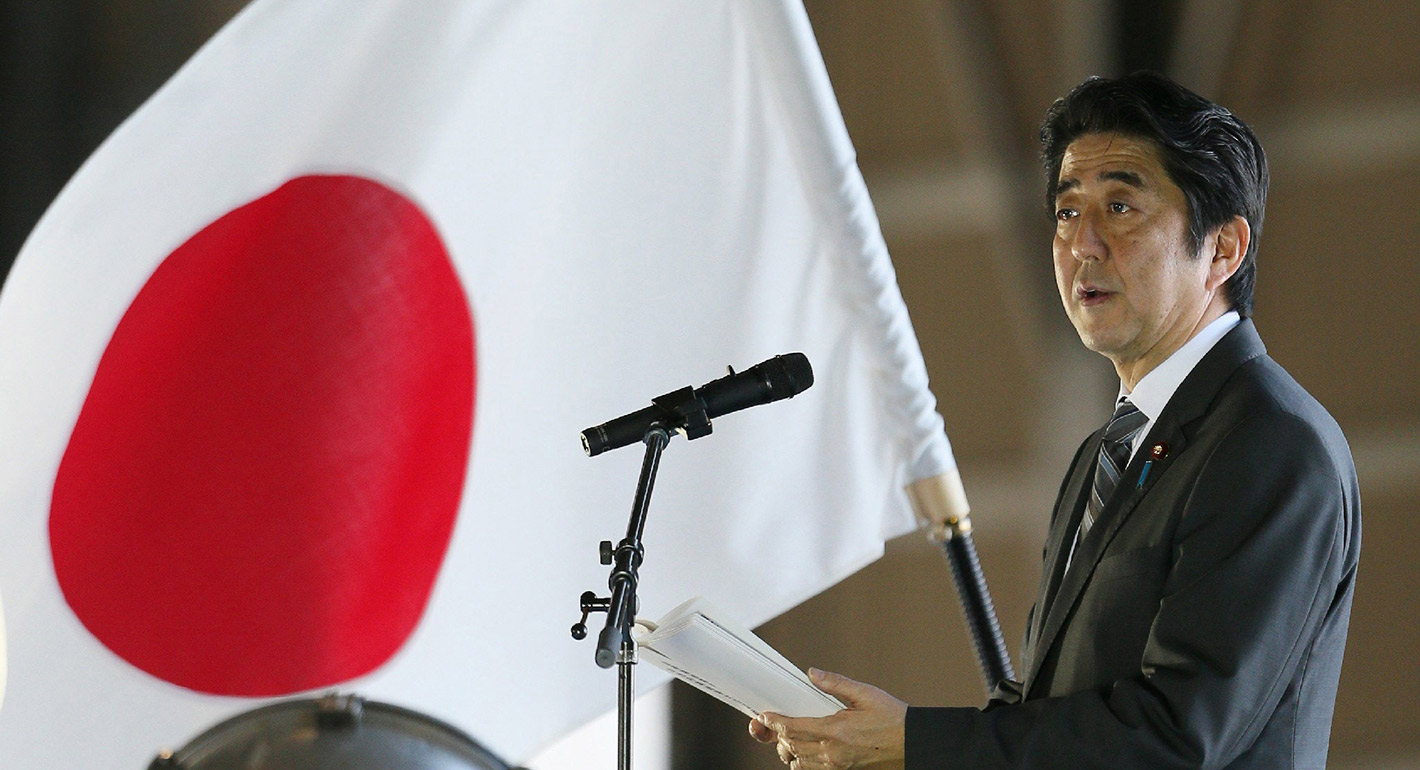
Japanese Prime Minister Shinzo Abe's visit to Washington is a valuable opportunity to envision how to align Japanese and American interests and to achieve the best possible outcomes in their respective dealings with China.
Source: National Interest
The “deliverable” in international diplomacy is akin to budgetary “earmarks” in Congress: not an ideal way to do business, at times even reviled, but everybody does it so they can tout their achievements back home. In my time at the Pentagon preparing for summits, trip planners derided the exchange of diplomatic “gifts” and stressed the need to address vital issues with patient diplomacy. But inevitably the next day they would complain about the lack of deliverables.
This needs to be avoided when Japanese Prime Minister Shinzo Abe visits Washington.
Instead of deliverables, the allies need to prioritize a real strategic discussion. This meeting—the first for Obama and Abe as they begin new terms—should not be transactional or a mere exercise of ticking off scripted talking points.This time, there is a genuine opening to develop a lasting personal relationship that will be essential for ensuring positive developments in Asia. Unlike the last six years (with six different Japanese prime ministers), Abe has a chance to build a political base to stay in office for years. This means there is time to begin working toward a farsighted vision for the region.
Japan is important for U.S. policy in Asia and there is a productive, shared history that Obama and Abe can fall back on to drive things forward.
The U.S.-Japan alliance is over fifty years strong. The two countries are the first- and third-largest economies in the world, and they are among each other’s largest trading partners, with both enjoying extensive business networks in Asia. Pick a category—overseas aid, support for international institutions, or foreign investment—and they are at or near the top. This is an alliance with tremendous potential influence.
But together, the two face many challenges in Asia.
The region is not poor anymore, yet its development has been uneven. While South Korea, Indonesia, Vietnam and others are tremendous economic success stories, many worry about widening income disparity domestically and will do whatever they can to maintain growth—even if it hurts others.
China epitomizes this kind of unbalanced growth. Its economic obsession makes Beijing reluctant to sacrifice industrial production for pollution control or adopt certain international trade practices that could undermine state-owned enterprises.
Maintaining political support from the masses in China also means stoking the fires of nationalism occasionally. Japan discovered this when it purchased small islets in the East China Sea that China claims for its own. It has now become a low-boiling crisis requiring high-level political attention and huge amounts of diplomatic skill to prevent conflict. The primacy of growth and stability for Beijing is also why it does not do more to sanction North Korea for its nuclear weapons and missile programs.
This all points to the need for Washington and Tokyo to find ways to improve relations with China and consider what it will take to ensure stability in Asia. They need to develop win-win relations with China, promote balanced growth and freer trade, mitigate environmental degradation, contain North Korea, and build a rules-based order in Asia backed by effective institutions.
Alas, much media attention on the upcoming summit is focused on short-term deliverables, primarily whether or not Abe will join multilateral negotiations over a free trade agreement championed by the United States. Japanese farmers oppose this, and with Abe preparing for one more legislative election in July, he has limited room to maneuver. The leaders will discuss the idea, of course, but Abe needs more time to act.
They will also confirm a joint response to North Korea’s recent nuclear test and address other issues of the moment. But in the end it’s the long-term solutions that matter more. The meeting is too important to waste on media-friendly sound bites.
All successful high-level meetings I witnessed had one thing in common: a personal connection. This stemmed from leaders putting aside talking points and sharing frank assessments of a policy problem. If you were lucky, they would sketch out the broad outline of a joint strategy that empowered their staffs to take effective next steps.
This is how consensus is forged and tough problems are solved (or at least mitigated). I am not looking for Obama and Abe to become great friends, but I will look for the seeds of a productive working relationship.
The visit is a valuable opportunity to envision how to align Japanese and American interests and to achieve the best possible outcomes in their respective dealings with China. The two need to finds ways to avoid conflict and promote peace, prosperity and stability in Asia. Obama and Abe should think big.

Former Senior Fellow, Asia Program
James L. Schoff was a senior fellow in the Carnegie Asia Program. His research focuses on U.S.-Japan relations and regional engagement, Japanese technology innovation, and regional trade and security dynamics.
Recent Work
James L. Schoff, Douglas E. Rake, Joshua Levy
James L. Schoff
Carnegie India does not take institutional positions on public policy issues; the views represented herein are those of the author(s) and do not necessarily reflect the views of Carnegie, its staff, or its trustees.

How is AI reshaping space security, creating governance challenges, and where does international diplomacy stand today?


Tejas Bharadwaj, Almudena Azcárate Ortega

After the chill in ties between 2020 and 2024 that brought India–China relations to their lowest point in several decades, the two countries have engaged each other afresh. This paper argues that there are predominantly four imperatives guiding India’s approach to China, and they exist in an order of priority.

Saheb Singh Chadha

This piece argues that India’s central challenge is not managing a single flashpoint but resolving the underlying tension between expansion and institutional coherency of the BRICS grouping.

Vrinda Sahai

A partnership between India, a country of subcontinental size, and Africa, a continent of fifty-four countries, may seem asymmetric until one notes that both are home to nearly the same number of people—1.4 billion. This essay spells out the existing challenges to the partnership, its optimal potential, and the possible pathways to realize it over the next quarter-century.

Rajiv Bhatia

The U.S.–India semiconductor cooperation story is well-stocked with top-level strategic intent. What remains unresolved, however, are some underlying challenges that will determine whether the cooperation actually functions. Three such friction points stand out.

Shruti Mittal