

Commentary
Marc Pierini
{
  "authors": [
    "Marc Pierini"
  ],
  "type": "legacyinthemedia",
  "centerAffiliationAll": "",
  "centers": [
    "Carnegie Endowment for International Peace",
    "Carnegie Europe"
  ],
  "collections": [
    "EU Integration and Enlargement",
    "Arab Awakening"
  ],
  "englishNewsletterAll": "",
  "nonEnglishNewsletterAll": "",
  "primaryCenter": "Carnegie Europe",
  "programAffiliation": "",
  "programs": [],
  "projects": [],
  "regions": [
    "Middle East",
    "Europe",
    "Eastern Europe",
    "Western Europe"
  ],
  "topics": [
    "EU",
    "Economy",
    "Political Reform"
  ]
}
Source: Getty
The euro crisis shows that more integration, not less, is indispensable for moving Europe out of the danger zone and ensuring that it remains a beacon of peace and prosperity.
Source: Hurriyet Daily News
Admittedly, the European Union is undergoing a serious financial, institutional and confidence crisis. From banking supervision to the seven-year budget framework, Brussels has been abuzz with financial talks. Meanwhile, the multiple crises (Egypt, Mali, Syria) made one doubt that the European Union matters much in foreign policy. From watching elections in EU member states, most recently in Italy, one is struck by the rejection of the concept of European integration and the rise of populism. Where do we stand?
Today, the European Union is entangled in a historic paradox. On the one hand, the European ideal is deteriorating, largely as a result of the elimination of the prospect of intra-European wars. The most recent economic crisis, with the ensuing responsibility on the richer European states to come to the rescue of the weaker ones, has only amplified the rejection of the European integration process: for the richer, it became too costly, for the weaker it is not enough. In parallel, a growing sense of “re-nationalization” of policy-making has emerged in the past 10 years.
Yet, on the other hand, even if it splits Europe between Eurozone members and others, the financial crisis shows that more integration, not less, is indispensable to move out of the danger zone. This is the direction in which the European Council is working.There is much talk around the notion of a “multi-speed Europe,” which has been in place for quite a while already: the Schengen area, the Eurozone, budget contributions and a host of other policies have been tailored for differentiated memberships. This process is bound to deepen, especially as the United Kingdom is keener than ever to mark its difference with the rest of the Union. The UK will never want to quit the EU altogether, but rather will try to dilute further the concept of European integration. The likelihood is that the European Union will deepen its integration among a selected number of countries, with different sets of members for different policies.
As a result, the European citizen will be confused. Yet, it still realizes that a united Europe stands stronger in today’s world, that its market size, technological level and democratic values remain a force of attraction for many countries.
While the European Union is painfully adjusting to the new world order, what are the prospects of it remaining a beacon of peace and prosperity?
By virtue of its treaties and political commitments (and the nuclear deterrent possessed by two of its member states), the EU stands for peace. Its foreign policy, however blurred it may seem due to the Lisbon Treaty innovations, is aimed at promoting and maintaining peace, at helping economic and social development, and at promoting the fundamental values it believes in.
The EU’s southern neighbors are, globally, undergoing massive social and political changes and witnessing major economic difficulties. Nobody can predict how long the “Arab transition” will last and one can wonder if anybody in Egypt, Syria or Tunisia is interested in “EU fundamental values.” Yet the EU will continue to be their major economic partner and an example of democratic organization. In the near future, the EU needs to streamline its foreign policy mechanisms and articulate its tools in a better fashion in order to support more efficiently the forces of democratization in the Arab world.
As for Turkey, despite all the discontent and strong rhetoric, the EU remains (together with NATO and the U.S. in the domain of security) a strong anchor. As a trading partner, a direct investor, a technology provider, a source of policy reform know-how and a reference for fundamental values, the EU will prove increasingly useful for Turkey. Here too, more EU, not less, is the way forward.
This article was originally published in the Hürriyet Daily News.

Senior Fellow, Carnegie Europe
Marc Pierini is a senior fellow at Carnegie Europe, where his research focuses on developments in the Middle East and Turkey from a European perspective.
Recent Work
Marc Pierini
Marc Pierini
Carnegie India does not take institutional positions on public policy issues; the views represented herein are those of the author(s) and do not necessarily reflect the views of Carnegie, its staff, or its trustees.
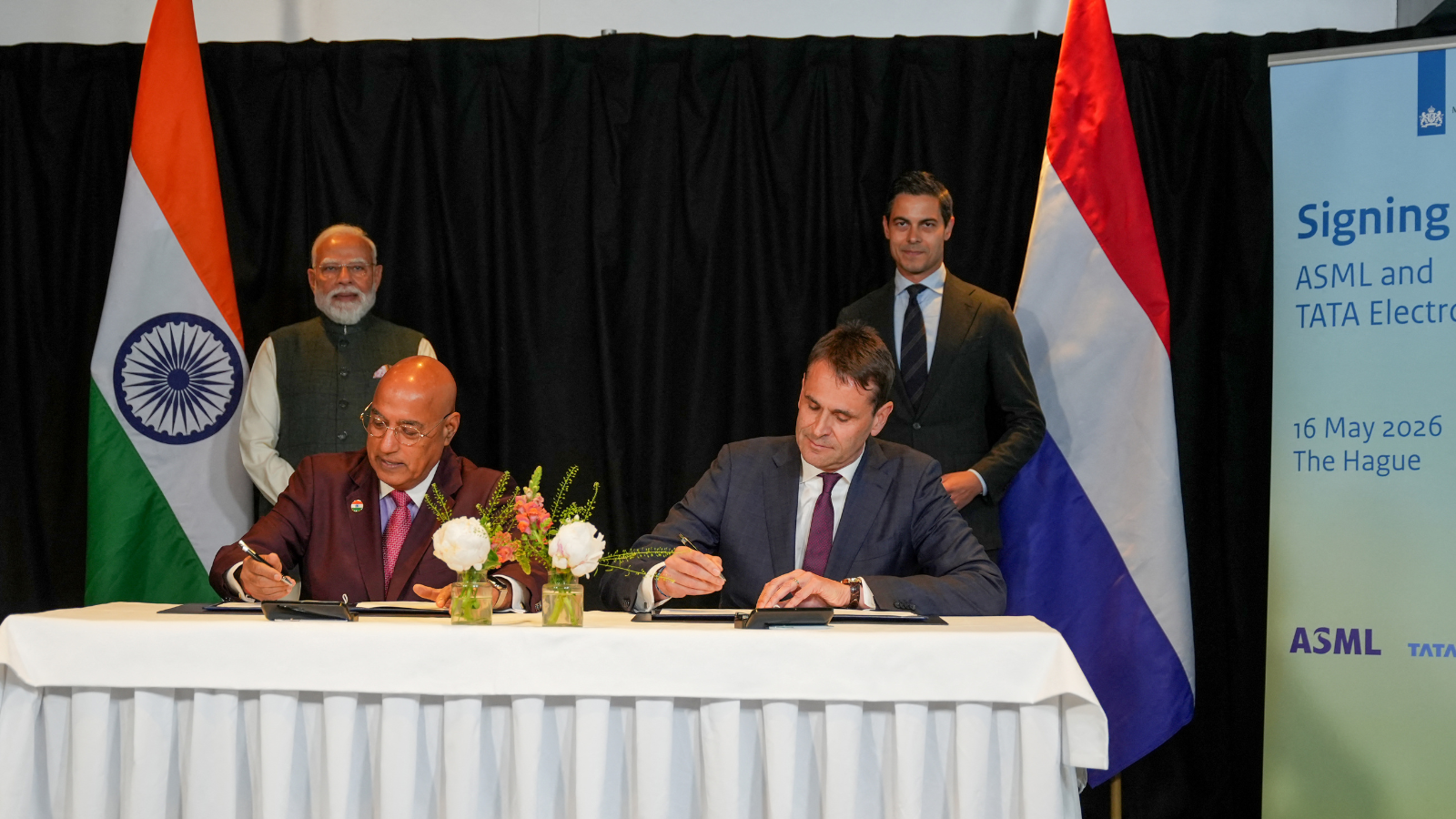
The ASML MoU with Tata Electronics is an indicator of how far the Indian semiconductor ecosystem has come. This ecosystem has been years in the making and represents real commercial logic.

Konark Bhandari

The India–EU Free Trade Agreement (FTA) is shaping up to be one of the most consequential trade negotiations, both economically and strategically. But, what’s in the agreement, what’s missing, and what will determine its success in the years ahead

Vrinda Sahai, Nicolas Köhler-Suzuki

On March 10, 2026, India’s Union Cabinet approved amendments to Press Note 3, a regulation that mandated government approval on all foreign direct investment (FDI) from countries sharing a land border with India. This amendment raises questions primarily about whether its stated benefits will materialize and if the risks have been adequately weighed. This piece will address the same.
Konark Bhandari

This piece examines India’s response to U.S. sanctions and tariffs, specifically assessing the immediate market consequences, such as alterations in import costs, and the broader strategic implications for India’s energy security and foreign policy orientation.
Vrinda Sahai

This paper examines the evolution of India-China economic ties from 2005 to 2025. It explores the impact of global events, bilateral political ties, and domestic policies on distinct spheres of the economic relationship.

Santosh Pai