

Article
C. Raja Mohan, Darshana M. Baruah
{
  "authors": [
    "C. Raja Mohan"
  ],
  "type": "legacyinthemedia",
  "centerAffiliationAll": "dc",
  "centers": [
    "Carnegie Endowment for International Peace",
    "Carnegie India"
  ],
  "collections": [],
  "englishNewsletterAll": "ctw",
  "nonEnglishNewsletterAll": "",
  "primaryCenter": "Carnegie India",
  "programAffiliation": "SAP",
  "programs": [
    "South Asia"
  ],
  "projects": [],
  "regions": [
    "North America",
    "United States",
    "South Asia",
    "India",
    "Afghanistan",
    "Pakistan"
  ],
  "topics": [
    "Security",
    "Military",
    "Foreign Policy"
  ]
}
Source: Getty
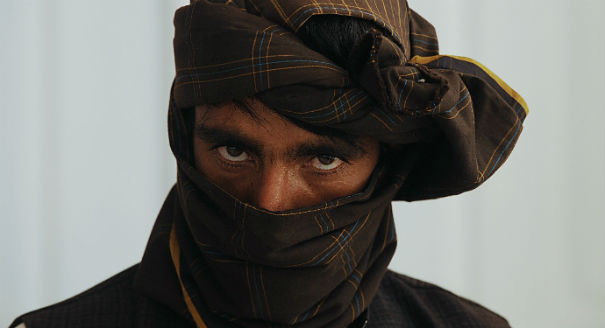
India is treading lightly as the Taliban, the Afghan government, and the United States inch towards negotiations.
Source: Indian Express
The confusion over the US talks with the Taliban in Qatar last week suggests that the so-called "endgame" in Afghanistan may not really be at hand. Barely hours after the talks were announced, the Taliban broke the agreement by flying its flag and presenting itself as the legitimate government of Afghanistan. Afghan President Hamid Karzai was furious, and Washington is now saying that Taliban's Qatar office will be closed if it does not abide by the terms agreed in the pre-negotiations.
Visiting U.S. Secretary of State John Kerry sought to reassure New Delhi that it was not about to abandon Kabul, cut a deal with the Taliban, and hand over Afghanistan to the Pakistan army. While Delhi's anxieties are understandable, the Indian debate on U.S. policy towards Afghanistan and Pakistan in the second term of the Obama administration has been over the top.What the recent developments point to is the growing uncertainty about the future of Afghanistan. It would be unwise for Delhi to prejudge the outcomes at this stage. Only two things are certain at this moment. One is the fact that the America is determined to end its combat role in Afghanistan by 2014. U.S. President Barack Obama has repeatedly declared that America cannot be locked in a "perpetual war." India or the rest of the world cannot alter that decision.
What remains open are two questions. How many troops should the United States leave behind? And how long should the United States extend military support to Kabul? It is reasonable for Delhi to assume that the answers to these questions will depend on the ground situation in Afghanistan and the political conditions in Washington.
The second certainty is the U.S. interest in engaging the Taliban to find a political settlement as the troop withdrawal takes place. Translating this objective into reality has proved to be a serious challenge, as the recent fiasco in Qatar has shown. The coming weeks and months will see more confusion as the major actors in Afghanistan, including Washington, Kabul, the Taliban, and the Pakistan army jockey for position. Instead of protesting at what others are doing, Delhi should prepare to play the few cards that it has in the increasingly uncertain Afghan situation.
In his public remarks in Delhi, Kerry seems to have added to the confusion when he reaffirmed some "red lines" in the engagement with the Taliban—breaking with al-Qaeda, renouncing violence, and respecting the Afghan constitution, including the rights of women and minorities. "Thus far, those conditions have not yet been met, so there is no negotiation at this point," Kerry said. "If the conditions are met, then there is a negotiation that will take place not with the United States, but with the High Peace Council of Afghanistan."
The Washington Post, however, says Kerry might have wrongly stated the current U.S. position. The Obama administration has for some time said these three principles were "outcomes" from successful negotiations rather than "preconditions."
The White House announced the talks, betting that the Taliban had shown enough flexibility by promising not to support international terrorism and supporting Afghan democracy. But before the first round of talks began in Qatar, the Taliban and its friends in Rawalpindi seem to have overplayed their hand in Qatar. We might see a lot of that in the coming weeks.
Although the Indian strategic community is in a funk over the changing dynamic in Afghanistan, the government of India is relatively calm and signaling some flexibility. External Affairs Minister Salman Khurshid has called the proposed American talks with the Taliban an "experiment," suggesting that the effort must be judged by the "outcomes" rather than the construction of a "process."
In his remarks last week, the spokesman for the foreign office hinted that Delhi has an open mind on talking to the Taliban. He insisted that there should be no dilution of the legitimacy of the elected government in Kabul. At the same time, he said that all insurgent groups, including the Taliban, should be engaged if they are prepared to "join the mainstream." The "good Taliban" are now welcome in Delhi.
Former Nonresident Senior Fellow, Carnegie India
A leading analyst of India’s foreign policy, Mohan is also an expert on South Asian security, great-power relations in Asia, and arms control.
Recent Work

C. Raja Mohan, Darshana M. Baruah


Alexander Gabuev, Paul Haenle, C. Raja Mohan, …
Carnegie India does not take institutional positions on public policy issues; the views represented herein are those of the author(s) and do not necessarily reflect the views of Carnegie, its staff, or its trustees.

In any defense establishment, change is an ongoing process. However, despite the best of intentions, existing bureaucracies, bound by habit and years of socialization, have their limits in implementing transformative change.

Anit Mukherjee

As AI grows more sophisticated, as the supply chains that power it become more contested, and as access to frontier models becomes geopolitically charged, India must begin to ask a different set of questions. Not what applications it can build on someone else’s infrastructure but what the world needs.

Konark Bhandari

The Indian Ocean Region hosts one of the densest concentrations of subsea cables in the world. Yet, despite accounting for a significant share of global internet traffic, India’s participation remains limited.

Charukeshi Bhatt

How is AI reshaping space security, creating governance challenges, and where does international diplomacy stand today?


Tejas Bharadwaj, Almudena Azcárate Ortega

After the chill in ties between 2020 and 2024 that brought India–China relations to their lowest point in several decades, the two countries have engaged each other afresh. This paper argues that there are predominantly four imperatives guiding India’s approach to China, and they exist in an order of priority.

Saheb Singh Chadha