

In The Media
Lilia Shevtsova
{
  "authors": [
    "Lilia Shevtsova"
  ],
  "type": "commentary",
  "centerAffiliationAll": "",
  "centers": [
    "Carnegie Endowment for International Peace",
    "Carnegie Russia Eurasia Center"
  ],
  "collections": [],
  "englishNewsletterAll": "",
  "nonEnglishNewsletterAll": "",
  "primaryCenter": "Carnegie Russia Eurasia Center",
  "programAffiliation": "",
  "programs": [],
  "projects": [],
  "regions": [
    "Western Europe",
    "Germany"
  ],
  "topics": []
}
Source: Getty
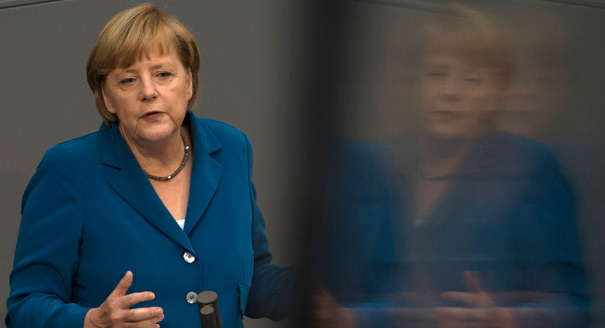
Merkel’s leadership is made up of a whole series of anti-leader qualities: attempts to put off needed decisions, not wanting to take responsibility, an emphasis on pragmatism, privatizing opponents’ ideas, and refusing to set a clear foreign policy line.
“Boring, boring,” you think, reading about the German election and discussing it with German colleagues. That is understandable. Where is the intrigue when everyone has already long since known the result? In this sense, Merkel’s Germany looks a bit like Putin’s Russia.
The German election is more of a chance to reflect on the West’s leadership crisis. This crisis has become clear as Western civilization enters a period of recession and loses its strategic vector. Indeed, the current state of Western civilization is in many respects the result of the leadership crisis. This concerns above all the two most influential Western countries’ leaders, Obama and Merkel. There is little leadership left to talk about in Obama’s case after Putin saved the U.S. president’s reputation by proposing a temporary exit from the Syrian problem. It is commonplace now to say that Obama’s model of “leading from behind” has been a fiasco.
Angela Merkel, on the contrary, looks the kind of a successful leader whom German voters are happy to support. The paradox is that Merkel’s leadership is made up of a whole series of anti-leader qualities: attempts to put off needed decisions, not wanting to take responsibility, an emphasis on pragmatism, privatizing opponents’ ideas, and refusing to set a clear foreign policy line.
Jan-Werner Mueller in his essay in Foreign Affairs “The Sleepwalking Giant” mentioned another element of Merkel’s policy—“demobilization,” that is relying on society’s passivity. Watching Merkel, one could say “So Putinesque!” Indeed, the style and leadership model used by Merkel, leader of Europe’s biggest power, resembles closely the authoritarian state leadership model. Muller is right to warn that “a truly charismatic right-wing populist could one day capitalize on the country’s creeping disenchantment with politics.” He is talking about Germany. I would reinforce his warning: all authoritarian populists came to the fore by breaking the cycles of social passivity and demobilization.
The fact that Europe’s major power wants to be governed by an anti-leader who prefers not to lead the nation but to follow in its wake says a lot not just about Germany but about the Western political establishment in general. Merkel is still way ahead of the other European leaders, who compared to her look like political pygmies. The fact that Europe’s most influential leader does not want to be a leader signals continued stagnation and perhaps even crisis in the European community itself, the West’s most outstanding project.
Yet I am more concerned about what might look like a detail from outside, but from Russia’s point of view is certainly not minutiae: Merkel’s policy toward Russia. In 2005, when she began her first term in office, “freedom” was her key word and it seemed that she would keep distant from Putin’s clutches, unlike her predecessor, Gerhard Schroeder, who had made it a cornerstone of his policy to accept the Kremlin’s embrace and is now a highly paid bureaucrat in its service. But no, even without the previous warm embraces, the Schroeder phenomenon has quietly crept into a Merkel phenomenon of similar substance. True, Merkel seems to be the only Western leader willing to speak to Putin of her concerns about human rights in Russia. But with what result? Putin listens to those concerns with indifference and continues tightening the screws. And Berlin’s friendship with the Kremlin continues.
No Western country has done more than Germany to win international legitimation for Russia’s personal power system and create the economic and financial mechanisms to feed it. The German political establishment shows an amazing desire for continuity, carrying forward the traditions that began in the late 1960s with Willy Brandt and Egon Bahr, and were sealed by the cooperation between Gazprom and Ruhrgas (the “gas for pipelines” deal was formulated by Soviet Foreign Affairs Minister Anatoly Gromyko, with Leonid Brezhnev’s blessing). No other Western country thought to award Putin a prestigious international prize for “building a path toward the future”(!)—the special prize Quadriga was not given to Putin by Werkstatt Deutschland only because it provoked an international scandal.
What motivates this German continuity policy? Is it a sense of guilt over the attack on the Soviet Union in 1941, an attempt to protect German business interests, or intertwined personal and group interests of sections of the German establishment and the Russian elite? These are all questions for German researchers and analysts to examine and answer.
Britain’s The Economist wrote a flattering article predicting that Angela Merkel “could still become—the great leader Germany and Europe so desperately needs.” Well… let us join in this hope. History says that a leader who starts out as a stabilizer never becomes a transformer. But if Angela Merkel does decide to put on the transformer’s hat, the new Russia policy would be the litmus test for her ability to actually take the lead.
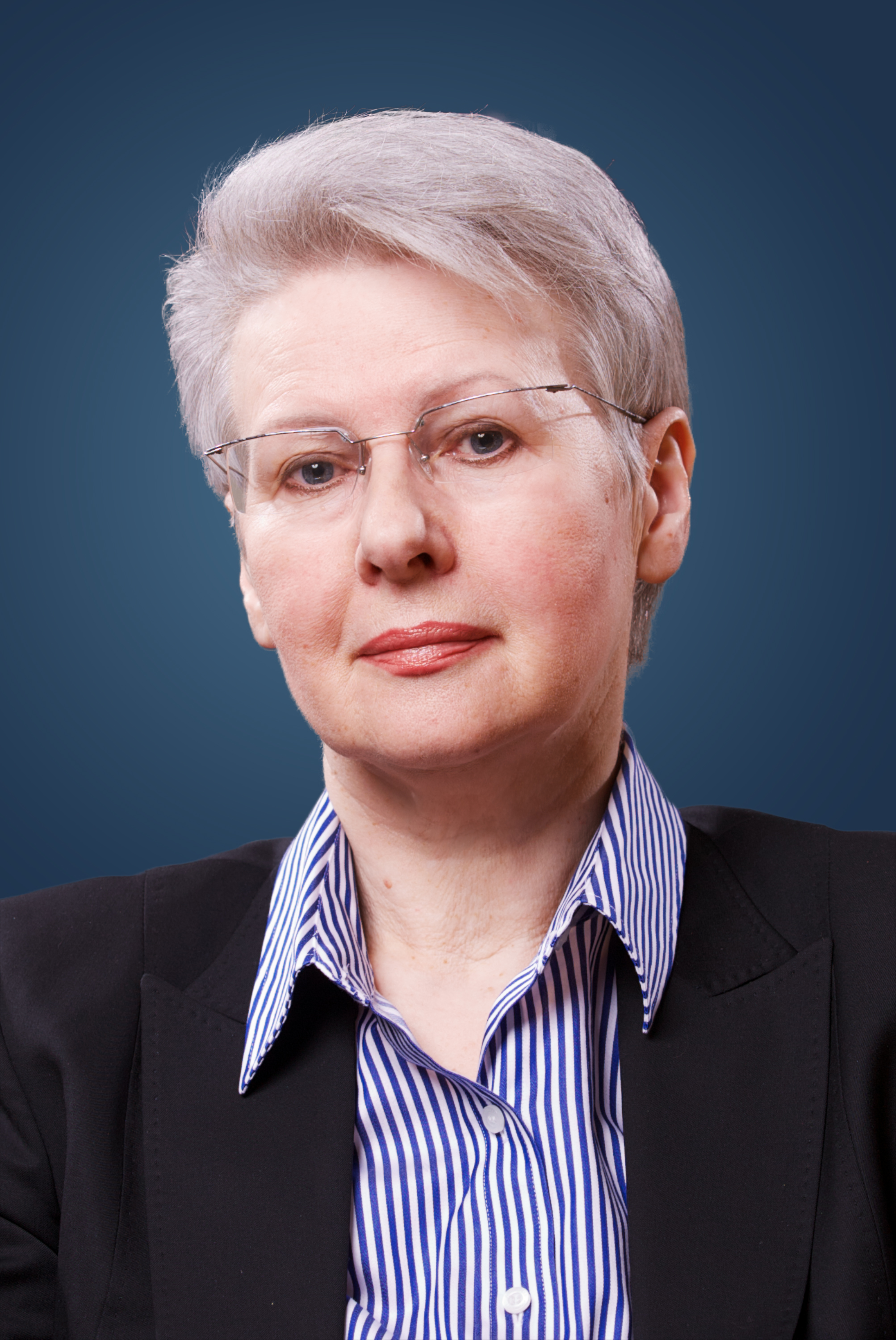
Former Senior Associate, Russian Domestic Politics and Political Institutions Program, Moscow Center
Shevtsova chaired the Russian Domestic Politics and Political Institutions Program at the Carnegie Moscow Center, dividing her time between Carnegie’s offices in Washington, DC, and Moscow. She had been with Carnegie since 1995.
Recent Work
Lilia Shevtsova
Lilia Shevtsova
Carnegie India does not take institutional positions on public policy issues; the views represented herein are those of the author(s) and do not necessarily reflect the views of Carnegie, its staff, or its trustees.
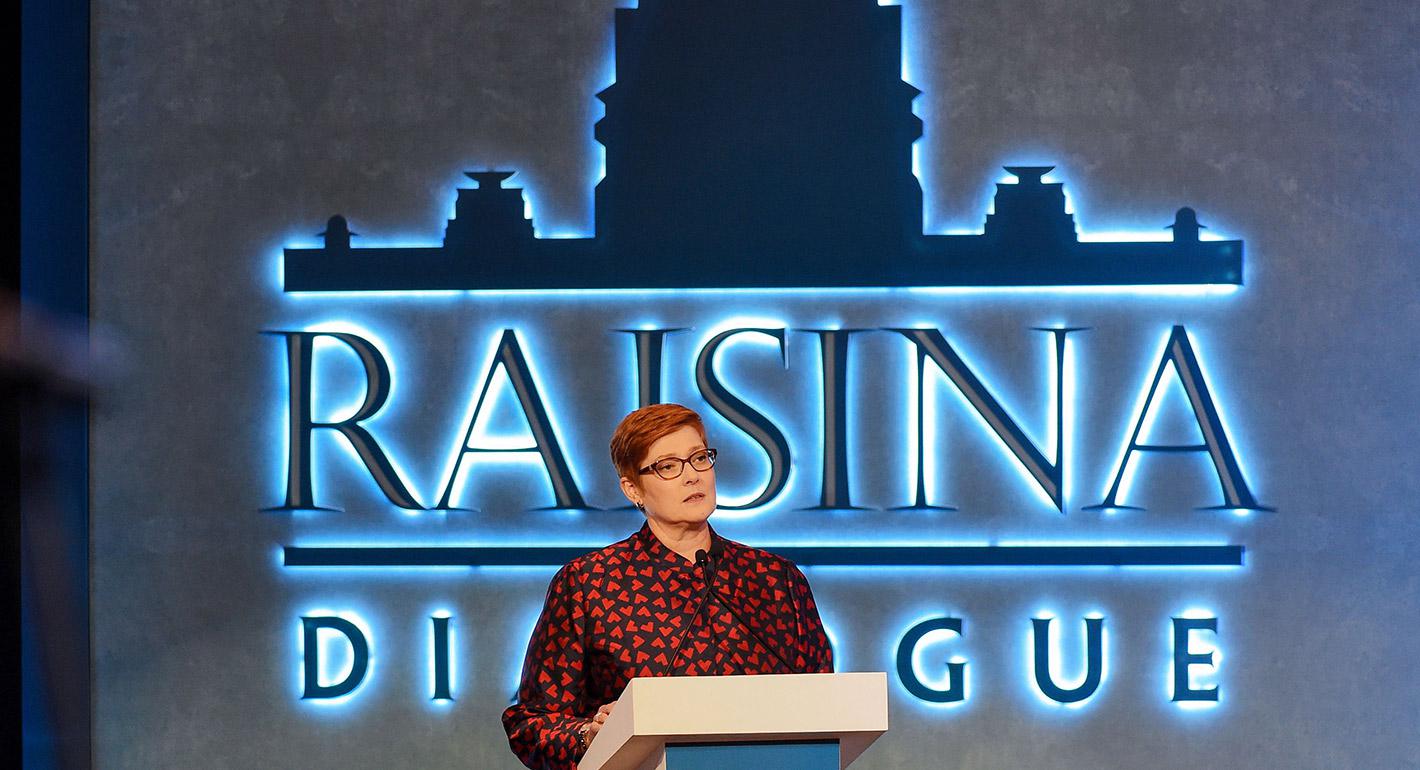
Foreign ministers from India, France, and Australia recently met (virtually) at the Raisina Dialogue, India’s flagship annual conference on geopolitics and geoeconomics. What can they get done if they work together?


Rudra Chaudhuri, Shibani Mehta
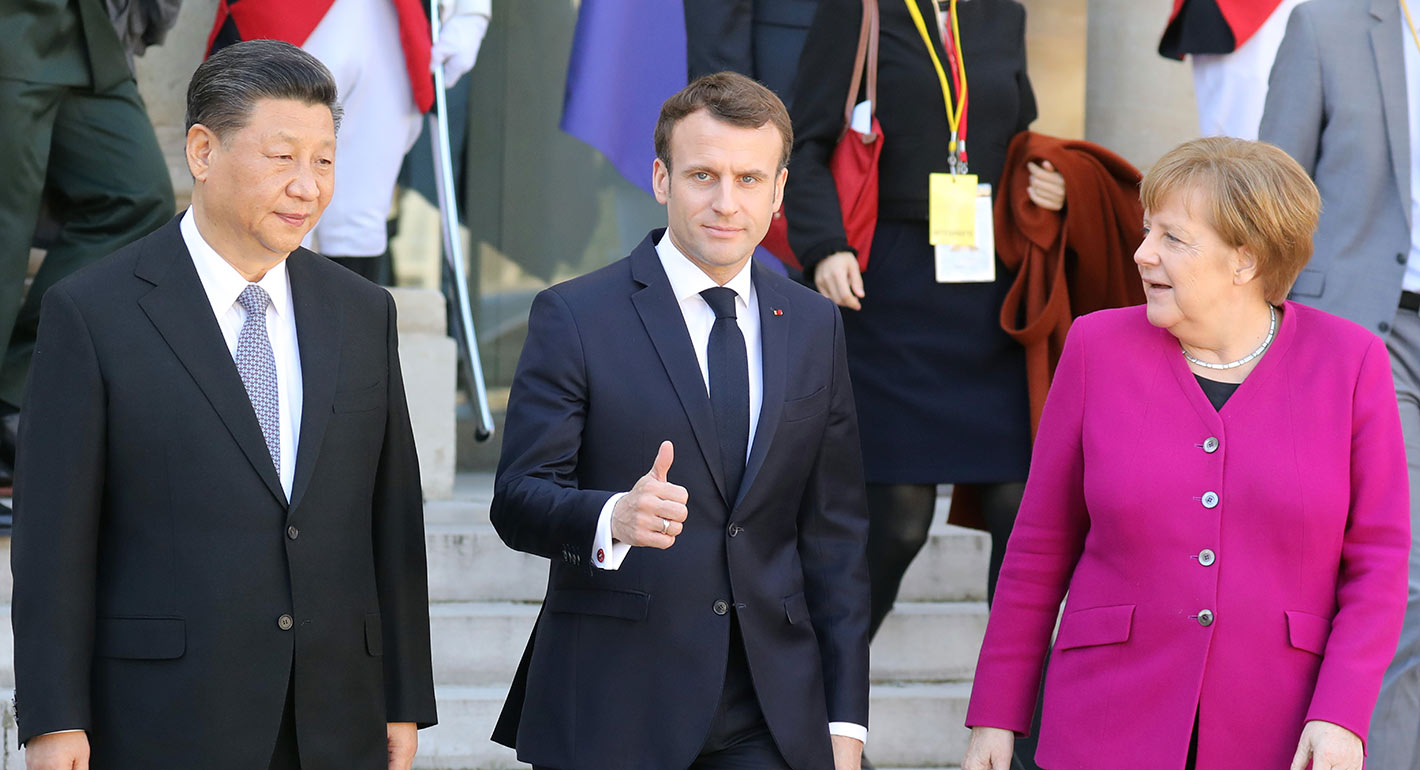
Europe’s huge stakes in the economic stability of Asia, the sea lines of communication connecting Europe and Asia through the Indo-Pacific, and threat of U.S. retrenchment may force Europe to reconsider its role in Asia. Asia needs a robust European contribution to connectivity and security.
C. Raja Mohan, John J. Vater
Pitched as a new Silk Road sweeping from Asia to Europe, China’s enormous Belt and Road Initiative is an ambitious, multinational infrastructure project. Experts from four Carnegie global centers explain other countries’ perspectives.


Paul Haenle, Dmitri Trenin, Alexander Gabuev, …
The period known as the “Emergency” in India—June 1975 to March 1977—is widely recognized as one of the darkest episodes in the nation’s 70-year history.
Rudra Chaudhuri
With an assertive China and uncertainty of U.S. policy under the Trump administration, Europe and India have realized they have much to offer each other.
Garima Mohan