

Commentary
Maria Lipman
{
  "authors": [
    "Maria Lipman"
  ],
  "type": "commentary",
  "centerAffiliationAll": "",
  "centers": [
    "Carnegie Endowment for International Peace",
    "Carnegie Russia Eurasia Center"
  ],
  "collections": [],
  "englishNewsletterAll": "",
  "nonEnglishNewsletterAll": "",
  "primaryCenter": "Carnegie Russia Eurasia Center",
  "programAffiliation": "",
  "programs": [],
  "projects": [],
  "regions": [],
  "topics": []
}
Source: Getty
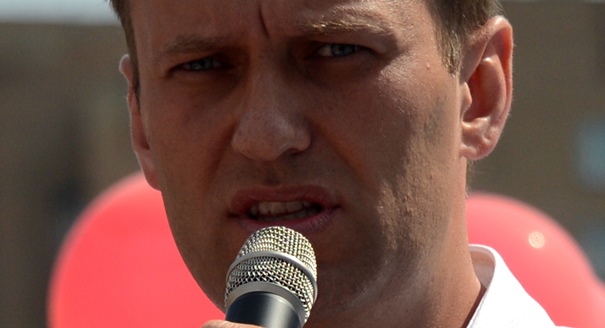
This year, the mayoral race in Moscow is more than just a return of politics—with anti-establishment candidate Alexey Navalny on the ballot, this campaign has triggered a repoliticization of the Russian society.
Last time Moscow was the scene of a contested election was in 1999. This year, the mayoral race is more than just a return of politics—with anti-establishment candidate Alexey Navalny on the ballot, this campaign has triggered a repoliticization of the Russian society.
Navalny has achieved several things that looked impossible up until a short while ago.
He forced his way into the political realm that had been securely sealed in the past decade: any figure, force, or party deemed unwelcome by the Kremlin had been effectively barred from politics.
Navalny built trust among Muscovites who had long grown fairly cynical about politics and politicians. Cynicism was persistently nurtured and banked on by the Kremlin in order to eliminate public participation in politics. But over the past weeks, about fifteen thousand young people volunteered their time and energy for Navalny’s campaign. Many others donated money—another major achievement in Russia where private fund-raising for political campaigns had not existed.
Navalny has also inspired dozens of businessmen to endorse him. They signed an open letter in which they made a “social contract” with Navalny. In a political environment where business had long been intimidated into loyalty such a move is risky, and the signatories were aware of that, but, as they wrote in the letter, “fear of public statements and a lack of cohesion is a path to nowhere.”
Of course, Navalny would not have run without the Kremlin’s permission. In an unprecedented show of tolerance Navalny was allowed to stay at large until the higher-level court has ruled on the appeal of his five-year verdict. But it is also true that this sudden show of goodwill was not driven by a love of democracy and openness. Rather, it was the Kremlin’s response to a dilemma: keep Navalny behind bars and have the incumbent mayor “elected” in a business-as-usual manner with preordained results and no competition, or have an anti-establishment candidate in the race and allow a degree of unpredictability. Neither option was risk-free: the former was fraught with public outrage over yet another manipulated election and a further erosion of the regime’s legitimacy; the latter was associated with political uncertainty that Putin’s political system had thoroughly eradicated.
Such dilemmas did not arise in the past—unwanted challengers were easily removed through pressure, intimidation, or other tricks. This time round the dilemma has become inescapable because of the crack in the public acquiescence caused by the civic awakening and mass protests in Moscow in 2011-2012. Another factor is the economic deterioration that may lead to broader socioeconomic protests. As a result governance has become a more challenging job for the Russian rulers, and Navalny himself has emerged as part of the challenge due to his commitment and resolve, his fearlessness, amazing stamina, and skills of civic organization, as well as political talent, charisma, and a sense of humor (the latter is not to be underestimated!). Through his anti-corruption crusade he has gradually established himself as not just one critic out of many, but a doer who also encouraged others to join his effort by scouring government procurement files. He thus gave his followers a sense of “we can”—we can do more than just grumble and rage over government corruption and abuse of authority, we can actually expose them through personal effort. He inspired—and persuaded—people who routinely regarded national elections as a government sham that had nothing to do with their lives to think of the 2011 parliamentary campaign in terms of the best voting strategy. He suggested a goal: to reduce the support of the “crooks and thieves” (the nickname he invented for United Russia has firmly stuck in the Russian parlance). And when the egregious rigging caused mass protests, Navalny rose as their most prominent figure.
Navalny was looming so large now that the decision makers had to reckon with him. But it would be premature to see the Kremlin’s choice of a “softer” option as a game changer. The repressive trend that has slowed down in the past couple of months can be resumed, Navalny can be jailed and/or disqualified from politics. But there is no going back to the old acquiescence. The Kremlin will face new risks and new dilemmas, and whatever choices are made will come at a higher cost.
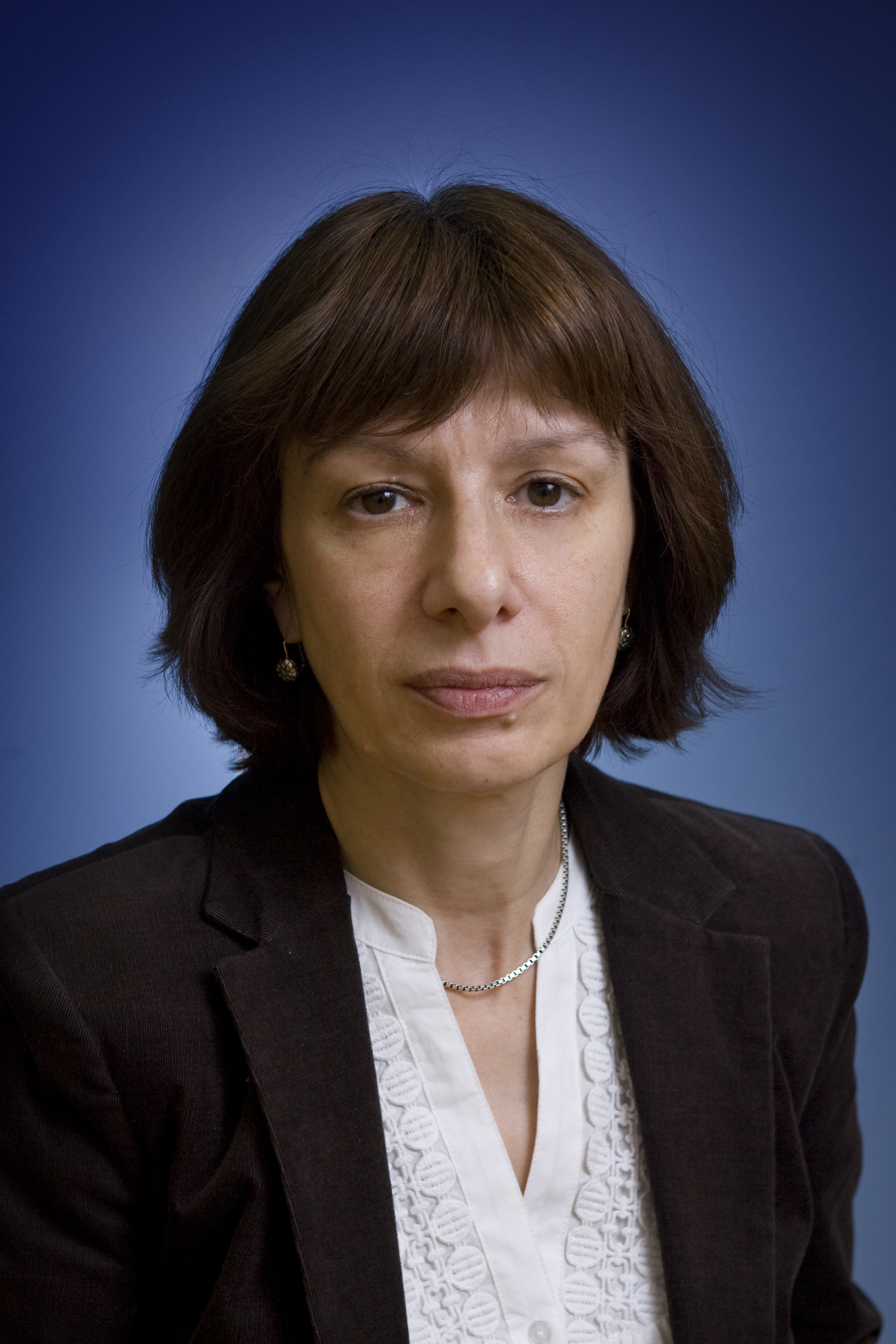
Former Scholar in Residence, Society and Regions Program, Editor in Chief, Pro et Contra, Moscow Center
Lipman was the editor in chief of the Pro et Contra journal, published by the Carnegie Moscow Center. She was also the expert of the Carnegie Moscow Center’s Society and Regions Program.
Recent Work
Maria Lipman
Maria Lipman
Carnegie India does not take institutional positions on public policy issues; the views represented herein are those of the author(s) and do not necessarily reflect the views of Carnegie, its staff, or its trustees.