Source: Russian International Affairs Council
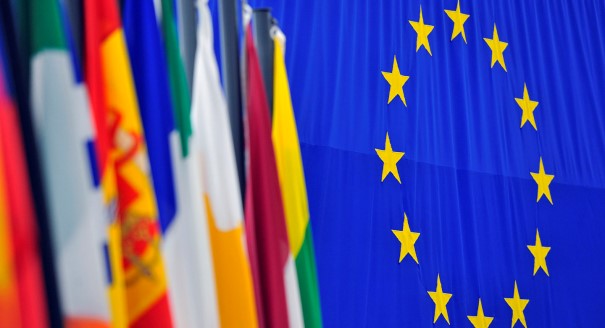
The relevance of the concept of Greater Europe, stretching from Iceland and Norway in the north to Turkey in the south, and from Portugal in the west to Russia in the east, and the prospects for this concept becoming reality were discussed by Irina Busygina, Professor at the Moscow International Relations Institute (MGIMO) and RIAC expert, and Dmitri Trenin, Director of the Carnegie Center in Moscow and RIAC member.
Greater Europe (in different interpretations and at different times) arises, as a concept, from time to time either as a political project or as an issue that quickens the pulse of the academic and expert community. Pan-European integration is either a strategic objective on the agenda or labeled a project that is, a priori, unfeasible. How relevant is this topic today?
Greater Europe undoubtedly deserves expert discussion. However, one should draw a line between discussion of the topic and Greater Europe as a promising
practical objective. In my view, we have missed the moment when Greater Europe could have happened in practice (which is not to say that this opportunity is lost forever). But today’s circumstances are such that both Russia and the European Union are at a stage when setting out their own domestic priorities and defining their respective roles in the system of international relations are more important and relevant than achieving an alliance.
And why is that?
The reason is that, before you start shaping the contours and principles of any future alliance, you have to identify the rationale for internal evolution. And this is true both of the EU and Russia. What will happen to the EU over the next 5-10 years? One may hypothesize, but there is a lack of any clear vision. What will the EU’s role in international affairs be? Will it re-think and revisit its foreign policies by making itself more of an international entity? Russia, similarly, has seen a lot of developments, both in the economy and in politics. Russia’s future depends to a great extent on stronger integration across the former Soviet territories, given the realistic need for wider markets. These integration plans are designed with Kazakhstan, Belarus, Armenia, and possibly the Kyrgyz Republic in mind, first and foremost. Let me reiterate my theory: Before they can join together in an alliance, Russia and the EU must decide on the rationale for their own evolution.
It is clear that the concept of Greater Europe is open to a variety of interpretations, and the expression itself gives little idea about the underlying principles of the project, or of its relationship with other world players. However, it is not only the term that is complex; its geography is no less complex. Arguably, the key axis in any such project would have to be the relationship between Russia and the EU, but that is not the only axis. We would be well advised to remember that a powerful player such as Turkey has its own policies and, admittedly rather unclear prospects, regarding the future of its relations with the EU.
That is true, and Turkey’s role has been on the rise, however, I don’t think it is in any sense as important as that of Russia or the EU. Turkey’s leadership has been pursuing EU membership, although it may well not be the best policy for the country. A strategic partnership between Turkey and the EU would have much better prospects for the country in future.
Discussions about Greater Europe are essentially discussions about institutions, or the “rules of the game” that bind European actors together by creating meaningful commitments. How would you describe the institutional structure of European security? Are there sufficient institutional arrangements to bind and link a variety of players (and territories) in Europe? How good are these institutions?
I would think these institutions are well established, although they may be facing certain quality issues. And with the principal issue being lack of trust, the difficult challenge is to bridge this gap. This lack of trust in practice takes two main forms: Russia’s mistrust in the goals and objectives of EU foreign policy, and the lack of trust that Central and East European EU countries have towards Russia.
So what is to be done? If we believe that trust is a rational category, based on certain expectations of the other party, can we accept that trust can be built?
We sure can. Building trust is one of the problems most commonly addressed by security communities. It is not about commitment or economic integration; the goal here is to achieve a state in which war, as an instrument of policy in relations within a certain group of nations, is ruled out in principle. It is essentially a new type of relations: Members of the security community will not always cooperate on a broad range of issues or share each other’s values. But they have confidence in one thing: Any dispute will be addressed exclusively by non-violent means.
If local conflicts or tensions already exist, will they hamper the emergence of a security community?
It would be naive to hope that building a security community will automatically remove all contradictions and tensions among community members. Conflicts will not disappear with the emergence of the security community, but military force will not be contemplated as a form of resolution.
It seems that the idea of security communities is extremely promising for Greater Europe’s future. There will be no need for alliance obligations (and the project will not be rejected), however there will be a common denominator for cooperation across the broader European space. At the same time, the security community of Greater Europe will not, in any way, undermine the other obligations of its members.
I would like to highlight another important proposition that is in line with your thinking: Greater Europe should not be built as an exclusive project, which would put dividing lines between the European and non-European spaces. It is therefore both imperative and feasible to engage the United States as “non-European Europeans.” However, such grand ideas need further conceptualization. I therefore see a positive side to the current divergence between Russia and the European Union, and more specifically, a potential opportunity to lend meaning to the pause that has occurred. This will give the EU and Russia time to consider the rationale of their further steps.
Thank you very much, Dmitri.
This interview originally appeared on the Russian International Affairs Council site.