

Report
- +3
James M. Acton, Alexey Arbatov, Vladimir Dvorkin, …
{
  "authors": [
    "Petr Topychkanov"
  ],
  "type": "commentary",
  "centerAffiliationAll": "",
  "centers": [
    "Carnegie Endowment for International Peace",
    "Carnegie Russia Eurasia Center"
  ],
  "collections": [],
  "englishNewsletterAll": "",
  "nonEnglishNewsletterAll": "",
  "primaryCenter": "Carnegie Russia Eurasia Center",
  "programAffiliation": "",
  "programs": [],
  "projects": [],
  "regions": [
    "Russia"
  ],
  "topics": [
    "Political Reform",
    "Civil Society"
  ]
}
Source: Getty
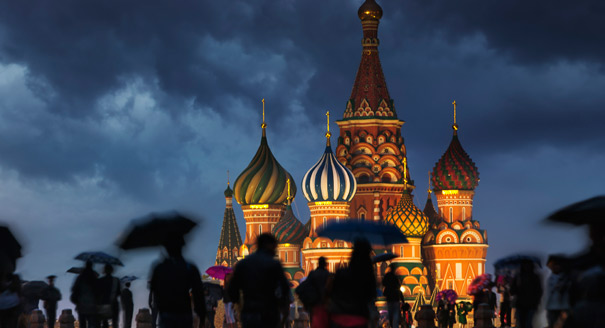
There is no need to invent a special day like the National Unity Day for strengthening national identity, because one day in a year cannot change people's vision of their nation. This is an everyday job for the citizens at all levels of Russian society.
If the authorities have decided to invent the National Unity Day, it can mean that they believe in the need for special activities in the field of nation-building.
As it usually happens in Russia, the idea is correct, but its realization is poor. A special day, dedicated to the national unity, looks like the Women’s Day on March 8, when many Russian men buy flowers and gifts for their women. The question is whether there is a need for a special day to buy flowers for your woman? Of course, there is none. It can be done as often as you want.
The same can be said about the National Unity Day. There is no need to invent a special day for strengthening national identity, because one day in a year cannot change people's vision of their nation. This is an everyday job for the citizens at all levels of our society.
No doubt, the state has its own role. It has a lot of means of nation-building policy, including the state system of education, state museums and galleries, state-sponsored events, and so on.
I have not mentioned the armed forces and political parties, usually regarded as the instruments of nation-building policy, because the effectiveness of these instruments is not so evident.
The United Russia Party is a good example. Sometimes it seems that this party exists in a parallel reality, which has nothing to do with the Russian nation. Other parties do not differ a lot.
As for the army, it is a classic example of the nation-building instruments. The military history, the memories about heroes, the military service can help build the national identity. And they do this every day.
But there are a lot of problems in the armed forces today, which can destroy people's expectations, replacing their pride of their nation with disappointment. Unsuccessful launches of space rockets, widely discussed in our society, can prove this.
Even if the authorities learn how to use the nation-building instruments in a proper way, it does not mean that someday they will be able to state that their mission has been accomplished.
The nation-building is an infinite mission, firstly because of a change of generations, secondly because of the continuous development of the political environment, and thirdly because of an on-going cultural transformation of the society.

Former Fellow, Nonproliferation Program, Moscow Center
Topychkanov was a fellow in the Carnegie Moscow Center’s Nonproliferation Program.
Recent Work


James M. Acton, Alexey Arbatov, Vladimir Dvorkin, …
Petr Topychkanov
Carnegie India does not take institutional positions on public policy issues; the views represented herein are those of the author(s) and do not necessarily reflect the views of Carnegie, its staff, or its trustees.

This piece argues that India’s central challenge is not managing a single flashpoint but resolving the underlying tension between expansion and institutional coherency of the BRICS grouping.

Vrinda Sahai
As India’s economy recovers from the coronavirus pandemic, Indian businesses need efficient financial structures to regain their ground. Key reforms to India’s Insolvency and Bankruptcy Code could fill these gaps.

Anirudh Burman

Access to cross-border data is an integral piece of the law enforcement puzzle. India is well placed to lead the discussions on international data agreements subject to undertaking necessary surveillance reforms.

Smriti Parsheera, Prateek Jha
After the coronavirus pandemic wanes, how will China’s reorientation of the Belt and Road Initiative to address global health concerns influence its relationships with South Asian countries?


Deep Pal, Rahul Bhatia
Early in the outbreak, government researchers forecast several high-risk scenarios that were downplayed or ignored in public messaging.
Gautam I. Menon