

Article
This piece argues that India’s central challenge is not managing a single flashpoint but resolving the underlying tension between expansion and institutional coherency of the BRICS grouping.
Vrinda Sahai
{
  "authors": [
    "Akio Kawato"
  ],
  "type": "commentary",
  "centerAffiliationAll": "",
  "centers": [
    "Carnegie Endowment for International Peace",
    "Carnegie Russia Eurasia Center"
  ],
  "collections": [],
  "englishNewsletterAll": "",
  "nonEnglishNewsletterAll": "",
  "primaryCenter": "Carnegie Russia Eurasia Center",
  "programAffiliation": "",
  "programs": [],
  "projects": [],
  "regions": [
    "East Asia",
    "Japan",
    "Russia"
  ],
  "topics": [
    "Political Reform",
    "Civil Society"
  ]
}
Source: Getty
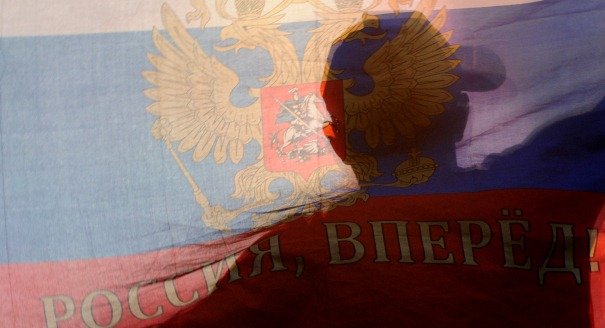
“National identity” and “nationalism”—there is nothing permanent about them. They vary, depending upon who speaks about them, and they change as time goes by. Those who resort to ultra-nationalism now in Russia had better hurry, because the nation states are losing efficacy, and values transform as economy and society change.
“National identity” and “nationalism”—there is nothing permanent about them. They vary, depending upon who speaks about them, and they change as time goes by. For example, Japanese Samurais changed their norm from being fierce warriors to being inert bureaucrats. The values in Japan are based on Confucianism and Buddhism (Shintoism does not possess particular moral codes), yet “Man-yo-shu,” a collection of short poems compiled in mid-8th century before the advent of Buddhism and Confucianism, far better represents our emotions and sentiments.
For Russia, as I see it, identity is also relative. When the “West” overly boasts of their values, Russians retort saying that they have their own civilization, but when the Russians do not want to follow suit and demonstrate Asian diligence, they allege that they belong to the “West” and are not apt to slavery work.
In her long history, Russia has gone through diverse civilizations—primitive paganism (its dynamism is marvelous), republican democracy in city states, Byzantine Christianity, autocracy, Western Enlightenment, Communism, and the (wild) Capitalism. Which of them should be regarded as the most representative for the Russians will be decided by the interaction and infighting among those who govern and those who are governed.
Values transform as economy and society change. If Russia is to continue with her state capitalism, then the “vertical” way of government and authoritarian morals will keep prevailing, while in certain new sectors, like information technology, open and liberal people are emerging.
This is what the national values are all about. “Nationalism” may be newer than national values. In 16th-century Europe, feudal lords lost power and the government became centralized. Only then nationalism was invoked to justify nation-wide universal taxation and compulsory (and low-paid) military service. Poor French soldiers were made to invade Russia driven solely by hollow Napoleonic patriotism.
Nowadays, Japan, the United States, and even France do not have compulsory military service. Modern nation state is no longer an entity which the people used to have to serve; it has become an institution which serves the people (I mean medical insurance, pension, and even defense). In other words, the human being has become more important than the soulless state.
Nevertheless, even in today’s Japan there are people who regard the state as something sublime which should be guarded at any cost (cost of others and not of themselves, mind you). Many of them are ultra-nationalistic and are excessively antagonistic toward Russia, China, South Korea, and even the United States.
In any society weaker people seek something to shore up their pride. For example, many Japanese commend Sumo wrestlers to compensate for the lack of their own physical size. Some Russians boast of the white color of their skin to compensate for the lack of proper jobs, Americans propagate freedom and democracy to compensate for the bitter feelings caused by the ever-widening income gaps, and so on, and so forth.
Those who resort to ultra-nationalism had better hurry, because the nation states are losing efficacy. When WTO and free-trade-area arrangements prevent wars for the acquisition of foreign markets, states become a peaceful mixture of an insurance company and a security agency. In such a new world what shall be a surrogate for ultra-nationalism? Perhaps, ultra-Eurasianism?
But please decide first whether it includes China or not.
Akio Kawato
Writer
Akio Kawato is a former Japanese diplomat and blogger.
Carnegie India does not take institutional positions on public policy issues; the views represented herein are those of the author(s) and do not necessarily reflect the views of Carnegie, its staff, or its trustees.

This piece argues that India’s central challenge is not managing a single flashpoint but resolving the underlying tension between expansion and institutional coherency of the BRICS grouping.

Vrinda Sahai
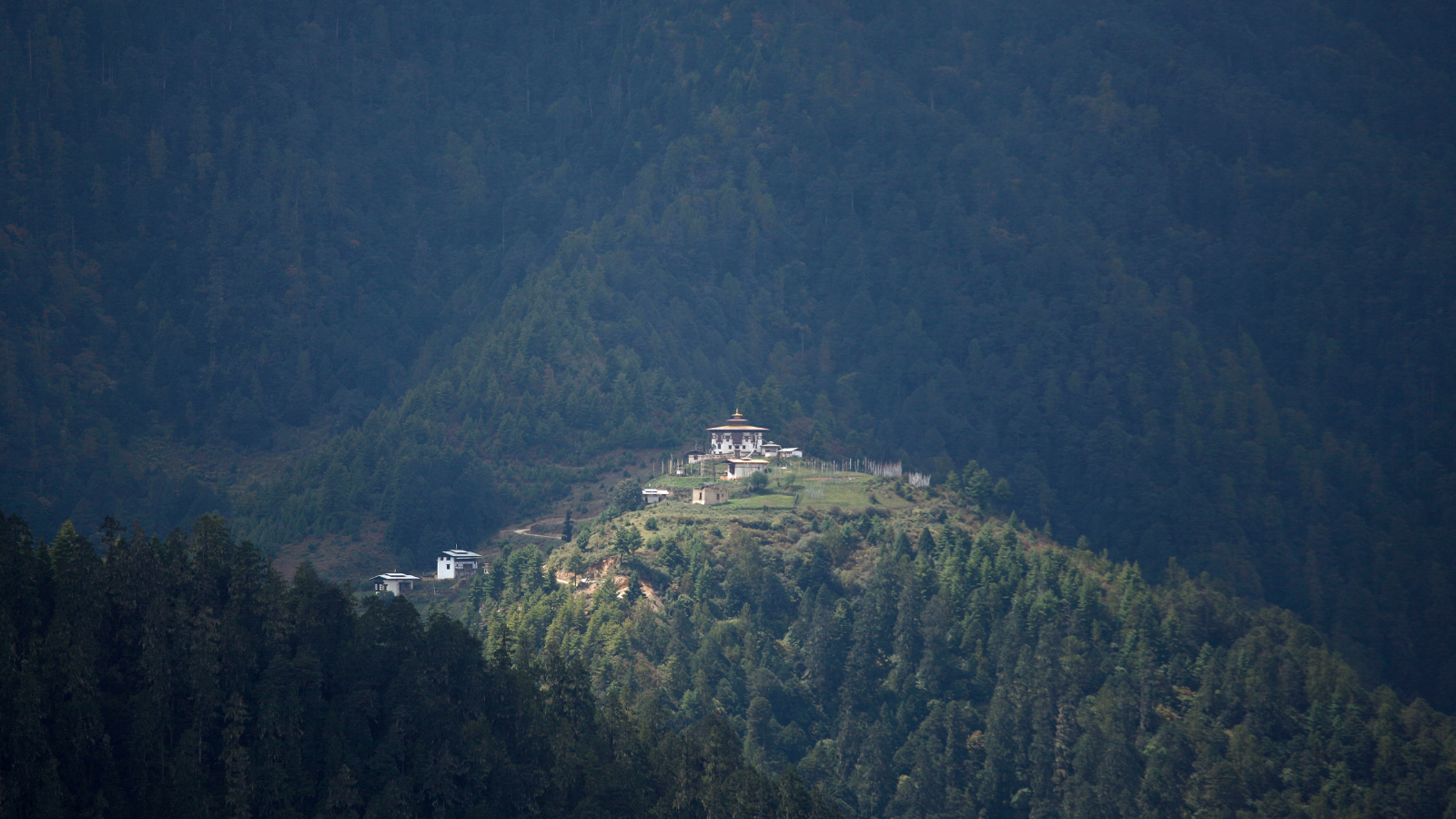
This piece examines the strategic implications of Bhutan’s diplomatic efforts amid its border dispute with China, highlighting the thin ice it walks on to achieve a resolution without compromising its vital relationships.

Shibani Mehta
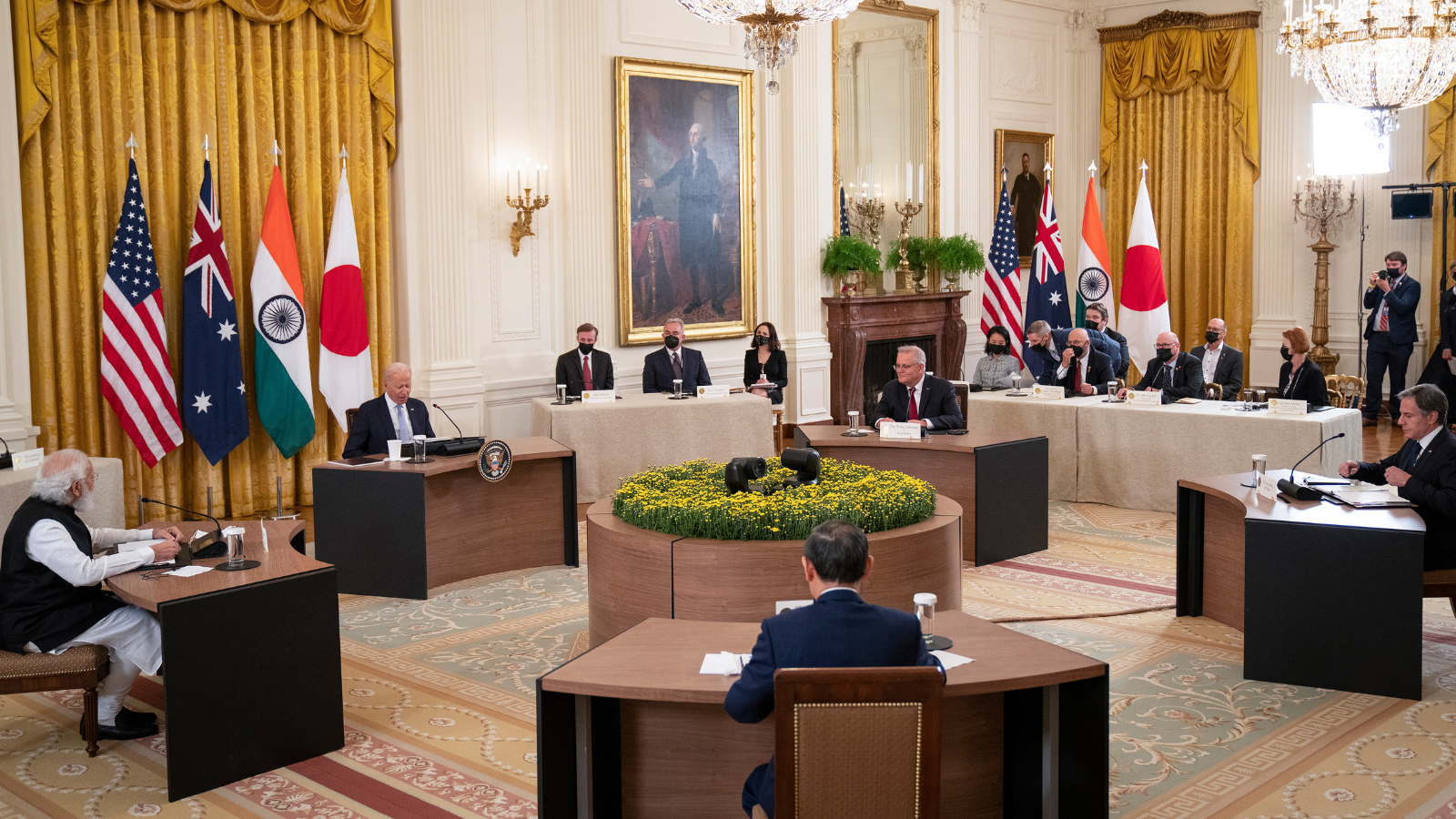
With India set to host the sixth Quad Leaders' Summit in 2024, there is every opportunity for this minilateral to not only develop a DPI initiative but also execute pilots in the Indo-Pacific. This essay shares a rationale for how the four Quad countries could achieve this goal.

Rudra Chaudhuri, Aadya Gupta
How can India navigate export control measures at a time when it is also entering into technology-centric partnerships with other nations to secure enhanced access to advanced technology?

Konark Bhandari
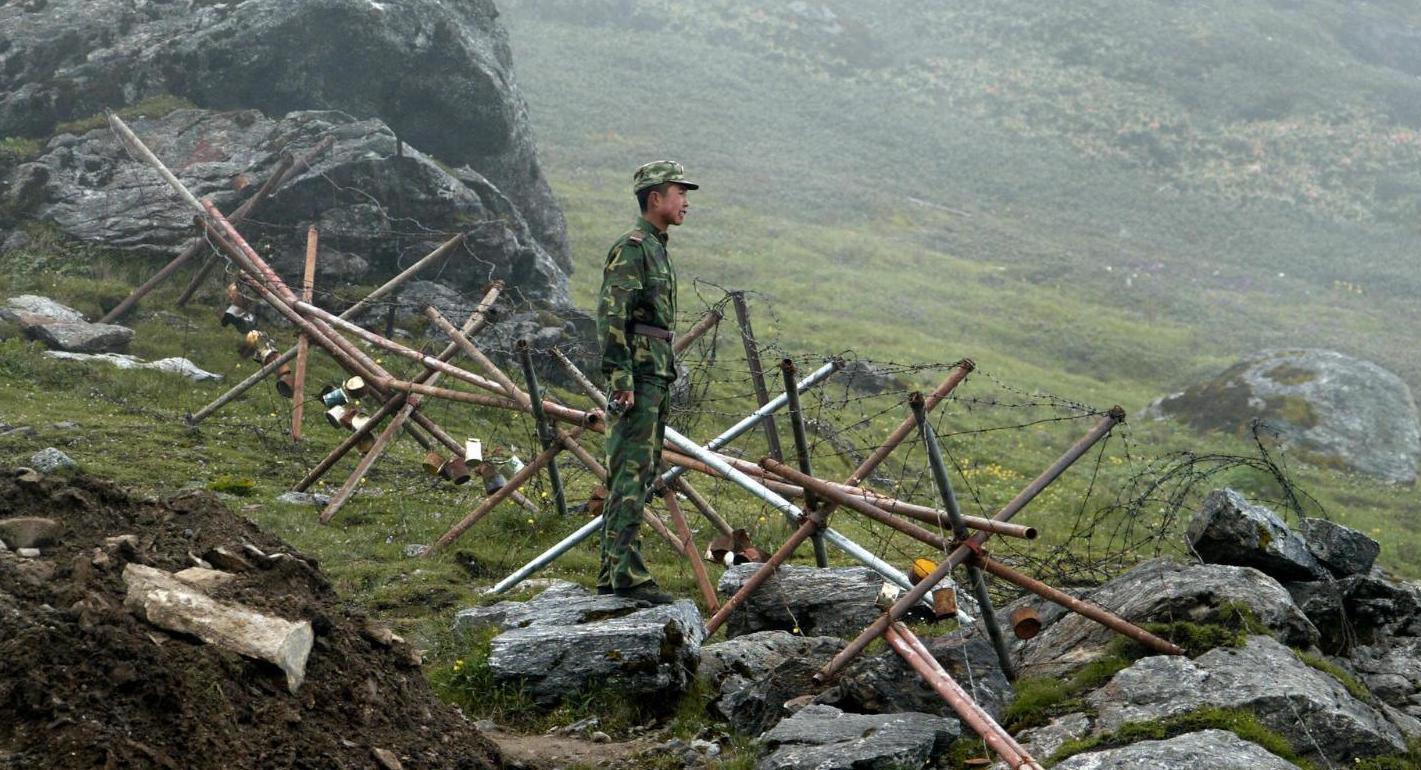
This article examines the significance of the 2013, 2014, and 2015 border standoffs between India and China. It presents a detailed account of the border crises and how the two countries tried to manage them.
Shibani Mehta