

Q&A
Dara Massicot, Aaron David Miller, Andrew S. Weiss
{
  "authors": [
    "Andrew S. Weiss"
  ],
  "type": "legacyinthemedia",
  "centerAffiliationAll": "dc",
  "centers": [
    "Carnegie Endowment for International Peace",
    "Carnegie Europe",
    "Carnegie Russia Eurasia Center"
  ],
  "collections": [
    "Europe’s Eastern Neighborhood"
  ],
  "englishNewsletterAll": "ctw",
  "nonEnglishNewsletterAll": "",
  "primaryCenter": "Carnegie Endowment for International Peace",
  "programAffiliation": "russia",
  "programs": [
    "Russia and Eurasia"
  ],
  "projects": [],
  "regions": [
    "Russia",
    "Eastern Europe",
    "Ukraine",
    "Western Europe",
    "Europe"
  ],
  "topics": [
    "Political Reform",
    "Economy",
    "Foreign Policy"
  ]
}
Source: Getty
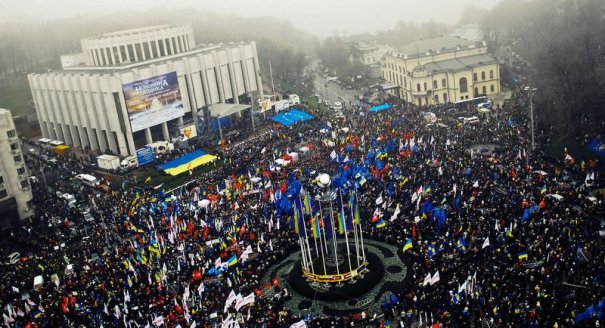
Putin’s Eurasian Union would be a set of political and economic structures, similar to the EU, that Russia would dominate. But this vision comes with a price; Ukraine’s economy is in trouble, just as Russia is suffering from low economic growth.
Source: Public Radio International’s World
"There is no doubt that we've seen a heavy-handed Russian approach to these agreements and there's no question that the Russians, on a gradual and determined basis, tried to stop the Ukrainians from signing the deal with the European Union," says Andrew Weiss, vice president of studies at the Carnegie Endowment for International Peace.
Weiss, who was director of Russian, Ukrainian and Eurasian affairs for the Clinton Administration, says Putin's Eurasian Union would be a set of political and economic structures, similar to the EU, that Russia would dominate. Putin wants to get all the former Soviet bloc countries into this union and Ukraine is the most desirable piece, mainly because it is the biggest of the post-Soviet countries, by far.But Putin will have to pay for this vision, says Weiss. For one thing, Ukraine's economy is in trouble, just as Russia is suffering from low economic growth. He thinks Russia will have to subsidize the Ukrainian economy.
"I think Ukraine is just a month or two away from some form of economic calamity," Weiss says. "There's something here that doesn't totally add up. Putin seems to be putting geopolitics above shrewd economic sense."
On the EU side, Weiss says that the foreign ministers of Sweden and Poland have been the main drivers of bringing Ukraine into the European Union's sphere. Other core EU players, like Germany, France and Britain, have generally been indifferent.
"What you ended up with was an EU initiative that was overly ambitious, delivered very little short term benefit for Ukraine and set Ukraine up for a sharp confrontation with the Russians," argues Weiss. There wasn't enough in the deal for Ukraine to break its economic ties with Russia.
Ukrainians themselves are divided over which partner to embrace. The protesters in Kiev are pro-Europe, but much of the country shares deep roots with Russia. And Weiss is worried for the Ukrainians.
"They are stuck," he says. "They have an economic crisis. They are facing, basically, running out of cash within the next couple months. President Yanukovych is up for re-election in 2015, and so the whole situation is veering very dangerously toward a very uncertain and very destabilizing conclusion."
This interview was originally aired on Public Radio International’s World.
James Family Chair, Vice President for Studies
Andrew S. Weiss is the James Family Chair and vice president for studies at the Carnegie Endowment for International Peace, where he oversees research on Russia, Ukraine, and Eurasia. His graphic novel biography of Vladimir Putin, Accidental Czar: the Life and Lies of Vladimir Putin, was published by First Second/Macmillan in 2022.
Recent Work

Dara Massicot, Aaron David Miller, Andrew S. Weiss

Frances Z. Brown, Nate Reynolds, Priyal Singh, …
Carnegie India does not take institutional positions on public policy issues; the views represented herein are those of the author(s) and do not necessarily reflect the views of Carnegie, its staff, or its trustees.

After the chill in ties between 2020 and 2024 that brought India–China relations to their lowest point in several decades, the two countries have engaged each other afresh. This paper argues that there are predominantly four imperatives guiding India’s approach to China, and they exist in an order of priority.

Saheb Singh Chadha

This piece argues that India’s central challenge is not managing a single flashpoint but resolving the underlying tension between expansion and institutional coherency of the BRICS grouping.

Vrinda Sahai
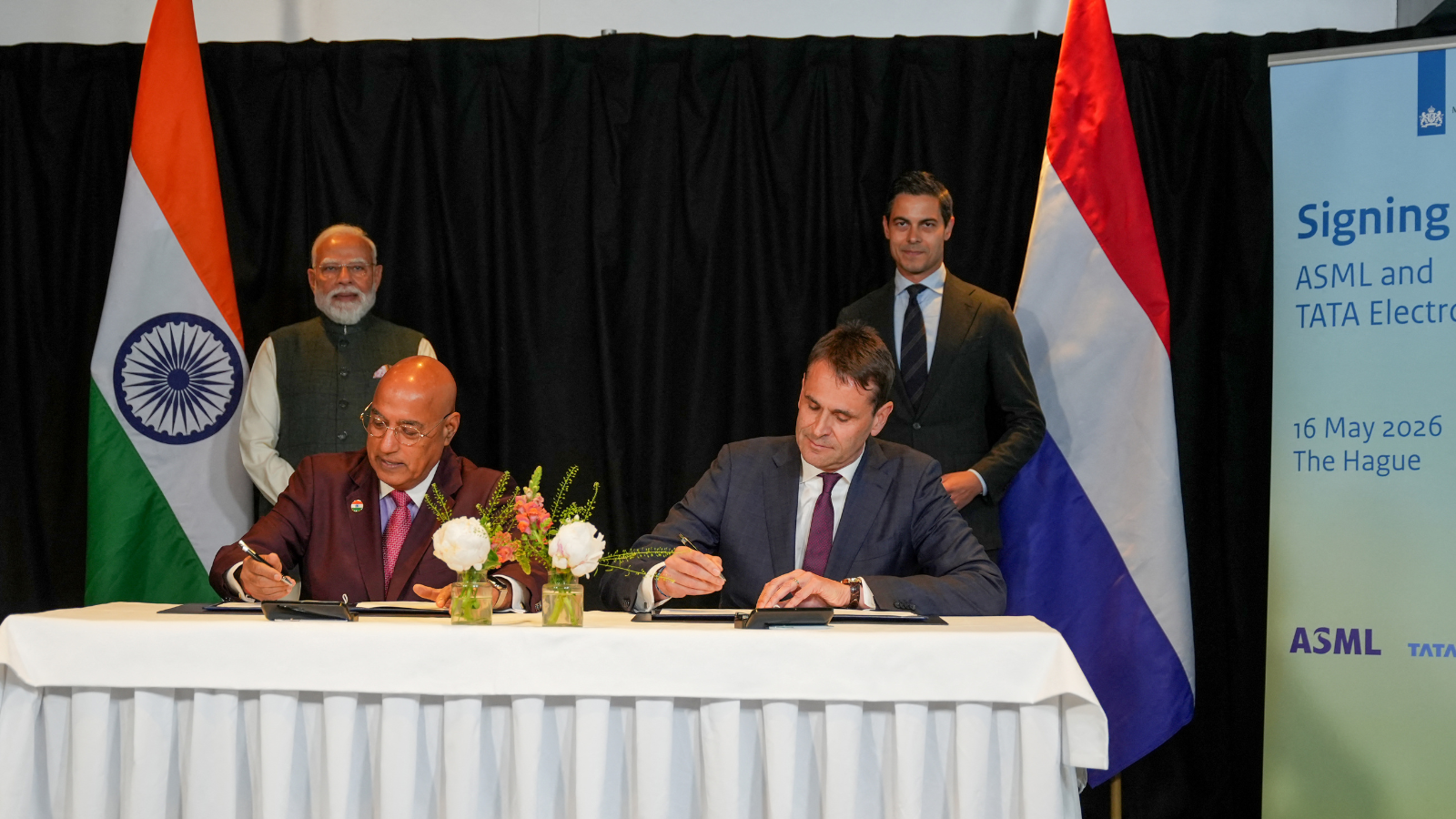
The ASML MoU with Tata Electronics is an indicator of how far the Indian semiconductor ecosystem has come. This ecosystem has been years in the making and represents real commercial logic.

Konark Bhandari

A partnership between India, a country of subcontinental size, and Africa, a continent of fifty-four countries, may seem asymmetric until one notes that both are home to nearly the same number of people—1.4 billion. This essay spells out the existing challenges to the partnership, its optimal potential, and the possible pathways to realize it over the next quarter-century.

Rajiv Bhatia

The India–EU Free Trade Agreement (FTA) is shaping up to be one of the most consequential trade negotiations, both economically and strategically. But, what’s in the agreement, what’s missing, and what will determine its success in the years ahead
Vrinda Sahai, Nicolas Köhler-Suzuki