

In The Media
Lilia Shevtsova
{
  "authors": [
    "Lilia Shevtsova"
  ],
  "type": "commentary",
  "centerAffiliationAll": "",
  "centers": [
    "Carnegie Endowment for International Peace",
    "Carnegie Russia Eurasia Center"
  ],
  "collections": [],
  "englishNewsletterAll": "",
  "nonEnglishNewsletterAll": "",
  "primaryCenter": "Carnegie Russia Eurasia Center",
  "programAffiliation": "",
  "programs": [],
  "projects": [],
  "regions": [
    "North America",
    "United States",
    "East Asia",
    "China",
    "Russia",
    "Eastern Europe",
    "Ukraine",
    "Western Europe"
  ],
  "topics": [
    "Democracy",
    "Global Governance",
    "Civil Society",
    "Foreign Policy"
  ]
}
Source: Getty
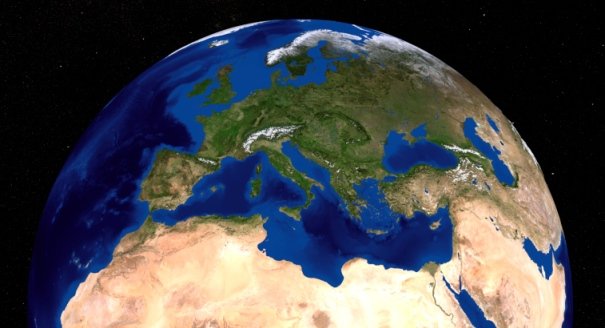
Understanding that the world has found itself in a period of interregnum, or “time without a trajectory,” is the key legacy of 2013.
The famous political Polish philosopher and sociologist Zygmunt Bauman reintroduced into our political language the term “interregnum,” once used by the Italian Marxist Antonio Gramsci in the early 1930s of the 20th century to describe his time. It means “time without a trajectory” or “time outside of time” when the old is leaving the scene and dies and the new has not been born yet. A treacherous time that could create a misleading impression if one cannot understand what it actually is: the dawn or twilight? No wonder that “interregnum” has become a popular word in global debates and in media.
I would argue that understanding that the world has found itself in a period of interregnum is the key legacy of 2013. The intellectual and even political community has already started to deliberate on the enormity of challenges the world is facing and on its own inability to face and answer them. I would use another Bauman’s metaphor: we entered the airplane cockpit and found that it is empty; but we still do not know that the airport of our destination has not been built yet!
The interregnum manifests itself in the tide of protest in various countries—starting with Brazil and Turkey and ending with Bulgaria and Ukraine—against the existing political order, and the lack of an Alternative. The emergence of weak political leaders—which rule the world trying to preserve the status quo—is another feature of our “time outside of time.” America’s retrenching, the European Union’s paralysis, and the attempts of the leading democracies to offer situational decisions and close eyes to the strategic problems, like Syria’s conundrum—are all features of the current reality.
No wonder that geopolitical and civilizational vacuum is being filled by a new authoritarian tandem—Putin’s Russia and China. The absurdity of the situation is that these two new sources of power and might are both political phantoms in a way: the first is in the stay of decay and the second is exhausting its resilience.
For me personally, the dramatic fate of Ukraine is an illustration of the current period. This country has demonstrated the Triad of the new time: the drive of the society for its dignity, the inability of the West and first of all Europe to understand this drive and to help it, and the return of the traditional Russia that drags Ukraine into its orbit, helping its leader to surrender Ukrainian independence for his own survival. One cannot be totally surprised if the Putin-Yanukovych trade-off finds a silent endorsement of at least a part of the Western political community that is not ready for the “Ukrainian headache” and justifies its “wait and see” tactics by arguing that “Ukrainians are not ready for reform.”
One could argue that it was a Success year for Putin’s Russia that has returned to the global scene as one of the key players and for China that has succeeded in remaining the object of mass “pivoting.” However, this is just the proof of how the appearances are misleading! At least in the case of Russia. The Western leaders pulling out in droves from attending Putin’s Olympic games and hundreds of thousands of Ukrainians taking to the streets protesting against embraces with Putin’s Russia could be hardly viewed as the manifestation of the Kremlin’s success. The release of Mikhail Khodorkovsky who has refused to admit any wrongdoing is again a slap in the face of the ruler who has been trying to demonstrate his Omnipotence…
But this year means failure for the liberal civilization that not only has not solved its domestic problems, but has not formulated a coherent foreign policy and has not proved that it still cares about the principles it declares. An abysmal failure! The question is to what extent this failure is understood by the Western community and whether it is ready to look for a way to overcome its paralysis. True, the West succeeded twice in using its crises as an impetus for reenergizing and progress—in the 1930s and 1970s of the past century. However, one cannot exclude that today’s malaise has to grow deeper before it becomes an impetus for change…
“Isn’t there anything in the political landscape that could be viewed as an accomplishment?” you would ask. The fact that “interregnum” has become a buzz word, for many in the political world is already an achievement. It means that we know that there is no pilot in the cabin. Now we have to think how to land the plane and where to land it…
Happy New Year!
Former Senior Associate, Russian Domestic Politics and Political Institutions Program, Moscow Center
Shevtsova chaired the Russian Domestic Politics and Political Institutions Program at the Carnegie Moscow Center, dividing her time between Carnegie’s offices in Washington, DC, and Moscow. She had been with Carnegie since 1995.
Recent Work
Lilia Shevtsova
Lilia Shevtsova
Carnegie India does not take institutional positions on public policy issues; the views represented herein are those of the author(s) and do not necessarily reflect the views of Carnegie, its staff, or its trustees.

How is AI reshaping space security, creating governance challenges, and where does international diplomacy stand today?


Tejas Bharadwaj, Almudena Azcárate Ortega

After the chill in ties between 2020 and 2024 that brought India–China relations to their lowest point in several decades, the two countries have engaged each other afresh. This paper argues that there are predominantly four imperatives guiding India’s approach to China, and they exist in an order of priority.

Saheb Singh Chadha

This piece argues that India’s central challenge is not managing a single flashpoint but resolving the underlying tension between expansion and institutional coherency of the BRICS grouping.

Vrinda Sahai

A partnership between India, a country of subcontinental size, and Africa, a continent of fifty-four countries, may seem asymmetric until one notes that both are home to nearly the same number of people—1.4 billion. This essay spells out the existing challenges to the partnership, its optimal potential, and the possible pathways to realize it over the next quarter-century.

Rajiv Bhatia

The U.S.–India semiconductor cooperation story is well-stocked with top-level strategic intent. What remains unresolved, however, are some underlying challenges that will determine whether the cooperation actually functions. Three such friction points stand out.

Shruti Mittal