

Commentary
Dmitri Trenin
{
  "authors": [
    "Dmitri Trenin"
  ],
  "type": "commentary",
  "centerAffiliationAll": "",
  "centers": [
    "Carnegie Endowment for International Peace",
    "Carnegie Russia Eurasia Center"
  ],
  "collections": [],
  "englishNewsletterAll": "",
  "nonEnglishNewsletterAll": "",
  "primaryCenter": "Carnegie Russia Eurasia Center",
  "programAffiliation": "",
  "programs": [],
  "projects": [],
  "regions": [
    "Russia",
    "Eastern Europe",
    "Ukraine"
  ],
  "topics": [
    "Economy",
    "Foreign Policy"
  ]
}
Source: Getty
The Russian-Ukrainian economic agreements look like Putin’s victory, but the Kremlin will have to deal with an array of powerful opponents. The battle for Ukraine has entered a new stage.
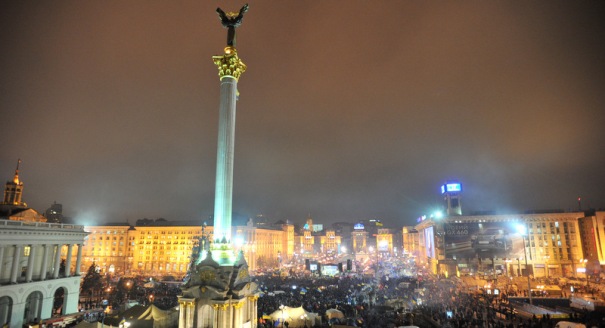
The Russian-Ukrainian economic agreements concluded on December 17, 2013, at the Kremlin look like a victory for President Vladimir Putin. As an anonymous Kremlin official told a Kommersant reporter, "They are now ours." True, the victory has come at a considerable cost: slashing the gas price by one-third and buying $15 billion worth of Ukrainian securities, an equivalent of extending a credit line. Putin, however, aims at something far bigger: integration of Ukraine into the Moscow-led Eurasian geopolitical unit.
In reality, this is a gamble. If Ukraine were really leaning toward Russia, no price would be too high to bail it out. This, however, is not the case now. Putin will have to work very hard indeed to persuade the Ukrainian economic elite and its political clients that they are better off with Russia than slowly walking toward the EU: a tough sell. Putin also knows he can trust almost no one of the Ukrainian politicians or oligarchs. As he makes Yanukovych and Co. an offer they cannot refuse, Putin will probably have to help a new pro-Russian Ukrainian elite emerge. This new elite will have to come up with a new Ukrainian project, to replace the current one which is built on Ukraine being apart from Russia. A very tall order, if at all possible—but unless Russia can accomplish this feat, it will eventually lose.
These are long-term goals. Meanwhile, the Kremlin will have to deal with an array of powerful opponents. The Euromaidan, as expected, has seen the Kremlin accords as Yanukovych's sellout to Putin. The Maidan of course will dissipate before the Christmas break and will not reconvene automatically. Its leaders are clearly not giants. However, the Maidan represents a new stage in the formation of a Ukrainian nation which sees itself as part of Europe, not Eurasia. The EU, now, must secretly feel relieved: it is off the hook, having narrowly escaped the disaster of taking responsibility for a huge basket case. It will not, however, accept defeat easily and will work with the Maidan in the future. For the United States, Russia's geopolitical advance is unacceptable, and Washington will work to stymie it. With presidential elections in Ukraine scheduled for early 2015, next year looks crucial in determining the future direction of that country. Russia's bid has been accepted; the battle for Ukraine has entered a new stage.
Former Director, Carnegie Moscow Center
Trenin was director of the Carnegie Moscow Center from 2008 to early 2022.
Recent Work
Dmitri Trenin
Dmitri Trenin
Carnegie India does not take institutional positions on public policy issues; the views represented herein are those of the author(s) and do not necessarily reflect the views of Carnegie, its staff, or its trustees.

This piece examines India’s response to U.S. sanctions and tariffs, specifically assessing the immediate market consequences, such as alterations in import costs, and the broader strategic implications for India’s energy security and foreign policy orientation.

Vrinda Sahai

This paper examines the evolution of India-China economic ties from 2005 to 2025. It explores the impact of global events, bilateral political ties, and domestic policies on distinct spheres of the economic relationship.

Santosh Pai
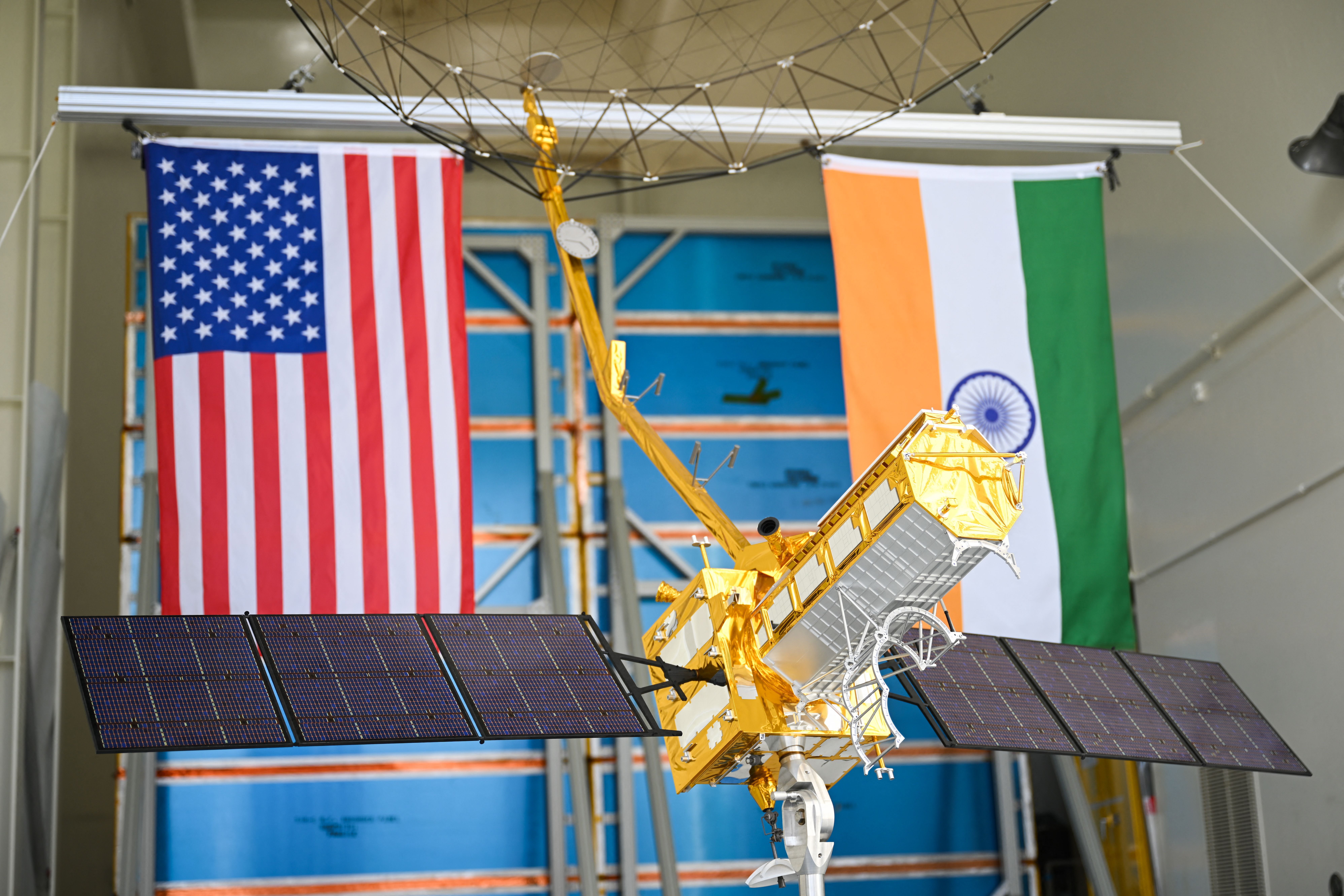
On July 30, 2025, the United States announced 25 percent tariffs on Indian goods. While diplomatic tensions simmered on the trade front, a cosmic calm prevailed at the Sriharikota launch range. Officials from NASA and ISRO were preparing to launch an engineering marvel into space—the NASA-ISRO Synthetic Aperture Radar (NISAR), marking a significant milestone in the India-U.S. bilateral partnership.

Tejas Bharadwaj
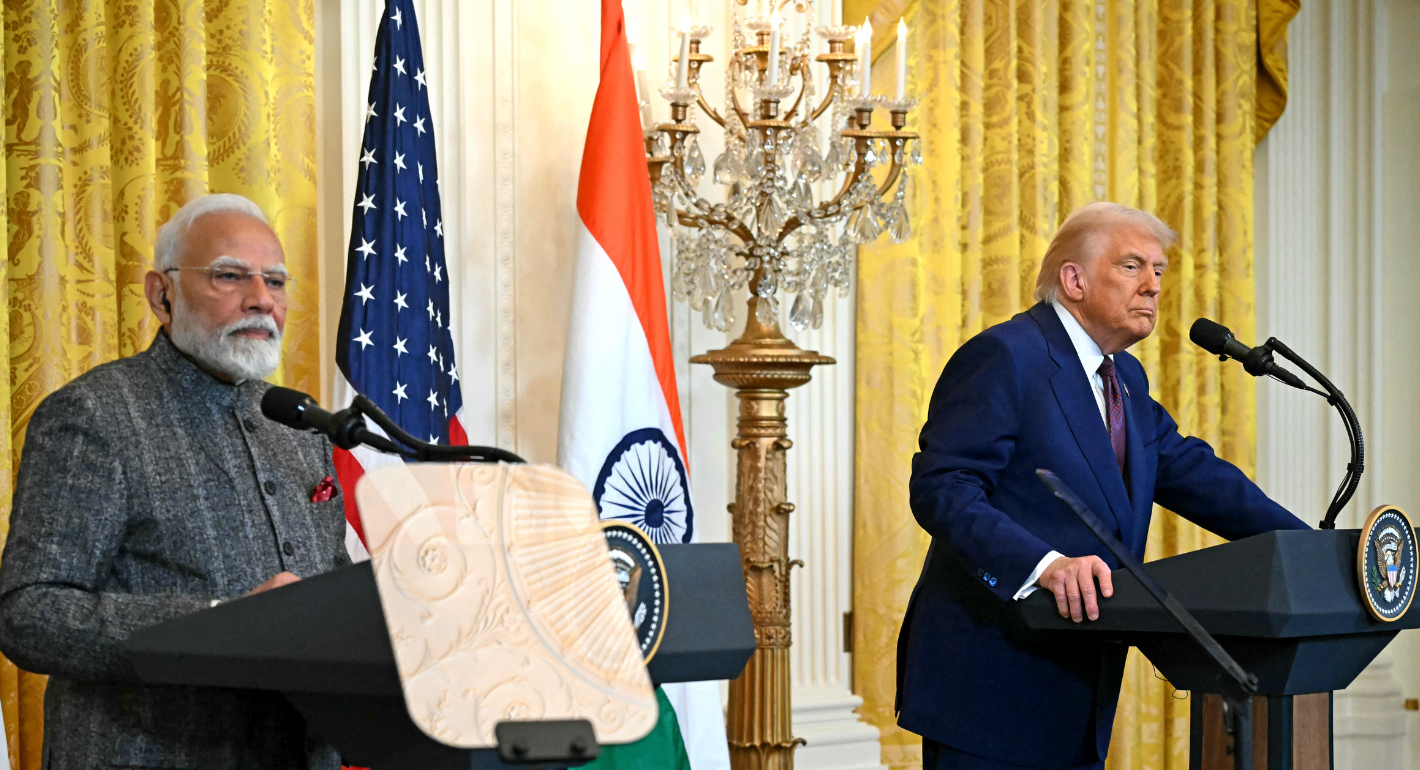
The India-U.S. relationship currently appears buffeted between three “Ts”—TRUST, Tariffs, and Trump.
Arun K. Singh
On May 7, 2025, between 1:05 and 1:30 a.m. (IST), airstrikes carried out by the Indian Air Force hit nine locations inside Pakistan and Pakistan occupied Kashmir (PoK). It was codenamed Operation Sindoor.

Rudra Chaudhuri