

Commentary
Dmitri Trenin
{
  "authors": [
    "Dmitri Trenin"
  ],
  "type": "legacyinthemedia",
  "centerAffiliationAll": "dc",
  "centers": [
    "Carnegie Endowment for International Peace",
    "Carnegie Europe",
    "Carnegie Russia Eurasia Center"
  ],
  "collections": [
    "Europe’s Eastern Neighborhood"
  ],
  "englishNewsletterAll": "ctw",
  "nonEnglishNewsletterAll": "",
  "primaryCenter": "Carnegie Russia Eurasia Center",
  "programAffiliation": "EP",
  "programs": [
    "Europe"
  ],
  "projects": [],
  "regions": [
    "Russia",
    "Eastern Europe",
    "Ukraine",
    "Europe",
    "Iran"
  ],
  "topics": [
    "Political Reform",
    "Foreign Policy"
  ]
}
Source: Getty
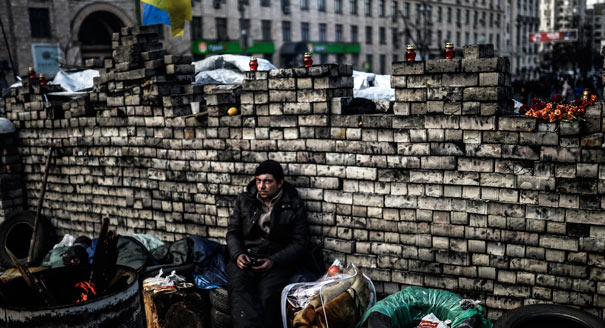
Russia has far less influence in Ukraine than is commonly appreciated. Moscow’s best option is to stand back and wait, while quietly favoring decentralization in Ukraine.
Source: International New York Times
Viktor F. Yanukovych of Ukraine and the Ukrainian opposition leaders signed an agreement on Friday that ended the deadly protests in Kiev by promising a new constitution and early elections. But the Russian president’s envoy to Kiev refused to co-sign it. While Moscow welcomed an end to the violence, it basically viewed the agreement as a diktat by the Western-backed Ukrainian opposition. The opposition has seized power in Kiev, and Moscow is wary that the crisis will not end anytime soon. Some radical groups remain well-armed; there are deep political, cultural and regional cleavages in Ukrainian society; the country’s elites are in disarray; and its economic situation is rapidly deteriorating. The mess is very much Ukraine’s own, and Russia has far less influence on it than is commonly appreciated.
The most popular myth about Moscow’s role in the Ukrainian crisis is that Mr. Yanukovych has been but a puppet of President Vladimir V. Putin. In reality, Mr. Putin has been very frustrated with his Ukrainian counterpart. To Mr. Putin, Mr. Yanukovych is unreliable, forever vacillating between the European Union and Russia; and now, a totally spent force, he has fled from Kiev to Kharkiv, a Russian-speaking city in eastern Ukraine. Moscow knows that the Ukrainian oligarchs, most of whom used to support Mr. Yanukovych, are largely anti-Russian. Though they in effect rule Ukraine, they fear being taken over by the richer business giants next door. Even those who made their money in Russia, like the protest-funder Petro Poroshenko, prefer to keep it in the West.The protests erupted when Mr. Yanukovych refused to sign the so-called association agreement between Ukraine and the European Union, which would have established a free-trade area, among other things. Despite what he claims, it wasn’t the Kremlin that made him do that. Moscow had clearly signaled it did not want Kiev to sign the deal when it introduced de facto sanctions on Ukrainian products last year, but ultimately Mr. Yanukovych was guided by his own calculations, rather than Putin’s admonitions or advice. The fundamental reason Mr. Yanukovych demurred was fear that he would not be re-elected in 2015 if he signed the agreement. At some point he realized that the deal would bring no financial support from the European Union and saw no way to offset the inevitable drop in trade with Russia or cushion the blow to Ukraine’s Soviet-era heavy industry.
During the months of standoffs in Kiev, Russia’s actual role was much more modest than advertised by the international media or the rumor mill in Kiev. The Russian ambassador to Ukraine, Mikhail Zurabov, was conspicuously absent from public view. The Kremlin ordered all Duma members to stay out of Ukraine. Dmitry Rogozin, a deputy prime minister and a former Russian ambassador to NATO with a knack for making in-your-face comments about the West, has largely remained silent on Ukraine. The only Russian official to display any continuous interest in Ukraine was Sergey Glazyev, Putin’s adviser for Eurasian integration, who spoke at conferences and wrote articles about the high costs of Ukraine’s turn to the European Union.
Mr. Putin did receive Yanukovych several times, in Sochi and Moscow. And in December Russia did offer to buy $15 billion in Ukrainian-government bonds — dwarfing any conditional aid the European Union could cough up via the International Monetary Fund — and lower by one-third the price of its gas shipments to Ukraine. This financial support was extended without any strings attached, with the dual purpose of helping Ukraine avoid a likely default and building goodwill for closer economic relations in the future.
But it was a risky proposition, given the political uncertainties in Kiev. And the move may be ineffectual. Moscow’s gesture of support was built on the belief, which Mr. Putin himself has expressed, that Ukrainians and Russians are one people. This obviously is not true, if only because Ukrainians themselves are not — at least not yet — one people. Just compare Lviv and Sebastopol: Western Ukraine, which was annexed by the Soviet Union only under Stalin, is vehemently anti-Russian; the east and the south are Russophone, with the Crimea mostly Russian ethnically. To the vast majority of the elite in Ukraine, the country’s independence from the Soviet Union meant, above all, independence from Russia. There are virtually no Ukrainian politicians who can be called pro-Russian: This simply goes against the grain of Ukraine’s national idea.
Thus Mr. Putin’s offer that Ukraine and Russia forge closer economic integration by way of a customs union are not very compelling to many Ukrainians. The idea also is potentially hazardous for Russia. Under that scheme, Moscow would need to pump a lot more money into Ukraine and give it a large say in joint bodies such as the Eurasian Economic Commission, with little guarantee that Ukraine wouldn’t break away again once it recovered from its current financial crunch.
Ukraine’s “February Revolution” may be a blessing in disguise for Moscow, as it could help debunk the notion that Russia cannot be a great power without Ukraine as its junior partner. Moscow does not need to govern more people; it needs to raise the health, education and work standards in its own people’s lives.
Despite what some Ukrainians suspect, Moscow is unlikely to try bringing about the breakup of Ukraine in order to annex its southern and eastern parts. That would mean civil war next door, and Russia abhors the idea. Moscow’s best option at this point is to stand back and wait, while quietly favoring decentralization in Ukraine. Although federalization is seen in Kiev and western Ukraine as a step toward ultimate partition, it could in fact help hold Ukraine together. With more financial and cultural autonomy, the country’s diverse regions could more easily live and let live, and keep one another in check. Promoting decentralization in Ukraine would be a realistic long-term strategy for Russia, something Moscow has lacked so far.
This article was originally published in the International New York Times.
Former Director, Carnegie Moscow Center
Trenin was director of the Carnegie Moscow Center from 2008 to early 2022.
Recent Work
Dmitri Trenin
Dmitri Trenin
Carnegie India does not take institutional positions on public policy issues; the views represented herein are those of the author(s) and do not necessarily reflect the views of Carnegie, its staff, or its trustees.

After the chill in ties between 2020 and 2024 that brought India–China relations to their lowest point in several decades, the two countries have engaged each other afresh. This paper argues that there are predominantly four imperatives guiding India’s approach to China, and they exist in an order of priority.

Saheb Singh Chadha

This piece argues that India’s central challenge is not managing a single flashpoint but resolving the underlying tension between expansion and institutional coherency of the BRICS grouping.

Vrinda Sahai
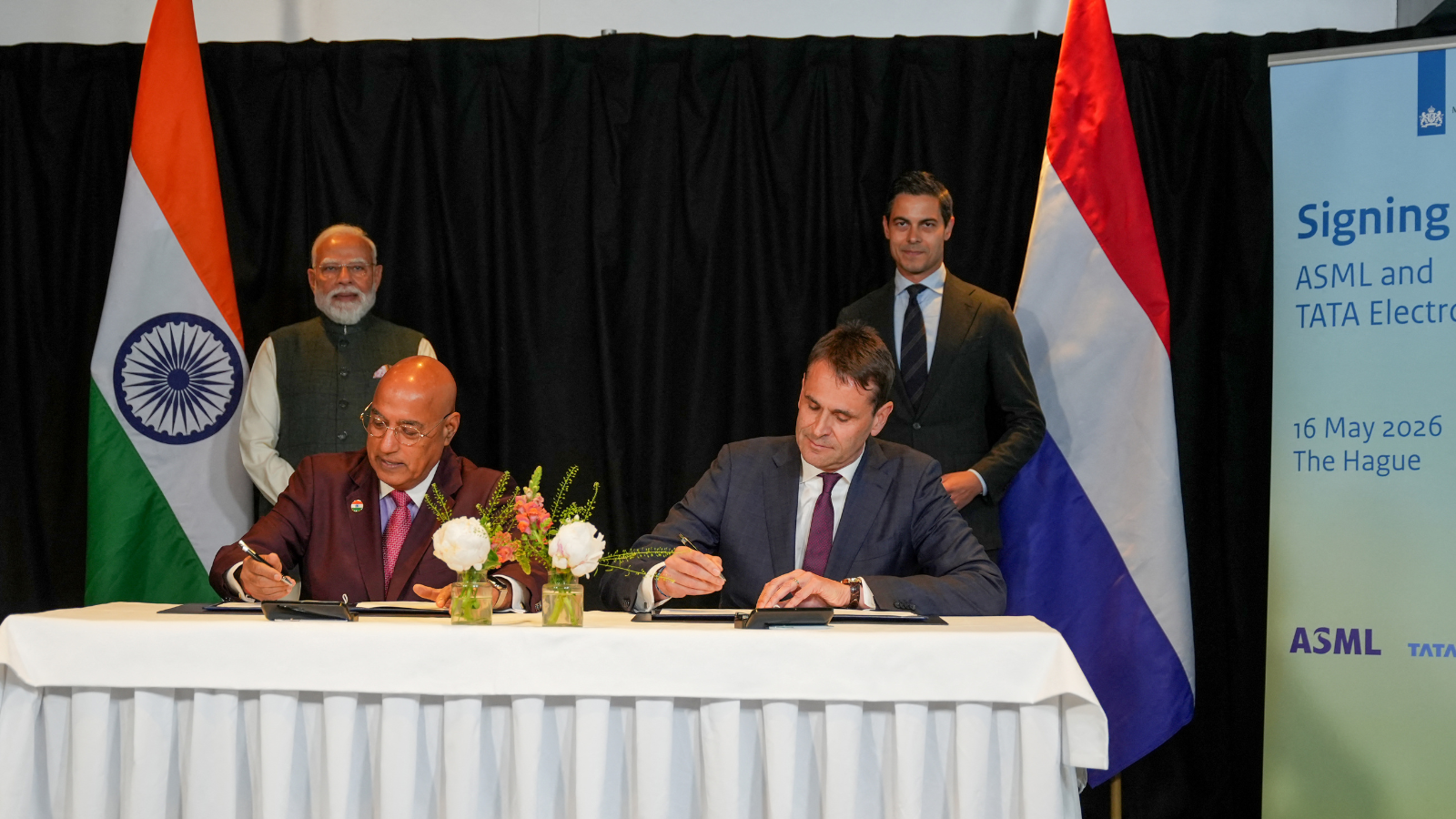
The ASML MoU with Tata Electronics is an indicator of how far the Indian semiconductor ecosystem has come. This ecosystem has been years in the making and represents real commercial logic.

Konark Bhandari

A partnership between India, a country of subcontinental size, and Africa, a continent of fifty-four countries, may seem asymmetric until one notes that both are home to nearly the same number of people—1.4 billion. This essay spells out the existing challenges to the partnership, its optimal potential, and the possible pathways to realize it over the next quarter-century.

Rajiv Bhatia

The India–EU Free Trade Agreement (FTA) is shaping up to be one of the most consequential trade negotiations, both economically and strategically. But, what’s in the agreement, what’s missing, and what will determine its success in the years ahead
Vrinda Sahai, Nicolas Köhler-Suzuki