

Commentary
Alexander Gabuev
{
  "authors": [
    "Alexander Gabuev"
  ],
  "type": "commentary",
  "centerAffiliationAll": "",
  "centers": [
    "Carnegie Endowment for International Peace",
    "Carnegie Russia Eurasia Center"
  ],
  "collections": [],
  "englishNewsletterAll": "",
  "nonEnglishNewsletterAll": "",
  "primaryCenter": "Carnegie Endowment for International Peace",
  "programAffiliation": "",
  "programs": [],
  "projects": [],
  "regions": [
    "East Asia",
    "China"
  ],
  "topics": [
    "Political Reform"
  ]
}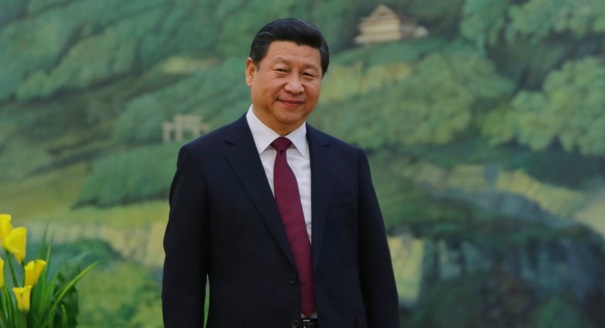
Source: Getty
Xi Jinping’s style of leadership, different from that of his predecessors, may have deep implications for Chinese decision-making and the country’s future. If Xi’s bold reform agenda succeeds by 2020, the world will see China on track to increase its role as a global powerhouse.
When an ordinary man walked in a low-key Beijing restaurant on December 28, it took other customers some time to recognize him. Standing in a line for his portion of steamed bun was the most powerful man in China—Secretary General Xi Jinping. Since taking office as the leader of the Chinese Communist Party (CCP) in November 2012, Xi has been trying to present himself as a man of the people. His first address as the country’s leader was in stark contrast to the dull speeches of his predecessors. Without using stiff party jargon Xi spoke of the problems, which worry millions of Chinese—rising cost of living, employment market, environmental degradation and rampant corruption.
All this, in principle, isn’t something really new for Chinese leaders. State television was always full of reports about Jiang Zemin or Hu Jintao visiting ordinary peasants in remote corners of the country. But Xi has brought it to another level. He is the first leader to base his model of public conduct not only on the Communist cliché of a leader being close to the masses or the Confucian image of a benevolent Emperor, but on the Western model of a popular president. His first-ever televised New Year address was modeled on the way U.S. presidents talk to the nation from the Oval Office. Xi is presenting himself as a national leader, not just a leader of the ruling party. And this is what makes him so different from his two predecessors—Jiang Zemin and Hu Jintao.
The differences are much deeper than just public image. Looking at Xi’s performance during his first year in office, one can conclude that China has again a strong and visionary party leader—the first one since Deng Xiaoping. Both Jiang Zemin and Hu Jintao shouldn’t be called that way. Jiang Zemin became party leader in the wake of the repression which followed the 1989 Tiananmen Square protests. He proved to be a good tactician in fighting for power, but the boldest steps for which his reign will be remembered were done by other people, most notably Deng Xiaoping and Premier Zhu Rongji. Hu Jintao’s reign is now increasingly dubbed as “the lost decade” by the China-watching community and the Chinese themselves. While hosting the 2008 Beijing Olympics, sending the first lunar mission and producing the first aircraft carrier, Hu was doing nothing to prevent growing imbalances in the economy and society.
The Third CCP Plenum (a meeting of the Party’s Central Committee) which took place in November 2013 also showed Xi Jinping as a different type of leader. The decisions of the Plenum have unveiled the most ambitious reform agenda in two decades. And Xi is clearly presiding over it. He is chairing the “leading group for overall reform” in the CCP and thus taking this role from Premier Li Keqiang—a person with a doubtful track record who won his position only as part of the factional balancing act, all due to Hu Jintao’s support.
The coming transformation will be painful for many social groups, especially the elites. One of the major reasons the reforms went nowhere during last 15 years are the vested interests. And here we come to the core difference between Xi and his predecessors, which will have a tremendous impact on China’s future. It’s Xi’s attitude toward the rules of the game inside the party. Anti-graft campaign as a tool to remove political opponents isn’t new for China (Bo Xilai’s trial is a good example), but ordering probe into Zhou Yongkang, the former security tsar and a member of the powerful Politburo Standing Committee (PSC), brings it to another level. Current and former PSC members had been considered untouchable since late 1970s, and this practice was a security guarantee for the top elite. By putting Zhou under house arrest Xi Jinping is changing these rules. The bold move has consolidated his power inside the party but also sent shockwaves in the elite.
Xi’s style of leadership may have deep implications for Chinese decision-making. If Xi’s bold reform agenda succeeds by 2020, the world will see China on track to increase its role as a global powerhouse. In foreign policy the world can expect a more confident and—what is more worrying—less pragmatic China. Xi enjoys a special relationship with conservative military leadership: his father was a legendary commander and Xi himself started his career in the ministry of defense. Xi’s patriotic views aired in 2009 during a speech in Mexico are in tune with the growing nationalism of Chinese society. Xi’s ascendance comes at the time of Beijing’s relations with its neighbors becoming more strained, as the rising tensions in the East and South China Seas vividly indicate.
Yet, the key issue will be Xi Jinping’s attempts to limit vested interests and increase his own role in the decision-making. The crucial moment will come in 2017 at the 19th CCP Congress where the party will need to appoint Xi’s and Li’s successors, who will join the PSC in 2017 and then get their top jobs in 2022. Right now the party secretary of Guangdong Province, Hu Chunhua (Hu Jintao’s protege), and the party secretary of Chongqing, Sun Zhengcai, seem to be on track to secure these positions, but a stronger Xi may take a different view. It remains to be seen whether Xi will manage to combine his bold manner of governing China with the system of collective leadership institutionalized by Deng Xiaoping, which has helped China so far to avoid the most dangerous shortcomings of any authoritarian model—a one-man rule and a non-rotating elite.
Alexander Gabuev is deputy editor-in-chief of Kommersant Vlast.

Director, Carnegie Russia Eurasia Center
Alexander Gabuev is director of the Carnegie Russia Eurasia Center. Gabuev’s research is focused on Russian foreign policy with particular focus on the impact of the war in Ukraine and the Sino-Russia relationship. Since joining Carnegie in 2015, Gabuev has contributed commentary and analysis to a wide range of publications, including the Financial Times, the New York Times, the Wall Street Journal, and the Economist.
Recent Work
Alexander Gabuev
Alexander Gabuev
Carnegie India does not take institutional positions on public policy issues; the views represented herein are those of the author(s) and do not necessarily reflect the views of Carnegie, its staff, or its trustees.

After the chill in ties between 2020 and 2024 that brought India–China relations to their lowest point in several decades, the two countries have engaged each other afresh. This paper argues that there are predominantly four imperatives guiding India’s approach to China, and they exist in an order of priority.

Saheb Singh Chadha

This piece argues that India’s central challenge is not managing a single flashpoint but resolving the underlying tension between expansion and institutional coherency of the BRICS grouping.

Vrinda Sahai

This paper examines the evolution of India-China economic ties from 2005 to 2025. It explores the impact of global events, bilateral political ties, and domestic policies on distinct spheres of the economic relationship.

Santosh Pai

This article examines the scale and impact of Chinese IUU fishing operations globally and identifies the nature of the challenge posed by IUU fishing in the Indian Ocean Region (IOR). It also investigates why existing maritime law and international frameworks have struggled to address this growing threat.

Ajay Kumar, Charukeshi Bhatt

This compendium brings together three essays by scholars who participated in Carnegie India's Security Studies Dialogue in 2024, each examining a different aspect of China’s policies. Drawing on their expertise and research, the authors offer fresh perspectives on key geopolitical challenges.
Vijay Gokhale, Suyash Desai, Amit Kumar, …