

In The Media
Lilia Shevtsova
{
  "authors": [
    "Lilia Shevtsova"
  ],
  "type": "legacyinthemedia",
  "centerAffiliationAll": "",
  "centers": [
    "Carnegie Endowment for International Peace",
    "Carnegie Russia Eurasia Center"
  ],
  "collections": [],
  "englishNewsletterAll": "",
  "nonEnglishNewsletterAll": "",
  "primaryCenter": "Carnegie Russia Eurasia Center",
  "programAffiliation": "",
  "programs": [],
  "projects": [],
  "regions": [
    "Russia",
    "Eastern Europe",
    "Ukraine"
  ],
  "topics": [
    "Security",
    "Foreign Policy"
  ]
}
Source: Getty
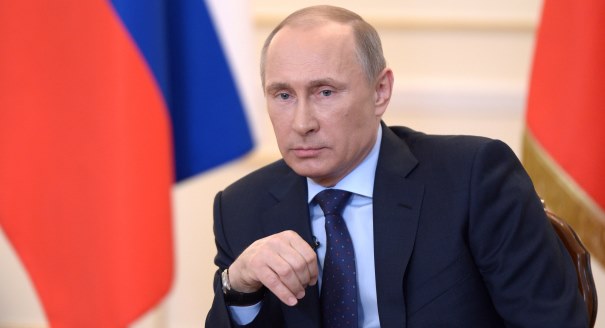
The Kremlin’s intervention in Crimea and destabilization of Ukraine exemplifies the Putin Doctrine, part of which is to find ways to reproduce the traditional Russian state.
Source: American Interest
I never expected so many intelligent, perceptive, and influential media and political personalities to so easily fall into Vladimir Putin’s trap. After the initial shock to the world, and especially to the West, following Moscow’s announcements about the possible use of Russian armed forces in Ukraine, and then after being forced to acknowledge that Russia has already occupied Crimea, the West breathed a collective sigh of relief upon hearing Putin’s March 4 press conference, where he suggested Russia doesn’t have any plans to seize eastern Ukraine. I intentionally waited a while to make sure that this would indeed be the prevailing Western reaction after the dust settled—and it was. Western capitals felt encouraged by Putin. In the New York Times, Peter Baker confirmed that “American officials took some solace” after hearing Putin’s explanations. One may suppose that the Europeans, who are much more inclined to forgive Putin than is Washington, have felt more than just relief, but actual satisfaction, at the news.
When it became apparent that Moscow was hurriedly attempting to annex Crimea through a “referendum” scheduled for March 16—in the presence of thousands of Russian troops—some in the West have grown nervous once again. They’re wondering why the Kremlin is in such a hurry, and why it is acting so crudely, without even pro forma attempts to clothe its naked aggression. But they needn’t wonder. By now it’s obvious that both Europe and the United States, unable to reverse the course of recent events and unwilling to pay the price for restraining Russia, are ready to participate in Putin’s gamble. Until now, stunned and appalled, the Western capitals have been merely reacting to the Kremlin’s moves, however belatedly or inadequately. But now the liberal democracies seem prepared to accept the new status quo—that is, to recognize the Russian annexation of Crimea as a fait accompli, since they do not dare force Russia to back down. They are now focused on stemming Russia’s expansion to Ukraine’s eastern and southern regions, apparently fearing that anything but acceptance of the new geopolitical reality will result in a much more dreadful outcome. Let us clarify what this reality is all about.First, it is about the destruction of the post-Cold War world order. This order was based on the premise that Russia and the West are not in the business of “containing” each other anymore, and that both support the principle of the territorial sovereignty of the independent states that emerged from the break-up of the Soviet Union. Moscow began to destroy that order as early as its 2008 war with Georgia, followed by the virtual annexation of Georgia’s breakaway territories, Abkhazia and South Ossetia. No less than President Nicolas Sarkozy, during France’s term of presidency of the European Union, ratified and legitimized the Russian occupation of Georgia’s territories. And Moscow’s interference in Ukraine’s internal affairs and its use of force in dealing with Kiev dates back to the Kremlin’s trade war against Ukraine in August 2013. So there’s nothing new or strange in the West’s inability to find a convincing way to react to Russia’s moves. Moscow concluded some time ago that it was free to take additional steps toward establishing the new order.
Second, it is about more than just setting a precedent allowing the Kremlin’s direct interference in the affairs of a sovereign state. Not only did its behavior validate the presence of Russia’s spheres of influence, thanks to the lack of meaningful Western reaction, but the Kremlin also reintroduced the “doctrine of interference” under the pretext of protecting the “Russian-speaking population.” Since Russian speakers live in most of the newly independent states, this “doctrine” threatens the stability of the entire post-Soviet space. Even Russia’s willing partners—Belorussian leader Lukashenko and Kazakh leader Nazarbajev—understand the looming threat to their countries’ territorial integrity, and so have stubbornly refused to support the Kremlin “solution” for Ukraine.
Third, it is about paving the way for the second stage of Moscow’s plans, which is to bring southeastern Ukraine under Russian control. This would make Ukraine a failed state and zone of instability, which will serve as an invitation to Moscow to “stabilize” it. One should even expect there to be Western supporters of Russia’s “moderating” role. Indeed some have already hinted that Moscow has its “interests” in the regions that have to be “accommodated.” And Moldova is likely the next target. In short, Eurasia is entering a period of instability. ...
Read the full text of this article in the American Interest.
Former Senior Associate, Russian Domestic Politics and Political Institutions Program, Moscow Center
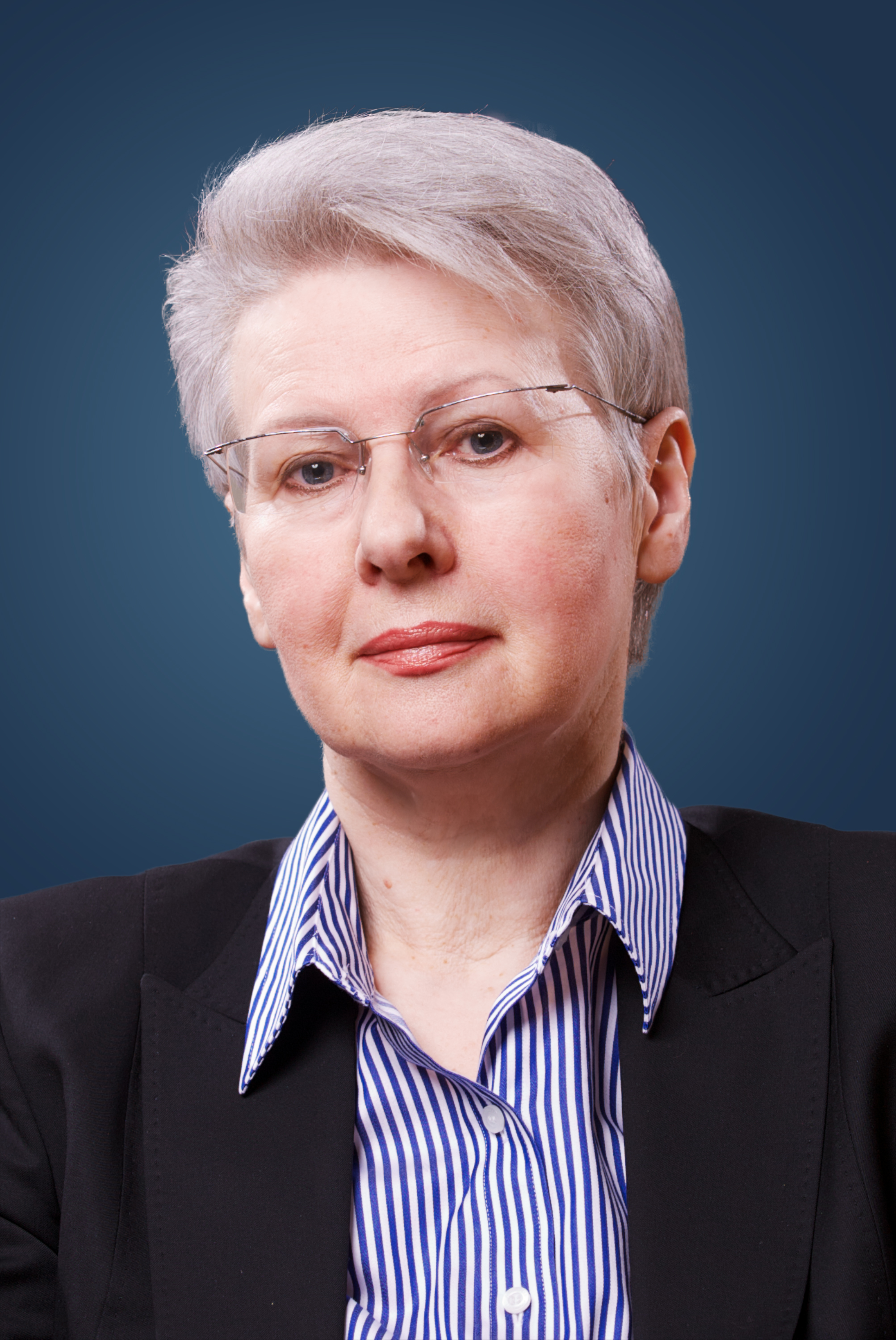
Shevtsova chaired the Russian Domestic Politics and Political Institutions Program at the Carnegie Moscow Center, dividing her time between Carnegie’s offices in Washington, DC, and Moscow. She had been with Carnegie since 1995.
Recent Work
Lilia Shevtsova
Lilia Shevtsova
Carnegie India does not take institutional positions on public policy issues; the views represented herein are those of the author(s) and do not necessarily reflect the views of Carnegie, its staff, or its trustees.

After the chill in ties between 2020 and 2024 that brought India–China relations to their lowest point in several decades, the two countries have engaged each other afresh. This paper argues that there are predominantly four imperatives guiding India’s approach to China, and they exist in an order of priority.

Saheb Singh Chadha

This piece argues that India’s central challenge is not managing a single flashpoint but resolving the underlying tension between expansion and institutional coherency of the BRICS grouping.

Vrinda Sahai

A partnership between India, a country of subcontinental size, and Africa, a continent of fifty-four countries, may seem asymmetric until one notes that both are home to nearly the same number of people—1.4 billion. This essay spells out the existing challenges to the partnership, its optimal potential, and the possible pathways to realize it over the next quarter-century.

Rajiv Bhatia

The India–EU Free Trade Agreement (FTA) is shaping up to be one of the most consequential trade negotiations, both economically and strategically. But, what’s in the agreement, what’s missing, and what will determine its success in the years ahead
Vrinda Sahai, Nicolas Köhler-Suzuki

This piece argues that the present Indian strategy, based on opportunistic diversification and utilization of limited strategic reserves, remains inadequate when confronting supply disruptions. It evaluates India’s options in the short, medium, and long terms.
Vrinda Sahai