Source: Real Clear World
Europe's "postmodern paradise," as historian Robert Kagan once described it, is seemingly under attack. Europeans suddenly find themselves confronted by devils from the past: a concept of power that is based on a narrow definition of national interests pursued at the expense of others.
To Europeans, the horrors of two world wars were to a large extent caused by precisely the kind of thinking they now see on display in the Kremlin: an aggressive, Hobbesian understanding of international politics; one in which might makes right and only the strongest survive.
Europeans built a system based on international law, economic cooperation, integration and shared sovereignty. Germany has been a driving force and proponent of this "postmodern" European order. The country is deeply invested in it not only out of conviction, but also by necessity. It has set itself, in response to the horrors of Nazi Germany, as a paradigmatic anti-power. For decades it pushed for the establishment and strengthening of European institutions designed to bind the continent together, making war in Europe seemingly impossible.
Moreover, in order to be powerful and safe, Germany needs the support of a strong international order that is respected by the major players and underwritten by the major powers. By defending the postmodern international order, Germany is also defending the foundations of its own power.
Russian President Vladimir Putin, in a clear breach of international law, is now challenging that order in Ukraine. Suddenly Europeans look into the abyss of a lawless world, and they are reminded of their continent's darkest days.
Russia hasn't always been on the opposing side. Until the conflict over Ukraine broke out, Russia itself had moved increasingly closer to the postmodern world of international institutions and agreements -- such as the G7 and the WTO -- often urged and invited by Europe.
But Moscow was never truly convinced of the merits of postmodern concepts of power and order. It has very often used its engagements in international organizations for very narrow national purposes, maximizing its power. What Europeans view as essential platforms for advancing common goals, Russians see as a game played by hypocrites -- and they have played accordingly.
Behind the facade of cooperation, Russia has never abandoned its traditional view of power as a struggle for superiority. Though it looked as if Russia would make some serious steps towards the postmodern world during the Medvedev years, Putin's return to the presidency has made clear that the harder edge of power would continue to shape Russian foreign policy.
Putin's rock solid support for Syria's dictator Bashar al-Assad was the first of many signals that Moscow was ready to challenge the West, thwarting U.S. and European hopes that Syria's ongoing civil war could be resolved multilaterally. By blocking the UN Security Council and arming a regime that wages war against large parts of its population, Putin demonstrated that Russia is back as a key player in the Middle East, ready and capable to keep a client in place -- even against the West.
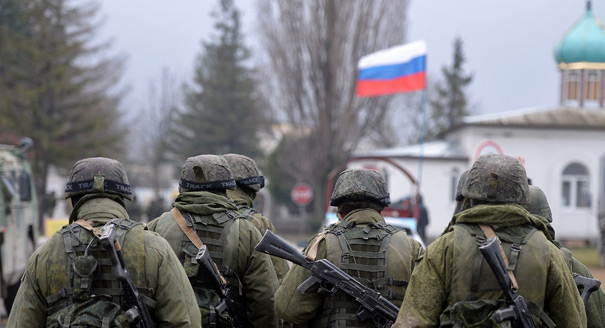
And with the invasion and annexation of Crimea, Putin has shattered all Western hopes that Moscow could be socialized into Western-style politics of cooperation and win-win-calculations. The U.S. reset and the EU's attempts to change Russia by integrating it into a web of legal and economic relationships have both failed to turn Moscow into a more responsible global actor.
Russia has become more autocratic, more nationalistic and much more aggressive in spite of Western overtures. Now both sides enter into a much harder, more dangerous game. If Russia succeeds in weakening basic principles of the liberal world order, it creates a dangerous precedent. At risk is the peace in the entire post-Soviet space. The weaker the West's response to Russia's annexation of Crimea, the more likely it will be that Moscow repeats the behavior in its "Near Abroad."
While the U.S. is still, through NATO, the primary security guarantor in Europe, it is in fact the EU that has the most leverage over Moscow. Only the European Union can dry out Putin's sources of gas and oil income. And though a trade war would certainly be costly, the long-term toll on postwar Europe would surely be even greater if Putin's act of aggression is left unchecked.
This article was originally published on Real Clear World.