

Article
The war in Ukraine has demonstrated that India needs to establish a strong domestic space economy in order to weather geopolitical storms.
Konark Bhandari
{
  "authors": [
    "Kateryna Pishchikova"
  ],
  "type": "commentary",
  "centerAffiliationAll": "",
  "centers": [
    "Carnegie Endowment for International Peace",
    "Carnegie Russia Eurasia Center"
  ],
  "collections": [],
  "englishNewsletterAll": "",
  "nonEnglishNewsletterAll": "",
  "primaryCenter": "Carnegie Endowment for International Peace",
  "programAffiliation": "",
  "programs": [],
  "projects": [],
  "regions": [
    "Eastern Europe",
    "Ukraine"
  ],
  "topics": [
    "Political Reform",
    "Democracy",
    "Civil Society"
  ]
}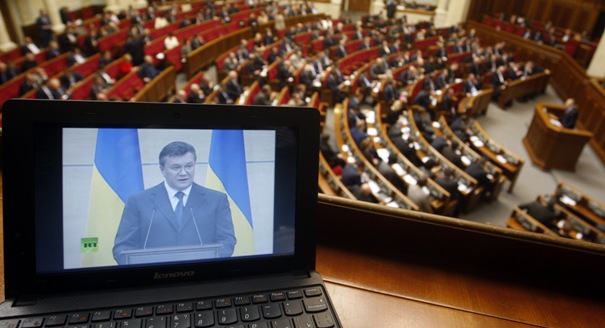
Source: Getty
As the new Ukrainian government is struggling to contain the crisis in Crimea, the broader picture should not be lost from sight. Comprehensive political reforms and an inclusive and transparent political process are needed to renew and strengthen political institutions and regain legitimacy.
Russian de facto military occupation of Crimea provoked a flurry of commentary and debates on issues that go beyond the situation in Ukraine: conspiracy theories, laments of Russia’s anti-Western stance, discussions of revamping the transatlantic cooperation, and broader questioning of the future of the liberal world order.
Fears of an open military confrontation with a nuclear power, although not unfounded, seem to have distracted the attention from the extremely delicate post-revolutionary situation in Kyiv. Although the United States and EU have been efficient in shoring up the necessary economic assistance to Ukraine, bilaterally and via IFIs, not sufficient attention is being paid to the post-revolutionary political process.
The hasty departure of President Viktor Yanukovych opened the door toward political change, yet a lot remains to be done to ensure the success of this tentative transition. Comprehensive political reforms and an inclusive and transparent political process are needed to renew and strengthen political institutions and regain legitimacy. As the government is struggling to contain the crisis in Crimea, the broader picture should not be lost from sight.
Here are several indispensable next steps.
Transitional justice. The toll on civic protesters is unprecedented for post-Soviet Ukraine. Indeed, investigation into the crimes against civilians was on the top of the list of Maidan demands. The Council of Europe offered to lead an International Advisory Panel to oversee investigations into recent acts of violence in Ukraine. It is imperative that such investigation starts as soon as possible and with full political support from the Ukrainian government. The recent leak of a conversation between EU high representative and Estonian foreign minister is yet another proof that, if not dealt with in an impartial and transparent manner, this issue will continue to haunt Ukrainian politicians and western mediators alike.
Constitutional reform. Constitutional change was the central issue of negotiations with President Yanukovych and one of the first laws voted by the parliament after he fled the country. What is often heralded as the change to a parliamentary system is in reality the reinstatement of 2004 constitutional amendments that are not without problems. The amendments, hastily adopted in the midst of the Orange Revolution as a part of the transition pact between outgoing President Leonid Kuchma and the opposition weakened the presidential powers, yet, stopped short of establishing a clear division of competencies between state organs and effective checks and balances. The stand-off between Prime Minister Yulia Tymoshenko and President Viktor Yushchenko after the Orange Revolution is too striking an illustration of this. It may be worth remembering that these amendments had been initially proposed by President Kuchma as early as January 2004 as a way to prepare a safe exit for himself by diffusing the authority of the next president. Indeed, the Venice Commission concluded at the time that the weakening of presidential powers did not improve the political system overall. It is high time that the recommended improvements are implemented. This should ideally happen before the presidential election in May so that reforms, once again, do not become hostage to individual political calculations.
Electoral law reforms. It should be remembered that the whole legal framework that regulates elections in Ukraine remains deficient and contradictory. A series of amendments introduced by President Yanukovych are widely recognized as having contributed to reinforcing the dominance of the ruling party as well as to an increase in electoral violence, fraud, and other violations. The law on presidential election is not without flaws either. The forthcoming presidential election may be accompanied by more violence. There is also a risk that some regions may boycott the election altogether. In this context, making use of the proposed technical assistance by the EU, the Council of Europe and the OSCE to safeguard the integrity of the scheduled electoral process is important.
Renewing state institutions. Even at the height of Maidan only half of Ukrainians were supporting the protesters. A recent poll shows as many as 30 percent do not support the transfer of power from the Party of Regions to the opposition, while 22 percent believe such a transfer will make the situation in Ukraine worse. Too swift a take-over of major political posts by the opposition aggravates the sense of being excluded from the political process by sizable portions of electorate. The Maidan protesters have repeatedly called for a complete system reload, not just a reshuffle among familiar faces. Over two-thirds of Ukrainians are now in favor of an early parliamentary election. Merely setting the date will not be sufficient. The electoral campaign should serve as a way to channel political energies, promote dialogue and confidence building measures, and boost the participation in the regions. It should also facilitate the ascendance of new political forces into politics.
None of these political reforms can be manufactured from the outside and it remains up to the Ukrainian political elites and civil society to push for these changes. Yet, given the leverage that the international community has over the new and fragile government in Ukraine at the moment, stricter political conditionality and a boost in political assistance may well help secure these reforms.
Ukraine’s territorial integrity remains a grave concern and Russia will continue to play the role of a key spoiler, whatever its next moves in Crimea are. Although Russian behavior puts at high risk the fragile balance in the country, it is Ukraine’s domestic politics that will determine whether the Maidan revolution will become the beginning of a new democratic transition in Ukraine or whether the all too well known dysfunctional and corrupt politics of alternating kleptocracies will prevail over the next months.
Kateryna Pishchikova is a visiting scholar at the Cornell Institute for European Studies.

Kateryna Pishchikova
ISPI
Kateryna Pishchikova is an associate research fellow at the Istituto per gli Studi di Politica Internazionale (ISPI) and an associate professor of political science and international relations at the eCampus University in Italy.
Carnegie India does not take institutional positions on public policy issues; the views represented herein are those of the author(s) and do not necessarily reflect the views of Carnegie, its staff, or its trustees.
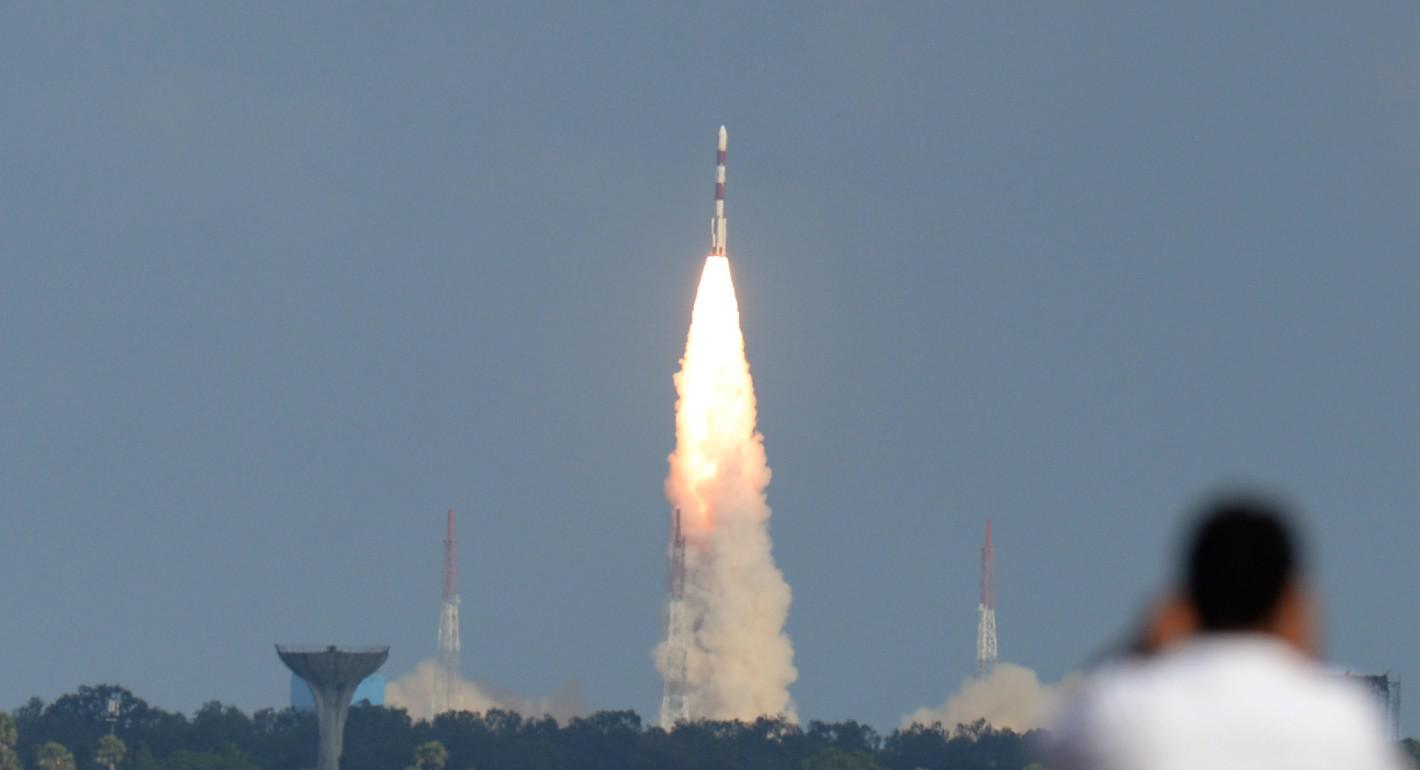
The war in Ukraine has demonstrated that India needs to establish a strong domestic space economy in order to weather geopolitical storms.

Konark Bhandari

Experts weigh in on whether the United States is too hostile toward China.


Stephen Wertheim, Evan S. Medeiros, Vijay Gokhale
As India’s economy recovers from the coronavirus pandemic, Indian businesses need efficient financial structures to regain their ground. Key reforms to India’s Insolvency and Bankruptcy Code could fill these gaps.

Anirudh Burman
Access to cross-border data is an integral piece of the law enforcement puzzle. India is well placed to lead the discussions on international data agreements subject to undertaking necessary surveillance reforms.

Smriti Parsheera, Prateek Jha
After the coronavirus pandemic wanes, how will China’s reorientation of the Belt and Road Initiative to address global health concerns influence its relationships with South Asian countries?


Deep Pal, Rahul Bhatia