

In The Media
Lilia Shevtsova
{
  "authors": [
    "Lilia Shevtsova"
  ],
  "type": "legacyinthemedia",
  "centerAffiliationAll": "",
  "centers": [
    "Carnegie Endowment for International Peace",
    "Carnegie Russia Eurasia Center"
  ],
  "collections": [],
  "englishNewsletterAll": "",
  "nonEnglishNewsletterAll": "",
  "primaryCenter": "Carnegie Russia Eurasia Center",
  "programAffiliation": "",
  "programs": [],
  "projects": [],
  "regions": [
    "Russia"
  ],
  "topics": [
    "Foreign Policy"
  ]
}
Source: Getty
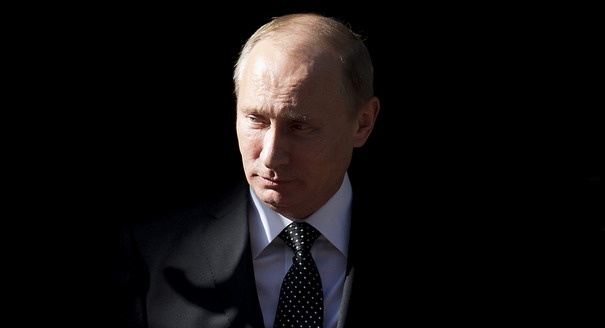
Putin’s rhetorical shift toward calm and congeniality shows that now Putin is presenting himself as a victor who has formulated and applied the new rules of the game.
Source: American Interest
In March, Vladimir Putin showcased himself as the character I like to call the Terminator. He performed this role for the benefit of a global audience, as well as for his opposition inside Russia. In his March 18 address to the Russian Federal Assembly and the public, the one intended to legitimize the Crimea annexation, Putin attacked the United States for “[being] guided not by international law, but by the rule of the gun.” Borrowing a term from Hitler’s lexicon, Putin also berated the “national traitors” inside Russia who refuse to toe the Kremlin line. It was bellicose rhetoric intended to portray the Russian leader as a wartime president addressing his nation in a time of crisis. Putin’s March pronouncements were in line with his 2013 speeches, in which he stated that Russia’s aim was to contain the “demoralized” Euro-Atlantic states.Now let us take a look at what Putin was saying during this April 17 question-and-answer session. He slipped into an entirely new skin, one projecting calm and a congenial nature. He chided his belligerent supporters in the audience. He even surprised many by saying, “Russia’s values do not differ dramatically from European values. We belong to the same civilization.” In a later interview he indicated that there is “nothing that could prevent normalization and normal cooperation” between Russia and the United States. Programs on Russian television stations have begun to preach the virtues of “tolerance” and “discussion.” ...
Read the full text of this article in the American Interest.
Former Senior Associate, Russian Domestic Politics and Political Institutions Program, Moscow Center
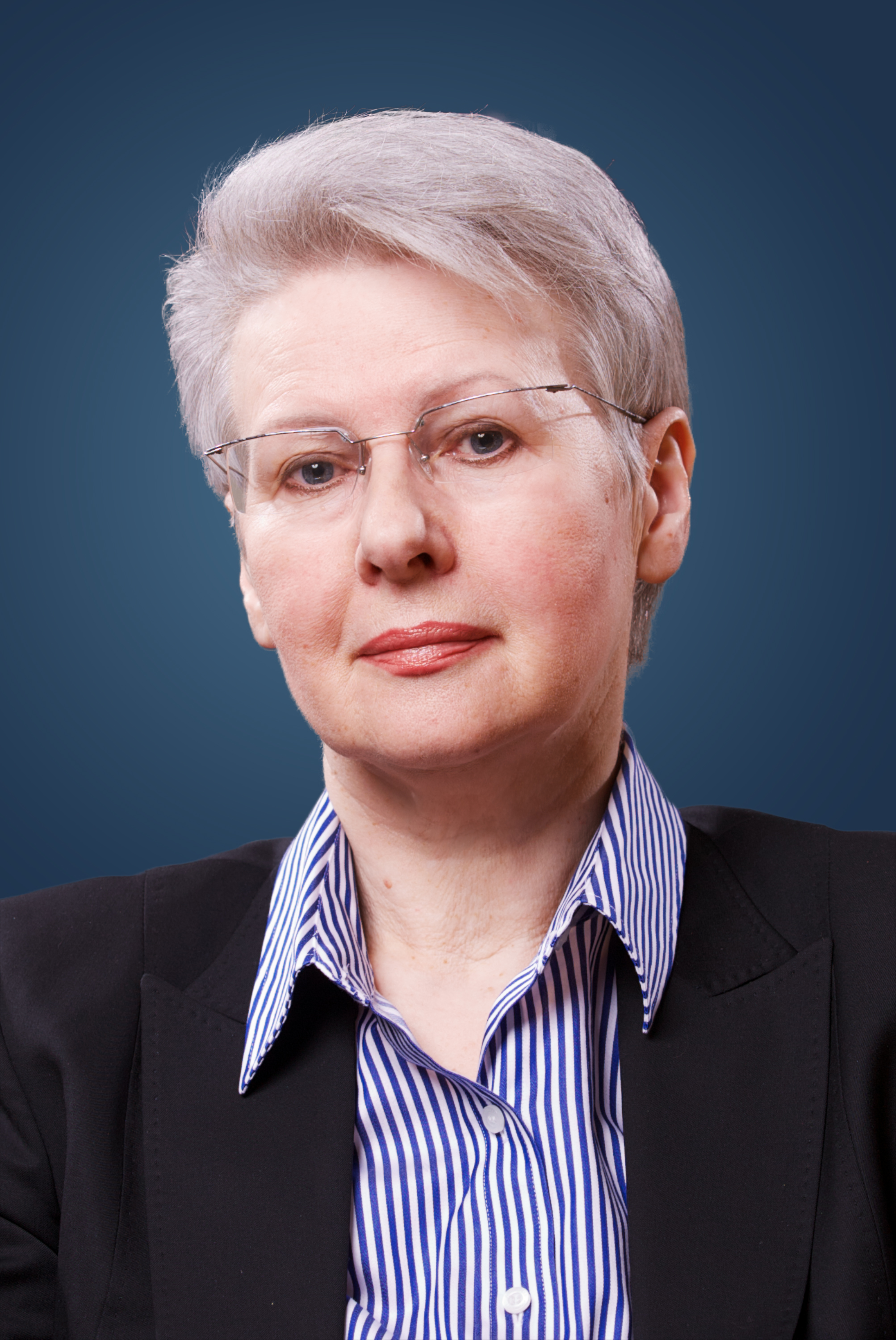
Shevtsova chaired the Russian Domestic Politics and Political Institutions Program at the Carnegie Moscow Center, dividing her time between Carnegie’s offices in Washington, DC, and Moscow. She had been with Carnegie since 1995.
Recent Work
Lilia Shevtsova
Lilia Shevtsova
Carnegie India does not take institutional positions on public policy issues; the views represented herein are those of the author(s) and do not necessarily reflect the views of Carnegie, its staff, or its trustees.

After the chill in ties between 2020 and 2024 that brought India–China relations to their lowest point in several decades, the two countries have engaged each other afresh. This paper argues that there are predominantly four imperatives guiding India’s approach to China, and they exist in an order of priority.

Saheb Singh Chadha

This piece argues that India’s central challenge is not managing a single flashpoint but resolving the underlying tension between expansion and institutional coherency of the BRICS grouping.

Vrinda Sahai

A partnership between India, a country of subcontinental size, and Africa, a continent of fifty-four countries, may seem asymmetric until one notes that both are home to nearly the same number of people—1.4 billion. This essay spells out the existing challenges to the partnership, its optimal potential, and the possible pathways to realize it over the next quarter-century.

Rajiv Bhatia

The India–EU Free Trade Agreement (FTA) is shaping up to be one of the most consequential trade negotiations, both economically and strategically. But, what’s in the agreement, what’s missing, and what will determine its success in the years ahead
Vrinda Sahai, Nicolas Köhler-Suzuki

Trump 2.0 has unsettled India’s external environment—but has not overturned its foreign policy strategy, which continues to rely on diversification, hedging, and calibrated partnerships across a fractured order.



Milan Vaishnav, ed., Sameer Lalwani, Tanvi Madan, …