

Commentary
Dmitri Trenin
{
  "authors": [
    "Dmitri Trenin"
  ],
  "type": "commentary",
  "centerAffiliationAll": "",
  "centers": [
    "Carnegie Endowment for International Peace",
    "Carnegie Russia Eurasia Center"
  ],
  "collections": [],
  "englishNewsletterAll": "",
  "nonEnglishNewsletterAll": "",
  "primaryCenter": "Carnegie Russia Eurasia Center",
  "programAffiliation": "",
  "programs": [],
  "projects": [],
  "regions": [
    "Russia",
    "Eastern Europe",
    "Ukraine",
    "Western Europe"
  ],
  "topics": [
    "Security",
    "Foreign Policy"
  ]
}
Source: Getty
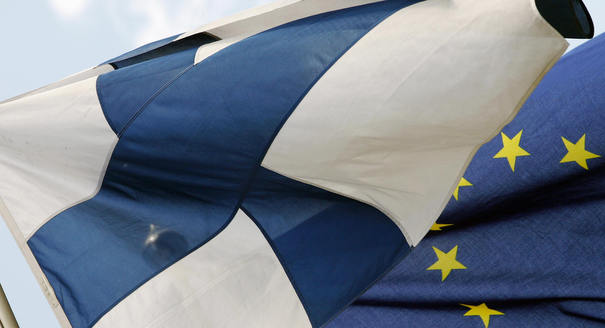
The current situation in Ukraine has intensified the long-simmering debate in Finland about joining NATO.
Any possible compromise in and on Ukraine would leave the country a neutral territory between Russia to the east and NATO to the west. Speaking at the 50th Munich Security Conference last February—it seems like a different epoch now—Zbigniew Brzezinski even spoke about “Finlandization” of Ukraine. A long time ago, my Finnish friends strongly discouraged me from ever using the term, which they treat as derogatory, and I have been keeping my promise ever since.
Inevitably, the current situation in Ukraine has intensified the long-simmering debate in Finland about joining NATO. Proponents of accession argue that membership in the alliance is the only guarantee of Russia's non-intervention. It is not clear, however, why Russia should want to invade Finland, with which it has had excellent relations for close to seventy years now, and which it has learned to respect from the Winter War onward.
That respect is not due to Finland's neutrality, as such, but to Finland's stubborn independence. During the Cold War, it learned to manage the Soviet Union much better than vice versa. After the Cold War, after initial hesitation, Moscow accepted Finland's decision to join the European Union as part of the process of European economic integration. NATO membership, by contrast, would be seen by Russia as the end of Finland's precious strategic independence.
Former Director, Carnegie Moscow Center
Trenin was director of the Carnegie Moscow Center from 2008 to early 2022.
Recent Work
Dmitri Trenin
Dmitri Trenin
Carnegie India does not take institutional positions on public policy issues; the views represented herein are those of the author(s) and do not necessarily reflect the views of Carnegie, its staff, or its trustees.

In any defense establishment, change is an ongoing process. However, despite the best of intentions, existing bureaucracies, bound by habit and years of socialization, have their limits in implementing transformative change.

Anit Mukherjee

After the chill in ties between 2020 and 2024 that brought India–China relations to their lowest point in several decades, the two countries have engaged each other afresh. This paper argues that there are predominantly four imperatives guiding India’s approach to China, and they exist in an order of priority.

Saheb Singh Chadha

This piece argues that India’s central challenge is not managing a single flashpoint but resolving the underlying tension between expansion and institutional coherency of the BRICS grouping.

Vrinda Sahai

A partnership between India, a country of subcontinental size, and Africa, a continent of fifty-four countries, may seem asymmetric until one notes that both are home to nearly the same number of people—1.4 billion. This essay spells out the existing challenges to the partnership, its optimal potential, and the possible pathways to realize it over the next quarter-century.

Rajiv Bhatia

The India–EU Free Trade Agreement (FTA) is shaping up to be one of the most consequential trade negotiations, both economically and strategically. But, what’s in the agreement, what’s missing, and what will determine its success in the years ahead
Vrinda Sahai, Nicolas Köhler-Suzuki