

In The Media
John Judis
{
  "authors": [
    "John Judis"
  ],
  "type": "legacyinthemedia",
  "centerAffiliationAll": "",
  "centers": [
    "Carnegie Endowment for International Peace"
  ],
  "collections": [],
  "englishNewsletterAll": "",
  "nonEnglishNewsletterAll": "",
  "primaryCenter": "Carnegie Endowment for International Peace",
  "programAffiliation": "",
  "programs": [],
  "projects": [],
  "regions": [
    "North America",
    "United States"
  ],
  "topics": [
    "Political Reform"
  ]
}
Source: Getty
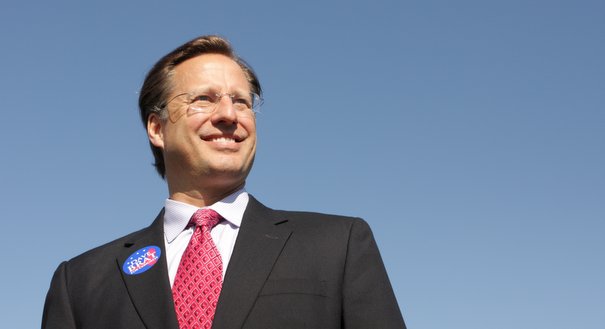
Dave Brat’s campaign against House Majority Leader Eric Cantor reflected an old strain of rightwing populism that continues to be an important part of U.S. politics.
Source: New Republic
Dave Brat’s victory over House Majority Leader Eric Cantor has been widely attributed to Brat’s opposition to immigration reform. But in his campaign, Brat and his Tea Party backers gave equal weight to denouncing Cantor as a tool of Wall Street, the big banks, the U.S. Chamber of Commerce and the Business Roundtable. Brat’s campaign reflected an old strain of rightwing populism that continues to be an important part of our politics.
American populism is rooted in middle class resentment of those who are seen as enjoying the benefits of the goods and services the middle class produces without having earned them through work. Its ideology is what historians call “producerism.” It first appears in the Jacksonian Workingmen’s Parties and then in the Populists of the late nineteenth century. But it takes a leftwing and a rightwing form.Facing an ailing economy, leftwing populists from Huey Long to Paul Wellstone primarily blame Wall Street, big business and the politicians whom they fund. Rightwing populists from George Wallace to Pat Buchanan also blame Wall Street, but put equal if not greater blame on the poor, the unemployed, the immigrant, and the minorities, who, like the coupon-clipper on Wall Street, are seen as economic parasites.
The Tea Party is a heterogeneous movement, but many of its members, and many of the local candidates it champions, are rightwing populists. And that was certainly true of Brat. The Randolph-Macon College economics professor attacked Cantor for supporting what he called “amnesty” for illegal immigrants, but he also took aim at Wall Street and big business.
Speaking last month before the Mechanicsville Tea Party, Brat tied Cantor to Wall Street and big business, whom he blamed partly for the financial crisis. “All the investment banks in the New York and D.C.—those guys should have gone to jail. Instead of going to jail, they went on Eric’s Rolodex, and they are sending him big checks,” he said. Brat echoed these charges in a radio interview. “The crooks up on Wall Street and some of the big banks—I’m pro business, I’m just talking about the crooks—they didn’t go to jail they are on Eric’s Rolodex,” he said.
Brat and local Tea Party leaders also criticized Cantor for attempting to water down the Stock Act, which banned members of Congress from profiting from insider trading. “One congressman changed the act so spouses could benefit from insider trading,” Brat charged, referring to Cantor. (Cantor drew equal fire from Democrats for attempting to undermine the bill.)
Brat’s case against immigration reform was directed at big business as much as it was directed at the immigrants themselves. “They get cheap labor,” he said of big business, “but everyone in the 7th district gets cheap wages.” He accused Cantor of following business’s lead on immigration reform. “Eric is running on the Chamber of Commerce and Business Roundtable principles,” Brat told a Tea Party audience. “They want amnesty for illegal immigrants. They want them granted citizenship. And it’s in the millions—40 millions—coming in. If you add 40 million workers to our labor supply, what will happen to the wage rate for the average American?”
Brat’s appeal was frankly demagogic. Cantor was not supporting amnesty, and there are about 10 million illegal immigrants currently in the United States. Some of Brat’s Tea Party supporters took it a step further. Larry Nordvig, the head of the Richmond Tea Party, told a joke at Brat rally. “A politician, a Muslim, and an illegal alien walk into a bar, and you know what the bartender said? Good evening, Mr. President.”
If he is elected in November, Brat may, of course, jettison the anti–Wall Street and anti-big business side of his politics. His actual economic views appear to be close to those of the Cato Institute and Ayn Rand. His solutions for America’s flagging economy consist in flattening the tax code and cutting spending—positions that will certainly not alienate the Chamber of Commerce or Business Roundtable. But in defeating Cantor, Brat echoed the age-old, darker, and more complicated themes of right-wing populism. These themes will continue to resonate, even if Brat abandons them.

Former Visiting Scholar
As a visiting scholar at Carnegie, Judis wrote The Folly of Empire: What George W. Bush Could Learn from Theodore Roosevelt and Woodrow Wilson.
Recent Work
John Judis
John Judis
Carnegie India does not take institutional positions on public policy issues; the views represented herein are those of the author(s) and do not necessarily reflect the views of Carnegie, its staff, or its trustees.

The U.S.–India semiconductor cooperation story is well-stocked with top-level strategic intent. What remains unresolved, however, are some underlying challenges that will determine whether the cooperation actually functions. Three such friction points stand out.

Shruti Mittal

India and the United States are close to concluding a Reciprocal Defense Procurement Agreement (RDPA) that will allow firms from the two countries to sell to each other’s defense establishments more easily. While this may not remedy the specific grievances both sides may have regarding larger bilateral issues, an RDPA could restore some momentum, following the trade deal announcement.

Konark Bhandari

On the last day of the India AI Impact Summit, India signed Pax Silica, a U.S.-led declaration seemingly focused on semiconductors. While India’s accession to the same was not entirely unforeseen, becoming a signatory nation this quickly was not on the cards either.
Konark Bhandari

This piece examines India’s response to U.S. sanctions and tariffs, specifically assessing the immediate market consequences, such as alterations in import costs, and the broader strategic implications for India’s energy security and foreign policy orientation.

Vrinda Sahai

On July 30, 2025, the United States announced 25 percent tariffs on Indian goods. While diplomatic tensions simmered on the trade front, a cosmic calm prevailed at the Sriharikota launch range. Officials from NASA and ISRO were preparing to launch an engineering marvel into space—the NASA-ISRO Synthetic Aperture Radar (NISAR), marking a significant milestone in the India-U.S. bilateral partnership.

Tejas Bharadwaj