• Research
  • About
  • Experts
Carnegie India logoCarnegie lettermark logo
{
  "authors": [
    "Ulrich Speck"
  ],
  "type": "commentary",
  "centerAffiliationAll": "",
  "centers": [
    "Carnegie Endowment for International Peace",
    "Carnegie Europe",
    "Carnegie Russia Eurasia Center"
  ],
  "collections": [],
  "englishNewsletterAll": "",
  "nonEnglishNewsletterAll": "",
  "primaryCenter": "Carnegie Europe",
  "programAffiliation": "",
  "programs": [],
  "projects": [],
  "regions": [
    "North America",
    "United States",
    "Russia",
    "Western Europe",
    "Germany"
  ],
  "topics": [
    "Foreign Policy"
  ]
}

Source: Getty

Commentary
Carnegie Europe

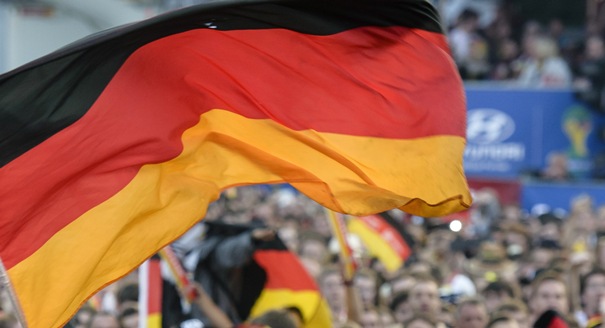
Is Germany Really Becoming a More Independent Power? A Response to Dmitri Trenin

A more confident, post-modern Germany that sees the world in a very different way than Russia is emerging. While illusions are gone, however, interests remain, and they incentivize both sides to work together on a range of issues.

Link Copied
By Ulrich Speck
Published on Jul 10, 2014

I very much agree with Dmitri Trenin's observation that there is a more self-confident Germany emerging: as an economic power, as key country inside the EU, and as an important diplomatic player.

But Germany is not on the way of becoming a traditional great power. Germany is, rather, the quintessential post-modern power: its power position relies on treaties and agreements inside Europe and with the Americans (the EU and NATO); it is generally unprepared to act unilaterally (in foreign policy at least); it is driven by the belief that there is no conflict that cannot be solved by peaceful means (such as negotiations and roundtables); it is very much focused on the economy; and has no territorial aspirations amongst other things.

(Western) Germany could develop this specific identity a) because it has been built on a tabula rasa in 1949, and b) because it has been protected for decades by the United States. It hasn't been burdened by traditions, and it wasn't forced to fully develop all the elements of traditional statehood because it was embedded in western alliances.

After re-unification in 1990, the view emerged that Germany would “normalize” and become more like France and Britain, a more complete power who's foreign policy tools included the use of force. But under Angela Merkel, Germany has reasserted its identity as a post-modern power. Instead of becoming more like its western neighbors, it became more like itself.

The big challenge for Germany today is to keep the structures in which it is embedded—the EU and NATO—alive and strong, as they are the preconditions for its power position. This also includes standing up for the post-modern principles in international politics: the view that the time of power politics has gone, the world has moved towards a cooperative order, and that win-win solutions should be sought instead of geopolitical competition.

The alternative would be the return to a more Hobbesian world, the one in which Russia feels it is living. To assert itself in such a world would, for Germany, require no less than a complete overhaul in its political mentality and institutions, almost a re-invention of German statehood.

The buildup of a true German-Russian partnership beyond trade would require an interest on the Russian side to move from great power politics towards post-modern international politics. For more than two decades, Germany has indeed attempted to invite Russia into its sphere.

But Russia has an understanding of international relations that remains tied to notions of unlimited sovereignty, competition, and national greatness. Both worlds, the German and the Russian one, are not compatible, and that is why finally they are now colliding.

German-Russian relations certainly are cooling down now, they may even freeze. But the reality check, or shock, that came with the Ukraine crisis may also lead to a more realistic view of the other. Germans understand now that Russians have a quite different worldview, and Russians understand that Germans are ready to defend core principles of western order.

While illusions are gone, interests remain, and they incentivize both sides to work together on a range of issues. The longer-term prospects for a German-Russian partnership are not as bad as the short-term prospects.

About the Author

Ulrich Speck

Former Visiting Scholar, Carnegie Europe

Speck was a visiting scholar at Carnegie Europe in Brussels, where his research focuses on the European Union’s foreign policy and Europe’s strategic role in a changing global environment.

Ulrich Speck
Former Visiting Scholar, Carnegie Europe
Foreign PolicyNorth AmericaUnited StatesRussiaWestern EuropeGermany

Carnegie India does not take institutional positions on public policy issues; the views represented herein are those of the author(s) and do not necessarily reflect the views of Carnegie, its staff, or its trustees.

More Work from Carnegie India

  • Commentary
    India Signs the Pax Silica—A Counter to Pax Sinica?

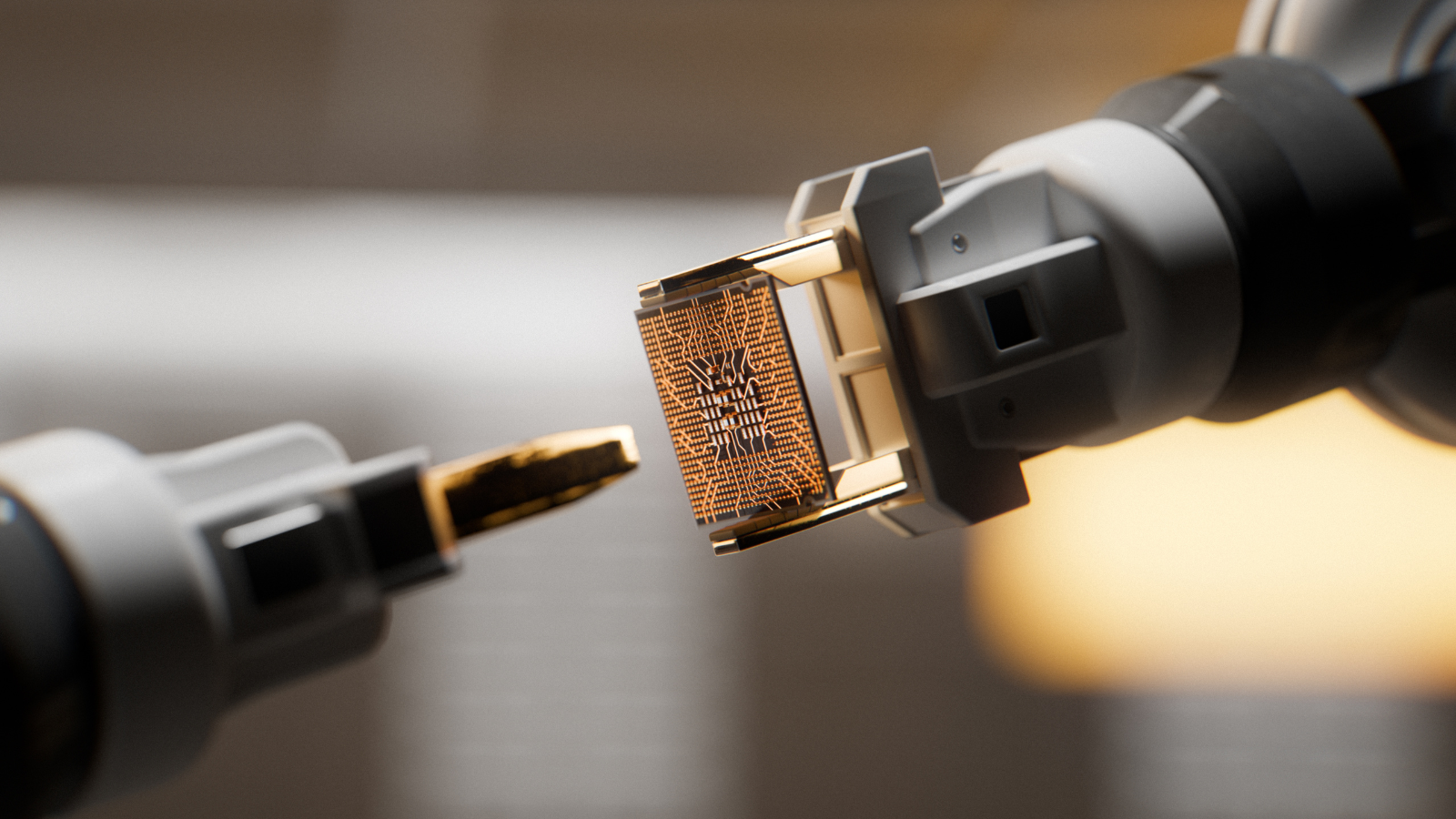
    On the last day of the India AI Impact Summit, India signed Pax Silica, a U.S.-led declaration seemingly focused on semiconductors. While India’s accession to the same was not entirely unforeseen, becoming a signatory nation this quickly was not on the cards either.

      Konark Bhandari

  • Commentary
    The Impact of U.S. Sanctions and Tariffs on India’s Russian Oil Imports

    This piece examines India’s response to U.S. sanctions and tariffs, specifically assessing the immediate market consequences, such as alterations in import costs, and the broader strategic implications for India’s energy security and foreign policy orientation.

      Vrinda Sahai

  • Commentary
    NISAR Soars While India-U.S. Tariff Tensions Simmer

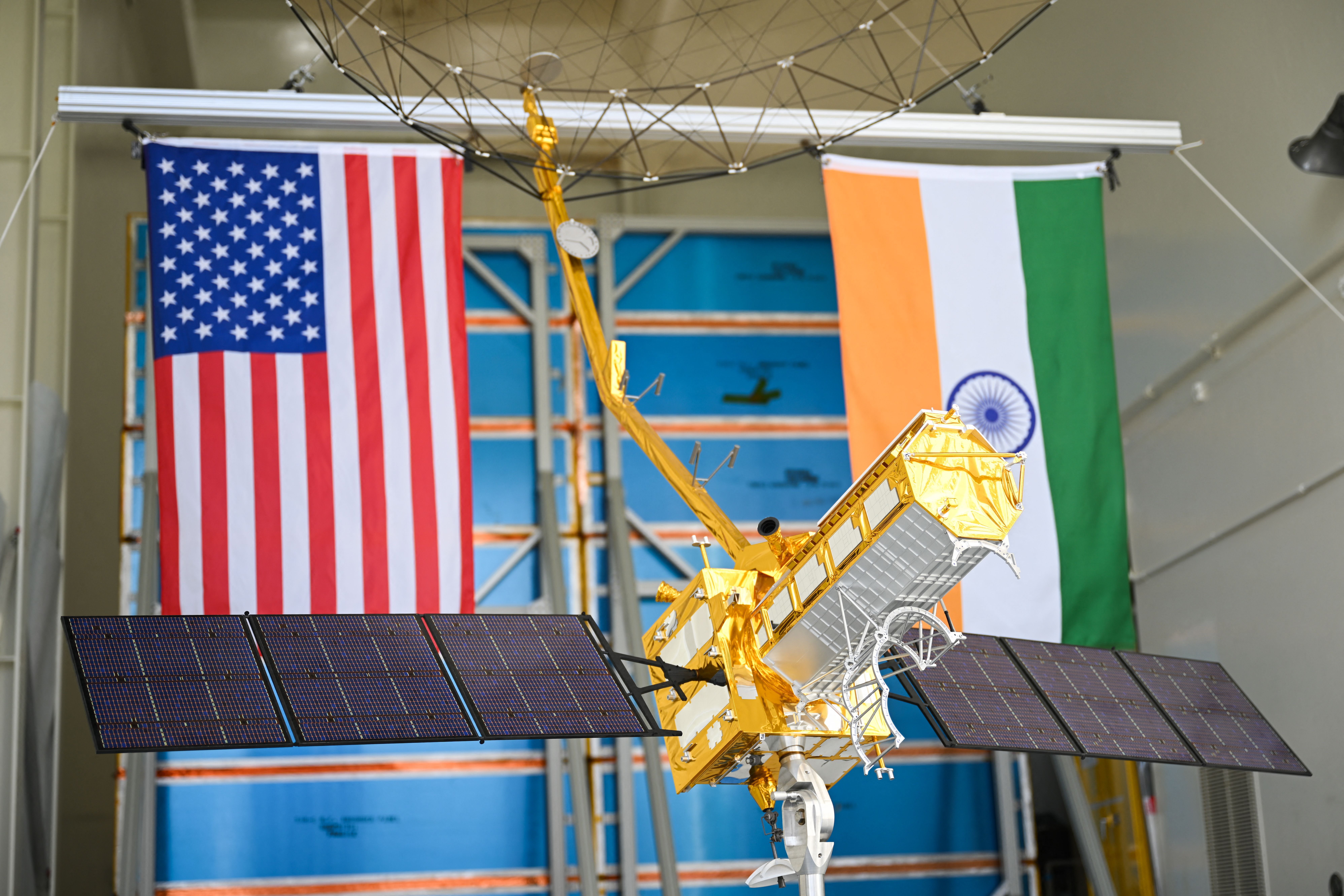
    On July 30, 2025, the United States announced 25 percent tariffs on Indian goods. While diplomatic tensions simmered on the trade front, a cosmic calm prevailed at the Sriharikota launch range. Officials from NASA and ISRO were preparing to launch an engineering marvel into space—the NASA-ISRO Synthetic Aperture Radar (NISAR), marking a significant milestone in the India-U.S. bilateral partnership.

      Tejas Bharadwaj

  • Commentary
    TRUST and Tariffs

    The India-U.S. relationship currently appears buffeted between three “Ts”—TRUST, Tariffs, and Trump.

      Arun K. Singh

  • Commentary
    Indian Airstrikes in Pakistan: May 7, 2025

    On May 7, 2025, between 1:05 and 1:30 a.m. (IST), airstrikes carried out by the Indian Air Force hit nine locations inside Pakistan and Pakistan occupied Kashmir (PoK). It was codenamed Operation Sindoor.

      Rudra Chaudhuri

Get more news and analysis from
Carnegie India
Carnegie India logo, white
Unit C-4, 5, 6, EdenparkShaheed Jeet Singh MargNew Delhi – 110016, IndiaPhone: 011-40078687
  • Research
  • About
  • Experts
  • Projects
  • Events
  • Contact
  • Careers
  • Privacy
  • For Media
Get more news and analysis from
Carnegie India
© 2026 Carnegie Endowment for International Peace. All rights reserved.