

Article
Deborah Gordon, Smriti Kumble, David Livingston
{
  "authors": [
    "David Livingston"
  ],
  "type": "legacyinthemedia",
  "centerAffiliationAll": "dc",
  "centers": [
    "Carnegie Endowment for International Peace"
  ],
  "collections": [],
  "englishNewsletterAll": "ctw",
  "nonEnglishNewsletterAll": "",
  "primaryCenter": "Carnegie Endowment for International Peace",
  "programAffiliation": "SCP",
  "programs": [
    "Sustainability, Climate, and Geopolitics"
  ],
  "projects": [],
  "regions": [
    "North America"
  ],
  "topics": [
    "Climate Change"
  ]
}
Source: Getty
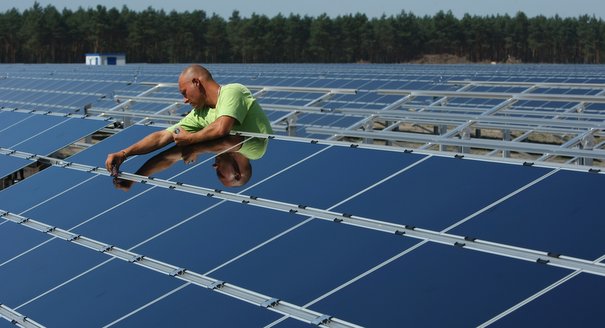
Negotiations on an environmental goods trade agreement between more than a dozen of the world’s leading economies could prove a significant step toward addressing climate change.
Source: Hill
Negotiations on an environmental goods trade agreement are currently taking place between more than a dozen of the world’s leading economies in what could prove a significant step toward addressing climate change through the multilateral trading system.
The efforts to liberalize trade through tariff reductions on a diverse set of “green” products would build on a similar agreement last year between leading Asia-Pacific nations. The final list of goods that would be covered is not yet determined, but it will likely start with those of the agreement of APEC nations. This includes technologies relating to environmental monitoring, waste treatment, air pollution mitigation, and renewable energy.
These negotiations between a relatively small group of governments, nonetheless representing nearly 90 percent of the trade in certain green goods, is attempting to make progress where efforts within the World Trade Organization (WTO) framework have stalled. It is a bet by the negotiators, including a muscular office of the U.S. Trade Representative, that “mini-lateralism” is capable of achieving what multilateralism has failed to deliver. Reaching an agreement would represent one of the signature environmental policy achievements of the Obama administration. While reducing tariffs alone is a worthy and important goal, many of the negotiating parties already possess relatively low tariff levels on most goods under consideration. The true potential of these talks lies in the willingness to define “environmental goods,” engage developing economies, and tackle more vexing technical barriers to trade.
There remains a danger of the final list of goods being influenced by classic horse-trading rather than a sound logic of what makes certain goods “green”. The equivalent Asia-Pacific list ranges from bamboo flooring to gas turbines to solar cells, which all had countries and sectors lobbying strongly for their inclusion. Negotiators in Geneva will likely seek to expand the reach of any agreement, with each party jostling to include goods in which they hold a comparative advantage or a dominant market position. While self-interest is inevitable in all trade negotiations, the usefulness and environmental credibility of the outcome will be undermined if not constrained by an objective set of criteria. Key decisions need to be taken about whether green goods are those that claim “green” origins (such as organic food), display better performance than their alternatives (such as energy-efficient appliances), or contribute to environmental ends (such as water purification systems and wind turbines).If negotiations progress, and they appear to have started positively, then more parties should be brought into the fold. Many developing countries are notably absent—though laudably the negotiations are open to any interested WTO member who wishes to join. It is significant that China as well as the United States and the European Union are already amongst the initial negotiating parties, creating sufficient gravity to attract smaller economies later on.
China has much to gain from enhanced access to technologies that will allow it to address, for example, alarmingly high levels of urban air pollution. Other emerging economies such as Brazil, Indonesia, Malaysia and South Africa also stand to benefit from greater trade in green goods. According to a recent UN report, developing countries moved from being net importers to net exporters of renewable energy in 2007, with South-South trade flows growing rapidly. Beijing in particular should consider using its leverage in key institutions, including the recently announced BRICS bank, to make the case for broader global participation in the green goods trade negotiations.
The potentially most significant impact of an agreement is addressing the growing role of “non-tariff barriers” to trade. These barriers often include divergent or poorly coordinated intellectual property regimes as well as technical regulations and standards. The environmental goods negotiators can draw from expertise within the WTO’s Committee on Trade and Environment and its Committee on Technical Barriers to Trade, both of which are valuable fora for collaboration and dialogue amongst diverse groups of country delegates, regulators and technical experts.
The profligate use of so called “trade remedies” is a cause for concern. These are retaliatory duties that countries impose upon others in response to ostensibly unfair subsidies or pricing policies. The solar sector has suffered particularly from trade remedies: just last week the United States established new import duties on Chinese solar products after preliminary findings that China was selling these products in the American market for less than the cost of production. While trade remedies remain important tools in any country’s trade policy arsenal, they have been overused in recent years as blunt political weapons. Mark Wu of Harvard University has proposed an elegant set of reforms that merit serious consideration by negotiators in Geneva in order to tackle this growing problem.
While the technical issues are more complex than simple tariff reduction, their potential environmental impact is significant. The talks should be given every chance to succeed by participating governments, with negotiators adopting a pragmatic approach that keeps the door open to addressing these non-tariff barriers. Success is far from guaranteed, but the potential outcome is worth fighting for, even if it is ultimately achieved slowly and incrementally.
Former Associate Fellow, Energy and Climate Program
Livingston was an associate fellow in Carnegie’s Energy and Climate Program, where his research focuses on emerging markets, technologies, and risks.
Recent Work

Deborah Gordon, Smriti Kumble, David Livingston

Erik Brattberg, David Livingston
Carnegie India does not take institutional positions on public policy issues; the views represented herein are those of the author(s) and do not necessarily reflect the views of Carnegie, its staff, or its trustees.

This commentary explores the likely actions of the Trump administration and driving forces on issues of deregulation, the United States’ leadership in AI, national security, and global engagements on AI safety.


Shatakratu Sahu, Amlan Mohanty
Since its launch nearly a year ago, the INDUS-X has marked many milestones in the India-U.S. relationship. Much has been achieved, but there is room to further enhance defense cooperation between the two countries in the coming years.


Ajay Kumar, Tejas Bharadwaj
This article explicates what iCET is and what it should not be mistaken for. The initiative is not designed to deliver a single deal. Instead, it involves multiple streams for cooperation and collaboration between the United States and India on critical and emerging technologies.

Rudra Chaudhuri
Based on preliminary research and stakeholder discussions, this article features four areas of biosafety and biosecurity that could potentially become concrete agenda items for collaboration between the United States and India under the iCET.

Shruti Sharma
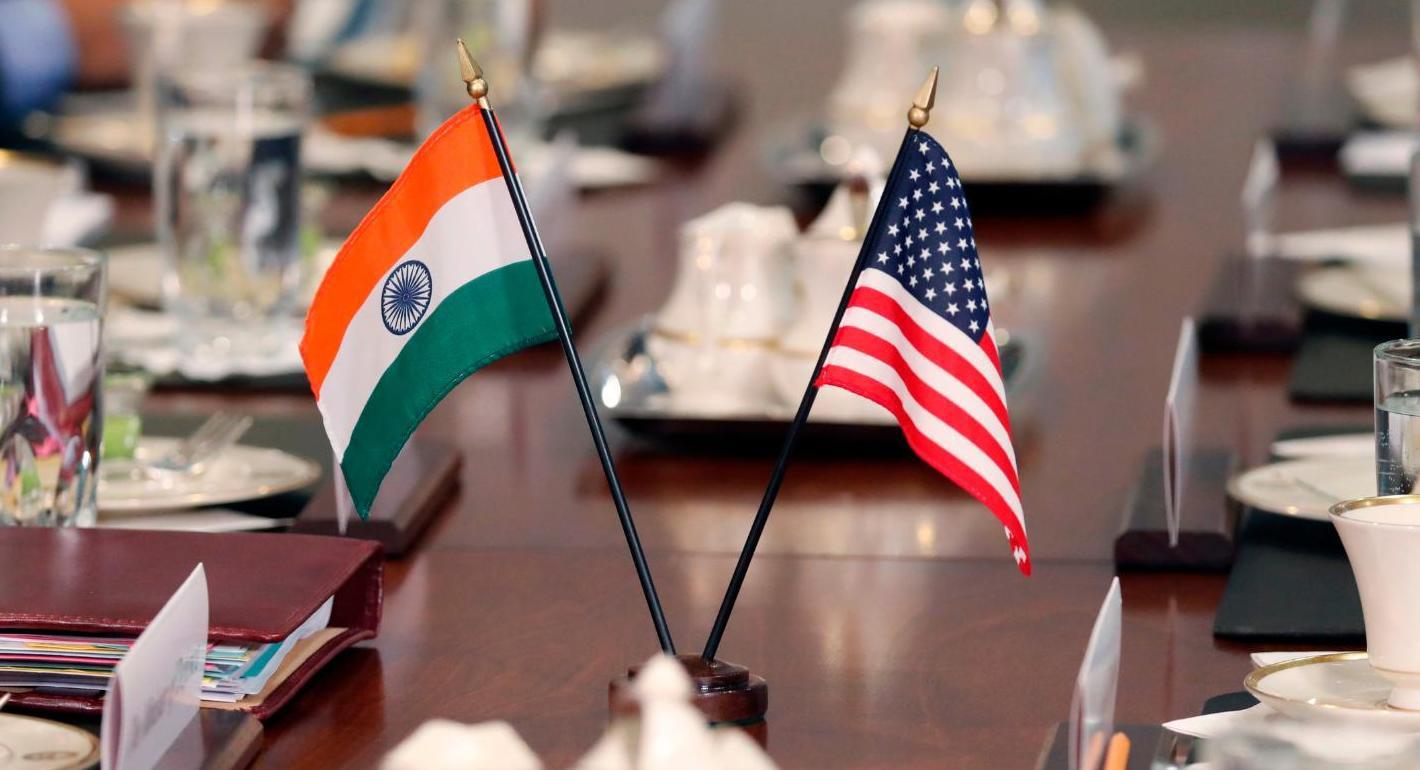
The article highlights critical takeaways from the unofficial discussions led by Carnegie India on the iCET with officials from both the countries, industry leaders, technologists, fund managers, entrepreneurs, and academics.

Rudra Chaudhuri, Konark Bhandari, Ashima Singh