

Commentary
Nathalie Tocci, Jan Techau
{
  "authors": [
    "Jan Techau"
  ],
  "type": "commentary",
  "centerAffiliationAll": "",
  "centers": [
    "Carnegie Endowment for International Peace",
    "Carnegie Europe",
    "Carnegie Russia Eurasia Center"
  ],
  "collections": [],
  "englishNewsletterAll": "",
  "nonEnglishNewsletterAll": "",
  "primaryCenter": "Carnegie Europe",
  "programAffiliation": "",
  "programs": [],
  "projects": [],
  "regions": [
    "North America",
    "United States",
    "Russia",
    "Eastern Europe",
    "Ukraine",
    "Western Europe"
  ],
  "topics": [
    "Security",
    "Military",
    "Foreign Policy",
    "Global Governance"
  ]
}
Source: Getty
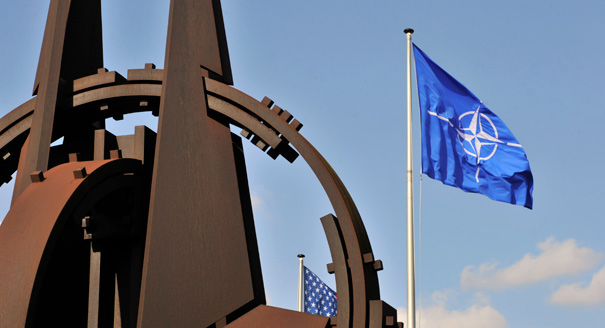
NATO leaders are gathering for a much-anticipated summit near the Welsh capital. Can they convince observers that they appreciate the scale of the challenges facing the alliance?
What a difference half a year makes. In early 2014, NATO was preparing for a not-too-exciting summit in Wales on September 4–5, dutifully filling the agenda with issues such as this year’s withdrawal from Afghanistan, partnerships with nonalliance countries, “smart defense,” and readiness.
Six months ago, the big overarching question was how NATO could master the transition from an alliance deployed in Afghanistan and elsewhere to a postoperational organization, desperate to cling on to the military skills and lessons it had learned over a decade of operations.
Now, NATO is preparing for the most important summit in recent memory—perhaps not quite historic, but definitely under intense scrutiny and with potentially enormous ramifications for the alliance’s future posture.
In both cases, the alliance must embrace deeply uncomfortable truths. In its relationship with Russia, NATO is now in a confrontation with a country it deemed a partner (albeit a difficult one) until only a few months ago. Short-term crisis management passed off smoothly, with a surprising degree of unity among 28 member states that hold very different views on the situation’s security relevance. But now, alliance strategy must shift from crisis management to the long game.
NATO needs to achieve three goals. First, it must provide credible reassurance to those allies that feel threatened by Russia. Second, it should keep the door open for a possible improvement in diplomatic relations. Third, it must make clear that the alliance’s security guarantee does not apply to Ukrainian territory while supporting the government in Kiev in its daunting security sector reforms.
What’s more, once a political compromise is achieved among NATO members, the alliance must keep it alive not just for a few months, but potentially for years. Next week’s summit in Wales marks the starting point of this long game, and the way the organization’s policies are formulated there will have a great impact on how they will be rolled out over the next few years.
With respect to IS, NATO’s position is both easier and more difficult at the same time. It is easier because the turmoil in Iraq and Syria does not fall into the alliance’s immediate remit. It is more difficult because the seemingly unstoppable expansion of the jihadists’ reach confronts Europeans and Americans with a daunting question: Will the West eventually have to go to war against IS? If the West’s indirect containment strategy—propping up the Kurdish Peshmerga as the group’s opponents—fails, and if the regional powers remain largely passive, Western troops on the ground may be unavoidable.
Of course, NATO will not phrase the conundrum in this way. Alliance leaders will agree on few tangible steps in Wales with regard to IS. And yet the war question is looming in the background, and with it the question of whether NATO will be involved.
So far, the West fears the costs and the unintended consequences of intervening in a politically, ethnically, and religiously hypercharged part of the world more than it fears the jihadists’ further expansion. That may change. Don’t expect the Wales summit to tackle this head-on. But do expect this topic to hang over the meeting like a dark cloud.
For a military alliance, many answers to these challenges sound technical and specific. NATO is set to embrace an elaborate exercise scheme in Central Europe that will increase the alliance’s troop presence there but will not constitute permanent basing. NATO’s Framework Nations concept, which aims to combine capabilities among allies, will make Britain and Germany leaders in projects that mix operational readiness with smarter defense spending. Members will renew their vow to spend 2 percent of GDP on defense.
But success in Wales will depend a lot on whether NATO can send a message that goes beyond the merely technical. The alliance must show that it can communicate the enormity of the changes that European security is currently undergoing, that it will address these changes resolutely without going overboard, and that the transatlantic link still works.
A larger-than-usual crowd will tune in when NATO leaders congregate in Wales. The summit will be followed closely not only in Europe but also around the world. It will be used as an indicator of whether the West is still alive. And it will tell audiences in Moscow, Beijing, Tokyo, Seoul, Tel Aviv, Damascus, Cairo, and elsewhere whether Europeans are still willing to play a military role and how loyal the United States is as an ally.
Any summit held under today’s geopolitical circumstances would be highly significant. The image NATO sends out in Wales will resonate for a long time to come.

Director, Europe Team, Eurasia Group
Techau is director with Eurasia Group's Europe team, covering Germany and European security from Berlin. Previously, he was director of Carnegie Europe.
Recent Work

Nathalie Tocci, Jan Techau
Jan Techau
Carnegie India does not take institutional positions on public policy issues; the views represented herein are those of the author(s) and do not necessarily reflect the views of Carnegie, its staff, or its trustees.

On the last day of the India AI Impact Summit, India signed Pax Silica, a U.S.-led declaration seemingly focused on semiconductors. While India’s accession to the same was not entirely unforeseen, becoming a signatory nation this quickly was not on the cards either.

Konark Bhandari

This piece examines India’s response to U.S. sanctions and tariffs, specifically assessing the immediate market consequences, such as alterations in import costs, and the broader strategic implications for India’s energy security and foreign policy orientation.
Vrinda Sahai
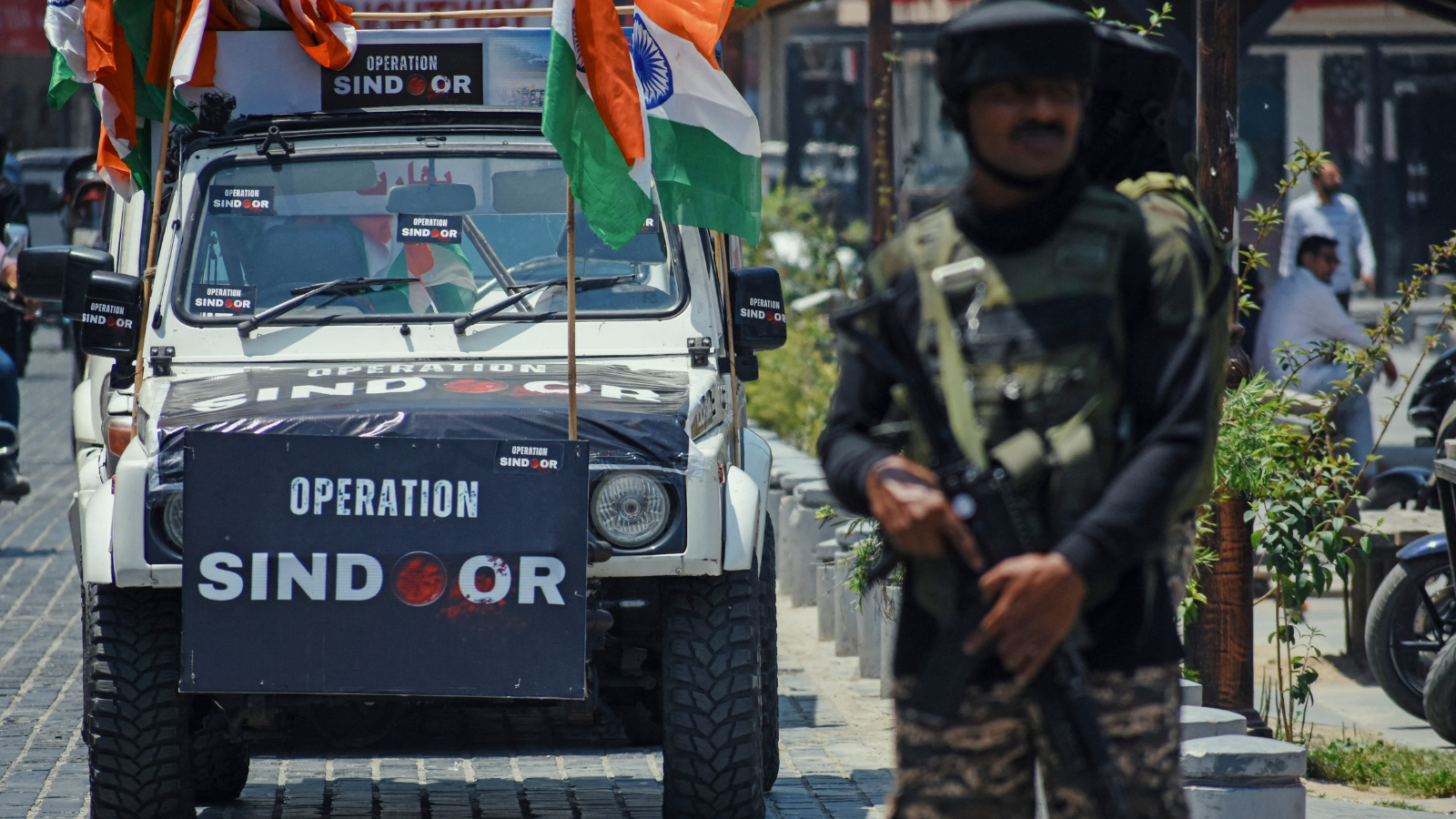
The India-Pakistan conflict that played out between May 6 and May 10, 2025, offers several military lessons. This article presents key takeaways from Operation Sindoor and breaks down how India’s preparations shaped the outcome and what more is needed to strengthen future readiness.

Dinakar Peri
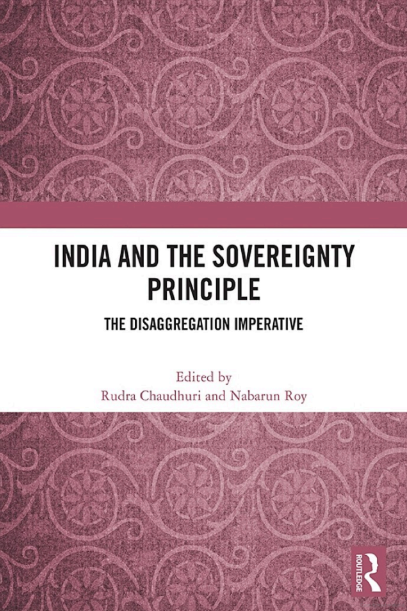
This book offers a comprehensive analysis of India's evolving relationship with sovereignty in a complex global order. Moving beyond conventional narratives, it examines how the sovereignty principle shapes India's behavior across four critical domains—from traditional military power to contemporary data governance.

Rudra Chaudhuri, Nabarun Roy
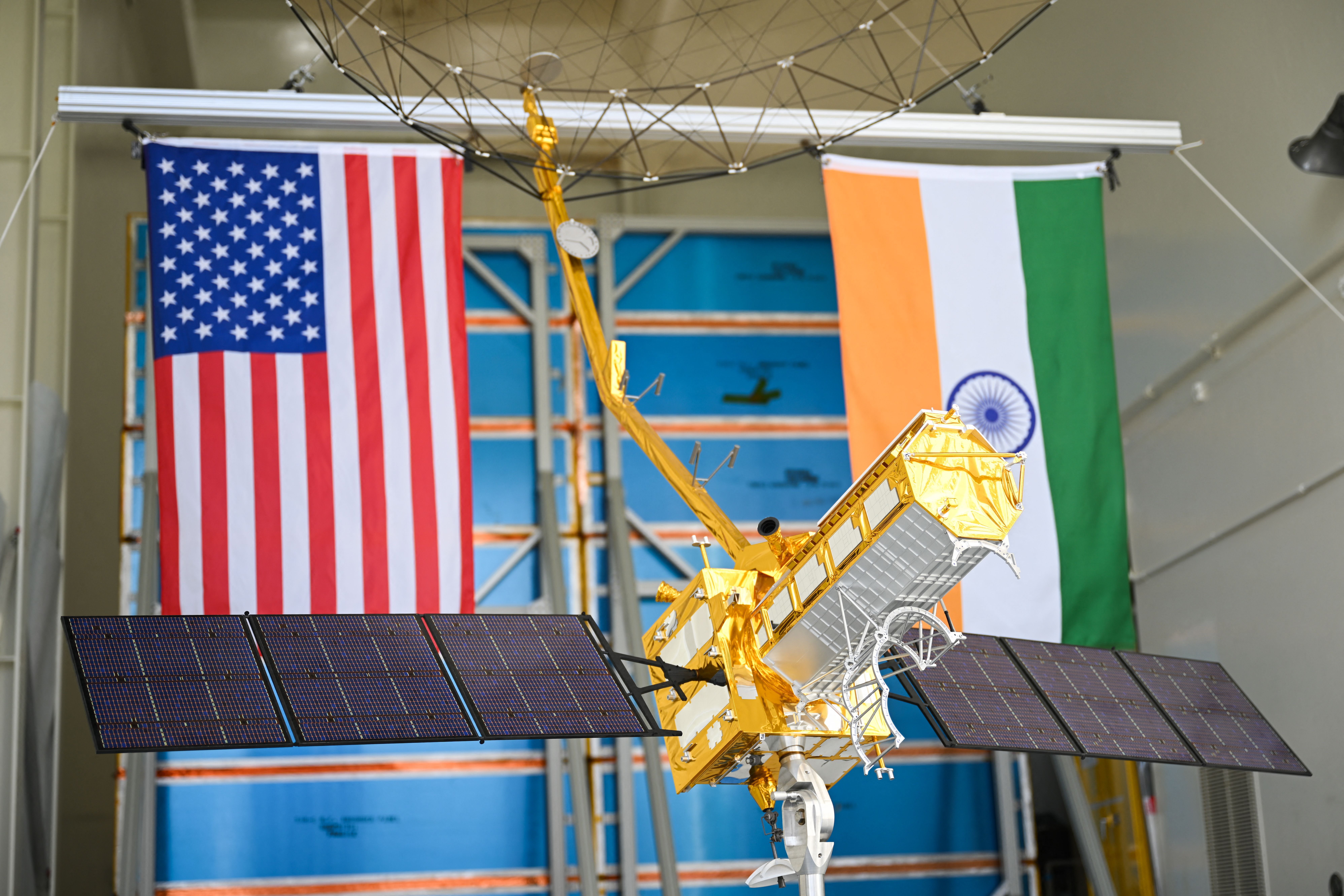
On July 30, 2025, the United States announced 25 percent tariffs on Indian goods. While diplomatic tensions simmered on the trade front, a cosmic calm prevailed at the Sriharikota launch range. Officials from NASA and ISRO were preparing to launch an engineering marvel into space—the NASA-ISRO Synthetic Aperture Radar (NISAR), marking a significant milestone in the India-U.S. bilateral partnership.

Tejas Bharadwaj