

Commentary
Nathalie Tocci, Jan Techau
{
  "authors": [
    "Jan Techau"
  ],
  "type": "commentary",
  "centerAffiliationAll": "",
  "centers": [
    "Carnegie Endowment for International Peace",
    "Carnegie Europe",
    "Carnegie Russia Eurasia Center"
  ],
  "collections": [],
  "englishNewsletterAll": "",
  "nonEnglishNewsletterAll": "",
  "primaryCenter": "Carnegie Europe",
  "programAffiliation": "",
  "programs": [],
  "projects": [],
  "regions": [
    "Eastern Europe",
    "Western Europe"
  ],
  "topics": [
    "Political Reform",
    "Global Governance",
    "Civil Society"
  ]
}
Source: Getty
Over the next few years, the European Union will have to revamp its neighborhood policies completely. The ambition is not only to prevent state failure, but to help build functional political systems that can strive economically, provide essential services, guard individual freedoms, and maintain social peace.
"Why Nations Fail" is not only the title of a hugely successful and influential book, it is also one of the dominant questions driving the analysis of international politics today. Fragile and failing states have long been identified as a primary source of upheaval and disorder in the world, for some analysts they are outright threats all by themselves.
The revolutions in the Arab world, the fate of Somalia, South Sudan, Mali and Libya, the rise of ISIL and the Syrian civil war, and the development in Iraq after the U.S. occupation—these and many other issues have at their core the question of state failure. Even in the Euro-crisis, the spectre of Greece as a candidate for institutional meltdown was often conjured up.
The answers to the question of why some systems work, produce public welfare, provide basic services, and are considered legitimate, and why others don't, are broadly accepted these days. Poverty, corruption, weak accountability of rulers and officials, high birthrates and low growth, youth unemployment, disastrous inequality, sectarian strife, and a weak rule of law, to name but a few factors, are seen as the central drivers for why states collapse. Weak institutions specifically have been identified as a key factor.
What I found even more interesting in that debate with the WEF, though, was the question why some nations do NOT fail, even though most of these factors are clearly in place in them. What is almost more mysterious than state failure is the enormous resilience of some systems against all odds. Many states in Africa would fall into this category, as some in the Arab world. The most notable examples are perhaps Egypt and Algeria.
I have not studied these issues (or these countries) at depth, so this is really more about questions than answers. But it seems to me that a number of factors for state survival stand out. Here is what I suggest and why it matters.
Perhaps unexpectedly, the number one reason why states survive against the odds is the fear of turmoil. People will often accept even very dire economic, political and social circumstances because they are afraid that if they attempt to change the circumstances, things could get even worse. In other words, even those having very little still feel they have something to lose. After the French revolution, similar uprisings, especially in Germany, but also elsewhere, were stymied by the fear that the brutality of the post-revolutionary reign of terror in France could also engulf other places. Similarly, the catastrophes of Syria and Libya today might deter other Arabs from taking to streets once more.
On the economic side, complete state failure is often averted by external subsidies into a political system. These could come in form of remittances, as Western aid, or as direct support payments to fragile regimes from ideological allies abroad. Saudi investments in Egypt are an example here. So is EU budget support to Moldova, which, contrary to its stated purpose, is not bringing about political change but cements the status quo.
The ability of rulers to pay out the political coalition that keeps them in power, is key to state survival, as Bruce Bueno de Mesquita and Alastair Smith have demonstrated in their marvelous study "The Dictator's Handbook." If the system itself does not produce sufficient resources to enable this system of buy-outs, external sources can often replace them. Generations of third-world despots and dictators have refined this system of power consolidation and state survival to the level of advanced statecraft.
And then, of course, sheer force often also plays a role. Systems can survive, even though all indicators point to failure, when a determined regime pours the bulk of its remaining resources into a repressive system which then holds together by force what would otherwise implode (or explode). The resource which then holds together a state is fear, not money. This is perhaps the most short-lived form of stabilizing the unstable. And yet can work for quite some time, as East Germany and other Central European examples from the cold war demonstrate.
But perhaps the most effective way of keeping a state together that should really be failing, is to use other non-state structures of governance to stabilize the systems. In non-failing states, it is often oligarchic, tribal, military, or clan structures that operate the system behind the facade of formal (but powerless) state institutions. Such systems might have a parliament, a government, parties, government departments, and all the other textbook insignia of modern statehood. But the shots are called elsewhere. The neo-patrimonial rule in the Palestinian territories and of course many tribal endo-structures in Africa are examples for this.
What follows from this? Over the next few years, the European Union will have to revamp its neighborhood policies completely. The ambition is not only to prevent state failure, but to help build functional political systems that can strive economically, provide essential services, guard individual freedoms, and maintain social peace. In pursuing this ambition, Europeans have often exclusively looked at why nations fail. This way they often underestimate and misjudge the stabilizing factors in fragile societies. These factors are a double-edged sword from a Western perspective. On the one hand they prevent the much-dreaded collapse of states and societies. On the other hand they are the primary obstacles to more liberal, democratic, and rights-based societies. They are friend and foe alike.
If the neighborhood policies of the EU and the transformative agenda of the West more generally, are to succeed, they will need to address this in-built dilemma more intelligently. It might sound counter-intuitive to many, but one way of doing this is to have a very good look at the reasons why nations don't fail.

Director, Europe Team, Eurasia Group
Techau is director with Eurasia Group's Europe team, covering Germany and European security from Berlin. Previously, he was director of Carnegie Europe.
Recent Work

Nathalie Tocci, Jan Techau
Jan Techau
Carnegie India does not take institutional positions on public policy issues; the views represented herein are those of the author(s) and do not necessarily reflect the views of Carnegie, its staff, or its trustees.

The war in Ukraine has demonstrated that India needs to establish a strong domestic space economy in order to weather geopolitical storms.

Konark Bhandari
With the Quad’s recent statement on a partnership related to outer space, India has an opportunity to bolster its private space sector. But it will need to articulate a national space policy first.
Konark Bhandari

Experts weigh in on whether the United States is too hostile toward China.


Stephen Wertheim, Evan S. Medeiros, Vijay Gokhale
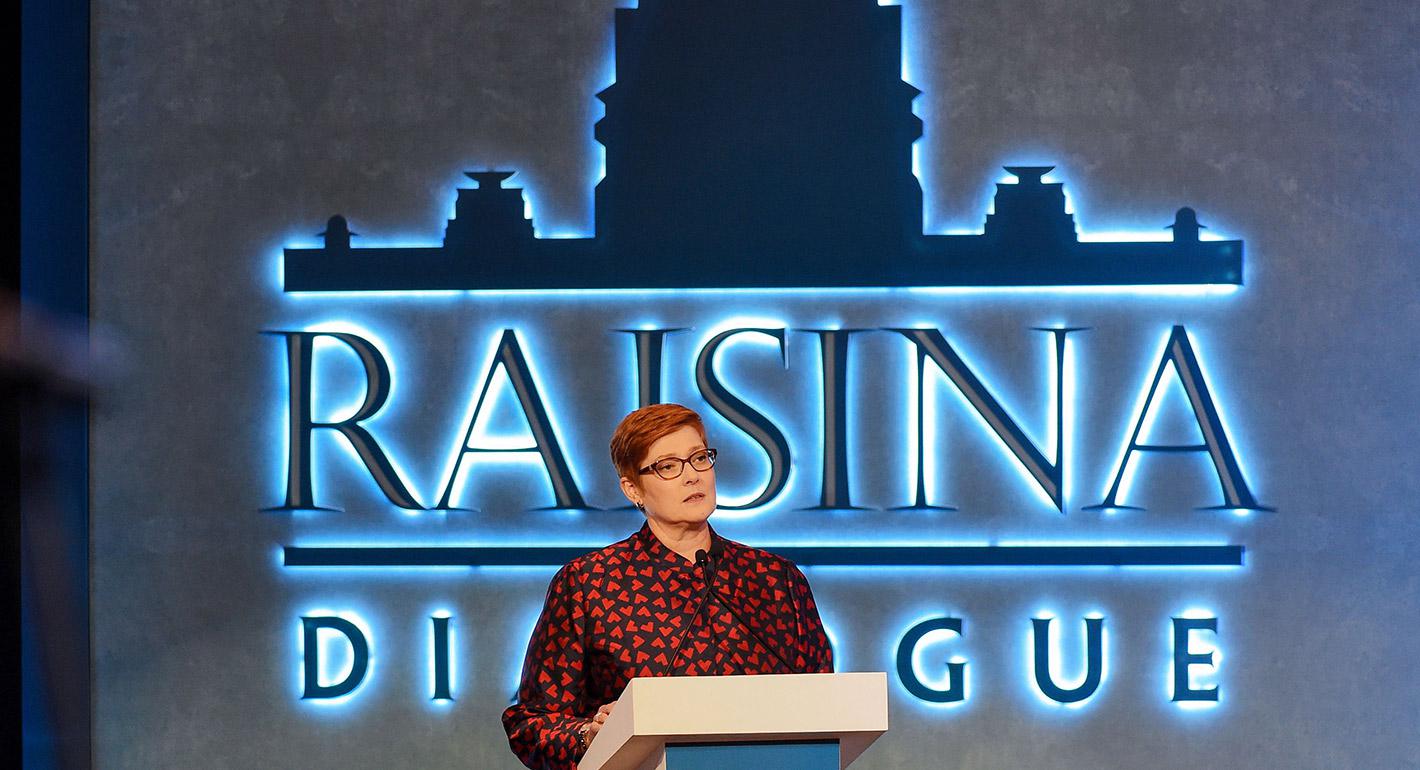
Foreign ministers from India, France, and Australia recently met (virtually) at the Raisina Dialogue, India’s flagship annual conference on geopolitics and geoeconomics. What can they get done if they work together?


Rudra Chaudhuri, Shibani Mehta

As India’s economy recovers from the coronavirus pandemic, Indian businesses need efficient financial structures to regain their ground. Key reforms to India’s Insolvency and Bankruptcy Code could fill these gaps.

Anirudh Burman