

Commentary
Marc Pierini
{
  "authors": [
    "Marc Pierini"
  ],
  "type": "legacyinthemedia",
  "centerAffiliationAll": "dc",
  "centers": [
    "Carnegie Endowment for International Peace",
    "Carnegie Europe"
  ],
  "collections": [
    "Europe’s Eastern Neighborhood",
    "Europe’s Southern Neighborhood"
  ],
  "englishNewsletterAll": "ctw",
  "nonEnglishNewsletterAll": "",
  "primaryCenter": "Carnegie Europe",
  "programAffiliation": "EP",
  "programs": [
    "Europe"
  ],
  "projects": [],
  "regions": [
    "Europe",
    "Eastern Europe",
    "Western Europe",
    "Iran"
  ],
  "topics": [
    "Foreign Policy"
  ]
}
Source: Getty
In 2014, the environment in the EU’s surroundings took a turn for the worse. It is high time to reevaluate the strategic thinking behind the European Neighborhood Policy.
Source: EUobserver
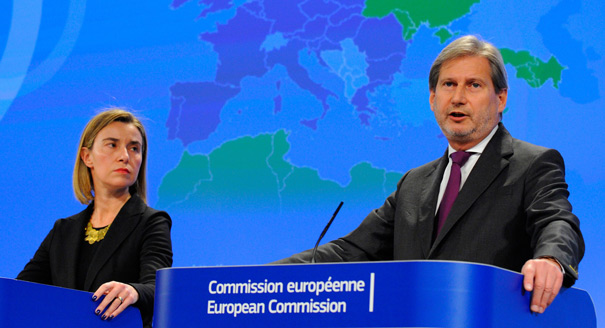
On 4 March, the EU’s neighbourhood commissioner and its foreign affairs chief issued a joint consultation paper titled “Towards a new European Neighbourhood Policy”, meant to trigger a debate with member states and other stakeholders on how to revive the EU’s decade-old neighborhood policy (ENP) - i.e. relations with countries spanning from Azerbaijan to Morocco and from Belarus to Egypt.
The paper is long on questions (74 of them) about policy proposals but much shorter on strategic thinking.
Yet, in 2014, the EU’s geographical environment took a sharp turn for the worse: in Crimea and eastern Ukraine, in Syria and Iraq, and in Libya.The political landscape across EU border regions has transformed radically and the east and south of Europe are undergoing even deeper political and societal changes than what meets the eye. Pre-existing EU assumptions about the neighborhood are now obsolete.
From Russia, bullying and open hostility have become the new normal, while successive eastern Ukraine ceasefire “negotiations” have turned into tragic farces.
Russia’s air force routinely challenges the integrity of Western European air space, while weekly Russian resupplies of Syrian leader Bashar alAssad’s forces are keeping the Damascus regime afloat, fuelling an unprecedented human tragedy.
Through military actions, political rapprochements, and massive propaganda, Moscow is doing its utmost to drive a wedge between both EU and Nato member states. EU policies are directly challenged by Russia in Ukraine, Moldova, Armenia, Azerbaijan, and Georgia.
Pre-existing EU assumptions about the neighborhood are now obsolete.Tweet This
Across Europe’s southern neighborhood, Islamic conservatism is becoming more deeply rooted than ever before, not just within Islamist parties but throughout entire societies, including those long perceived as predominantly “secular” and “modern” such as Tunisia and Turkey.
Their societal, scientific, and legal norms, long-inspired by Europe’s, are now regularly challenged or reversed. A different concept of society and state is being introduced.
There is also deep resentment across southern Europe toward the EU for its lack of influence on events in Palestine and Syria, and over the massive loss of life among irregular migrants in the Mediterranean Sea.
In addition, the self-proclaimed caliphate of Daesh - with its territorial control, its military aptitude, its unimaginable violence, and its cultural revisionism - presents a challenge that no Western diplomacy has had to cope with before.
These developments render the EU’s traditional model (liberal democracy) and methodology (personal high-level talks and financial incentives towards good governance) largely ineffectual.
Recent developments in the neighborhood render the EU’s traditional model and methodology largely ineffectual.Tweet This
EU leaders are now suddenly confronted with situations in which they can no longer trust their intruding interlocutors (Putin); cannot be sure that their counterparts are able to talk openly (Moldova or the South Caucasus); cannot decently negotiate with (Assad); and cannot even conceive to interact with (al-Baghdadi).
Elsewhere, as in Tunisia, the EU is now dealing with an unprecedented governing coalition between liberals (Nidaa Tounes) and Islamists (Ennahda) with radically diverging societal objectives.
This eminently mobile - and often hostile - environment requires radical policy changes to the ENP. The EU should:
The EU should combine the promotion of its values with a more assertive defense of its interests.Tweet This
The comfortable days of dealing with like-minded liberal interlocutors are largely over: the “EU model” is becoming less sellable in today’s global environment and the EU brand of democracy and civilization is fundamentally challenged.
It is high time to adjust to these new realities. Yes, the EU needs to continue promoting its values but should also defend its interests and watch long-term evolutions.

Senior Fellow, Carnegie Europe
Marc Pierini is a senior fellow at Carnegie Europe, where his research focuses on developments in the Middle East and Turkey from a European perspective.
Recent Work
Marc Pierini
Marc Pierini
Carnegie India does not take institutional positions on public policy issues; the views represented herein are those of the author(s) and do not necessarily reflect the views of Carnegie, its staff, or its trustees.

After the chill in ties between 2020 and 2024 that brought India–China relations to their lowest point in several decades, the two countries have engaged each other afresh. This paper argues that there are predominantly four imperatives guiding India’s approach to China, and they exist in an order of priority.

Saheb Singh Chadha

This piece argues that India’s central challenge is not managing a single flashpoint but resolving the underlying tension between expansion and institutional coherency of the BRICS grouping.

Vrinda Sahai
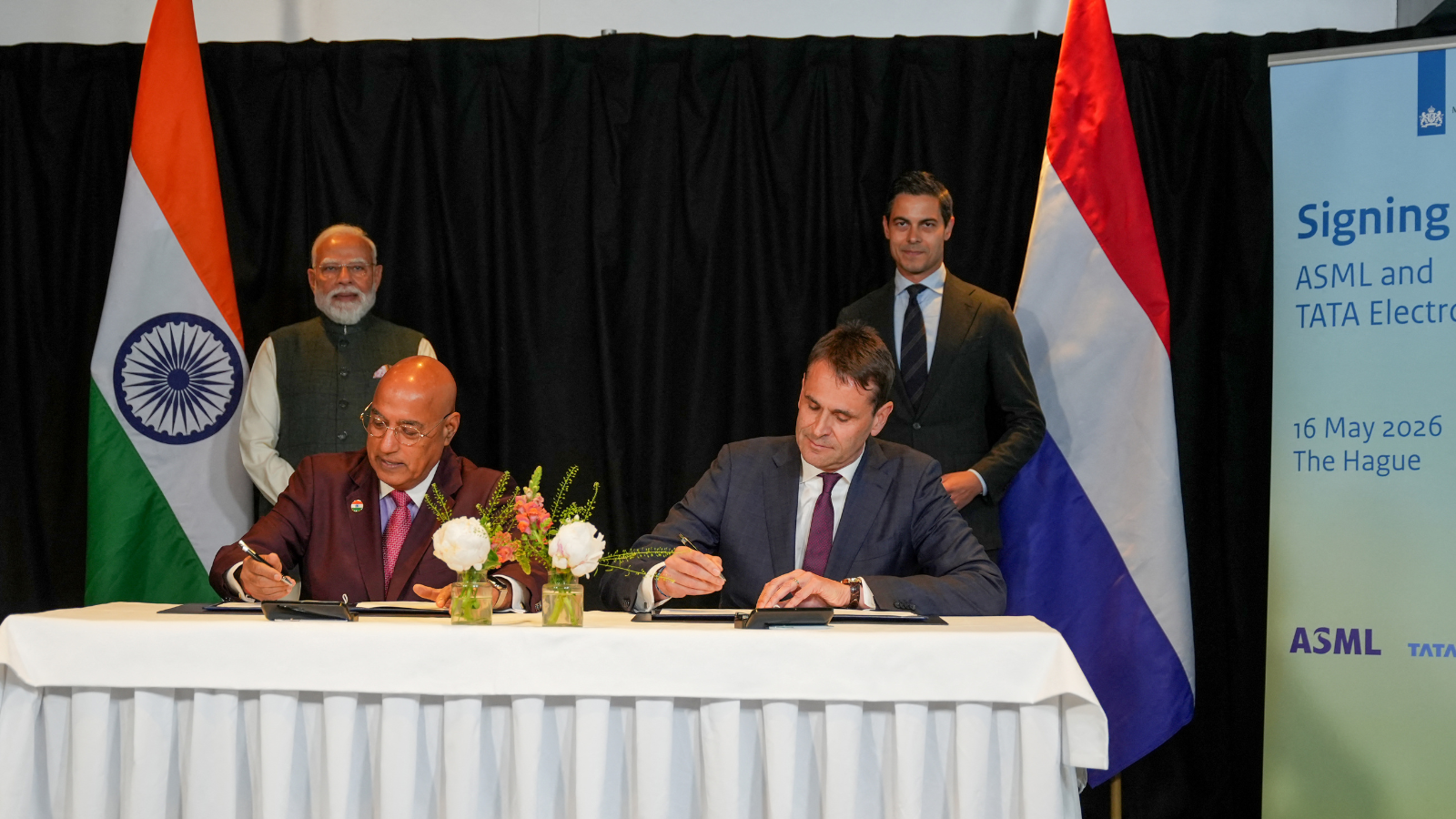
The ASML MoU with Tata Electronics is an indicator of how far the Indian semiconductor ecosystem has come. This ecosystem has been years in the making and represents real commercial logic.

Konark Bhandari

A partnership between India, a country of subcontinental size, and Africa, a continent of fifty-four countries, may seem asymmetric until one notes that both are home to nearly the same number of people—1.4 billion. This essay spells out the existing challenges to the partnership, its optimal potential, and the possible pathways to realize it over the next quarter-century.

Rajiv Bhatia

The India–EU Free Trade Agreement (FTA) is shaping up to be one of the most consequential trade negotiations, both economically and strategically. But, what’s in the agreement, what’s missing, and what will determine its success in the years ahead
Vrinda Sahai, Nicolas Köhler-Suzuki