

Research
- +10
Rosa Balfour, Frances Z. Brown, Yasmine Farouk, …
{
  "authors": [
    "Moisés Naím"
  ],
  "type": "legacyinthemedia",
  "centerAffiliationAll": "dc",
  "centers": [
    "Carnegie Endowment for International Peace"
  ],
  "collections": [],
  "englishNewsletterAll": "americanStatecraft",
  "nonEnglishNewsletterAll": "",
  "primaryCenter": "Carnegie Endowment for International Peace",
  "programAffiliation": "ASP",
  "programs": [
    "American Statecraft"
  ],
  "projects": [],
  "regions": [
    "North America"
  ],
  "topics": [
    "Economy",
    "Trade"
  ]
}
Source: Getty
Despite failing to foresee the largest financial crisis since the Great Depression, leaders in the field still fail to look for wisdom beyond economy’s bounds.
Source: Atlantic
Ten years ago, a survey published in the Journal of Economic Perspectives found that 77 percent of the doctoral candidates in the leading American economics programs agreed or strongly agreed with the statement "economics is the most scientific of the social sciences."
In the intervening decade, a massive economic crisis rocked the global economy, and most economists never saw it coming. Nevertheless, little has changed: A new paper from the same publication reveals how economists continue to believe that their science is superior to all other social sciences, such as political science, sociology, anthropology, etc. While there may be budding intentions to appeal to other disciplines in order to enrich their theories (especially psychology and neuroscience), the reality is that economists almost exclusively study—and cite—each other.
The authors of the article, Marion Fourcade, Etienne Ollion, and Yann Algan, looked at the 25 most respected publications in each of three disciplines: economics, politics, and sociology. They found that between 2000 and 2009, The American Economic Review (AER), the most prestigious economics journal, published articles in which 40 percent of the citations referred to the other 24 major economic publications. In contrast, just 0.8 percent of citations referred to political-science peer-reviewed journals and a meager 0.3 percent to sociology publications. (The majority of the citations went to books or publications not among the 25 the researchers included.) This is to say that in all the texts published in the top 50 journals in the other two social sciences in over ten years, economists found only about 1 percent of articles worth mentioning.And there’s more. When asked their response to the statement: "In general, interdisciplinary knowledge is better than the knowledge obtained by a single discipline," the majority (57 percent) of American economics professors disagreed. By contrast, most of their colleagues in sociology (75 percent) and political science (72 percent) agreed that an interdisciplinary approach is preferable.
But economists don’t disdain all other disciplines; the fields of finance and business appear to have plenty of appeal. While economists reference other social sciences less and less, citations to articles published in academic journals about finance have skyrocketed. And when examining where the majority of authors published in AER were employed, Fourcade, Ollion, and Algan found that in the 1950s only 3.2 percent of the authors worked as business school professors. But in the decade following the year 2000, that percentage rose to 18 percent.
Luigi Zingales, a respected economist and finance professor at the University of Chicago’s Booth School of Business quoted in the AER paper, worries that the proximity of his economist colleagues to the business and finance worlds will threaten their independence and shape their agenda, conclusions, and recommendations. Zingales found, for example, that when academic authors are not employed in business schools, their writing is significantly less likely to justify high executive compensation, and in fact will more often find fault with it. Of those surveyed, two-thirds of sociologists and one-third of economists believe that private company executives receive excessive pay. Few finance professors agree.
The world is still living with the effects of the most recent economic crisis, and the inability of economists to offer solutions with a significant degree of agreement shows how urgently their discipline needs to be disrupted by an injection of new ideas, methods, and assumptions about human behavior. Unfortunately, there are powerful obstacles to this disruption: elite control and lack of gender diversity. Fourcade and his co-authors show that a relatively small group of top scholars concentrated in four university departments (MIT, Harvard, Chicago, and Princeton) has an inordinate influence on what gets published, which research methods are acceptable, and who gets the most coveted jobs. As for the pool of candidates for those jobs: Economics ranks near the bottom of the percentage of doctorates awarded to women in selected disciplines between 1966 and 2011. Only in the physical sciences have women earned a smaller share of the doctorates than in economics.
Ten years ago, I suggested that economists would “be well advised to trade in their intellectual haughtiness for a more humble disposition.” That's advice that has yet to be heeded.

Distinguished Fellow
Moisés Naím is a distinguished fellow at the Carnegie Endowment for International Peace, a best-selling author, and an internationally syndicated columnist.
Recent Work



Rosa Balfour, Frances Z. Brown, Yasmine Farouk, …
Moisés Naím
Carnegie India does not take institutional positions on public policy issues; the views represented herein are those of the author(s) and do not necessarily reflect the views of Carnegie, its staff, or its trustees.

On March 10, 2026, India’s Union Cabinet approved amendments to Press Note 3, a regulation that mandated government approval on all foreign direct investment (FDI) from countries sharing a land border with India. This amendment raises questions primarily about whether its stated benefits will materialize and if the risks have been adequately weighed. This piece will address the same.

Konark Bhandari

This piece examines India’s response to U.S. sanctions and tariffs, specifically assessing the immediate market consequences, such as alterations in import costs, and the broader strategic implications for India’s energy security and foreign policy orientation.

Vrinda Sahai

This paper examines the evolution of India-China economic ties from 2005 to 2025. It explores the impact of global events, bilateral political ties, and domestic policies on distinct spheres of the economic relationship.

Santosh Pai
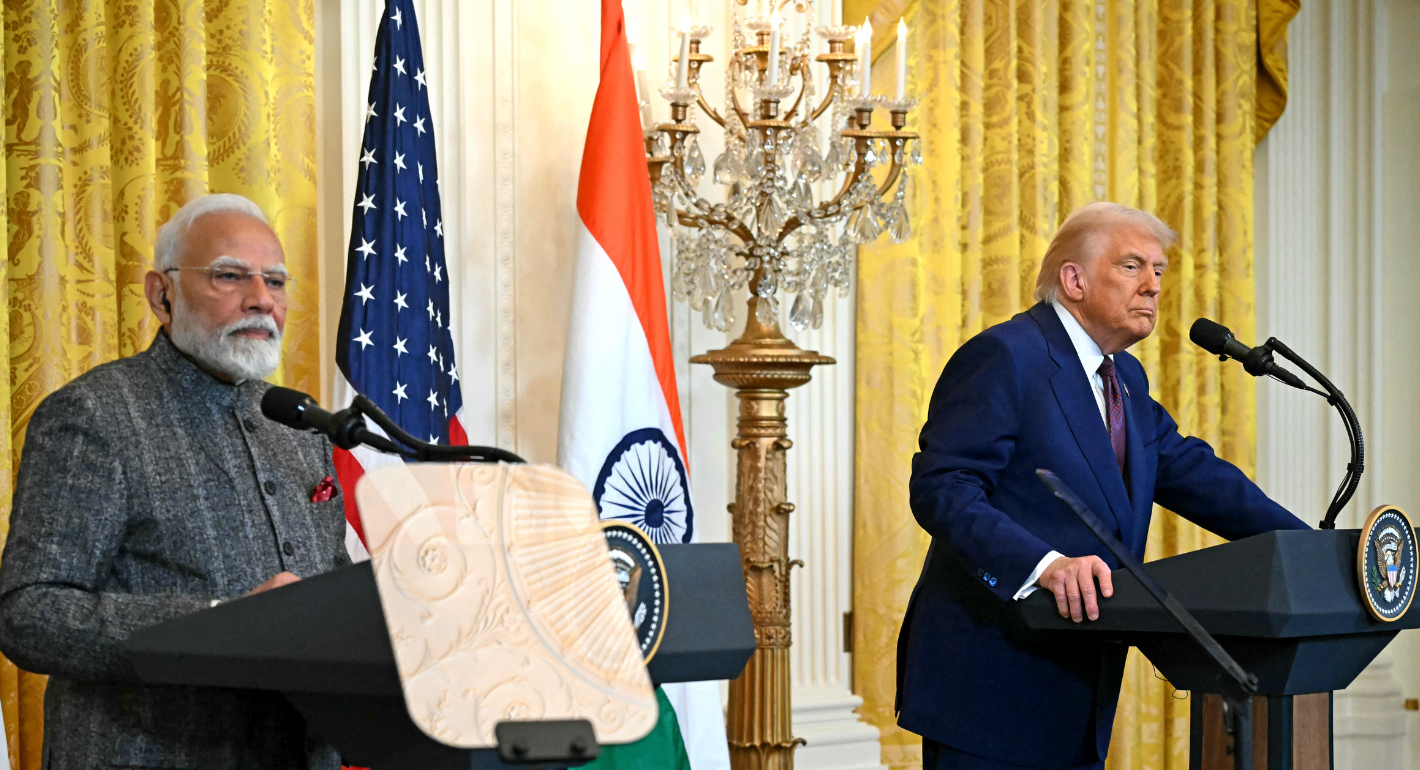
The India-U.S. relationship currently appears buffeted between three “Ts”—TRUST, Tariffs, and Trump.
Arun K. Singh
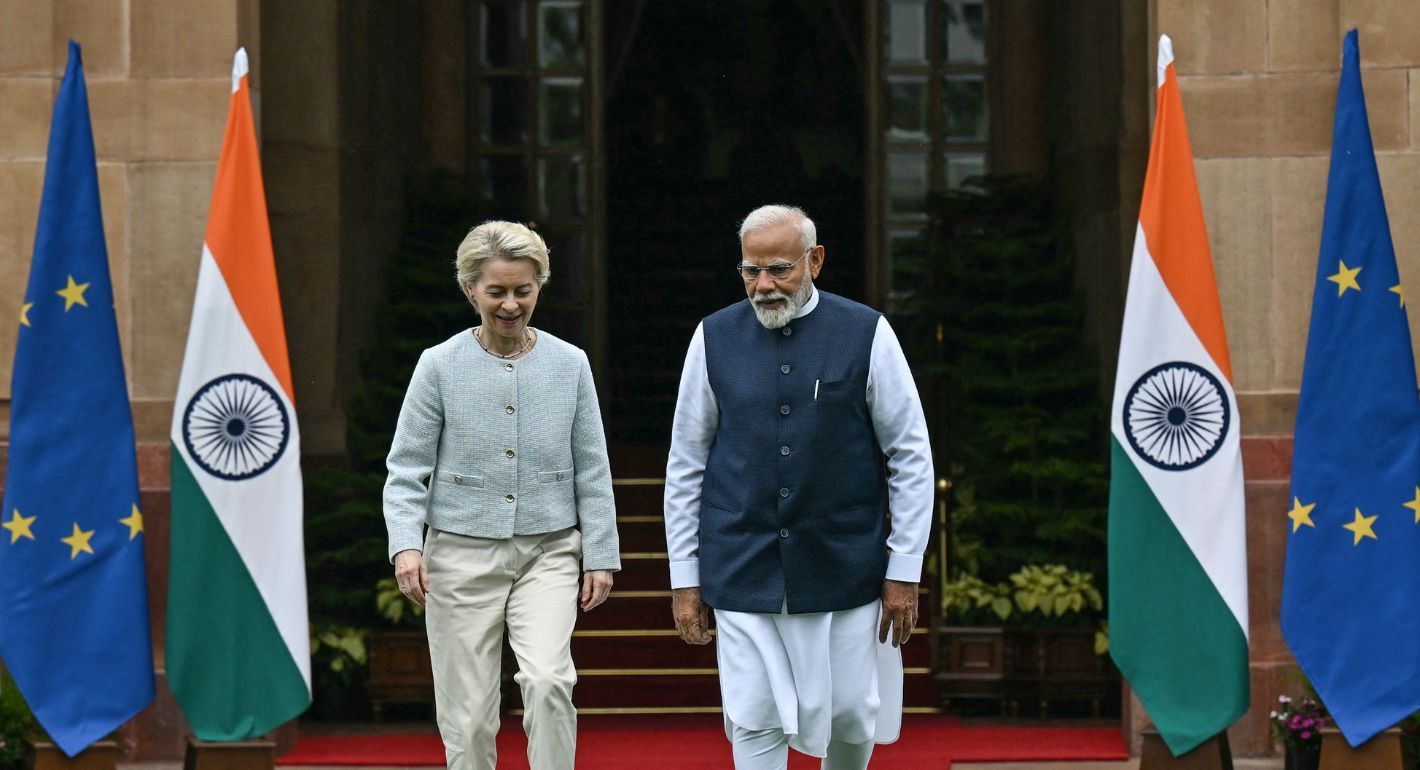
This article argues that the geopolitical circumstances have never been more conducive, not merely for the early conclusion of the free trade agreement (FTA) between India and the EU, but also for crafting a substantive and comprehensive strategic partnership.
Mohan Kumar