

Article
Frederic Grare
{
  "authors": [
    "Frederic Grare"
  ],
  "type": "legacyinthemedia",
  "centerAffiliationAll": "dc",
  "centers": [
    "Carnegie Endowment for International Peace"
  ],
  "collections": [],
  "englishNewsletterAll": "ctw",
  "nonEnglishNewsletterAll": "",
  "primaryCenter": "Carnegie Endowment for International Peace",
  "programAffiliation": "SAP",
  "programs": [
    "South Asia"
  ],
  "projects": [],
  "regions": [
    "South Asia",
    "India",
    "Western Europe",
    "France"
  ],
  "topics": [
    "Economy",
    "Security",
    "Foreign Policy"
  ]
}
Source: Getty
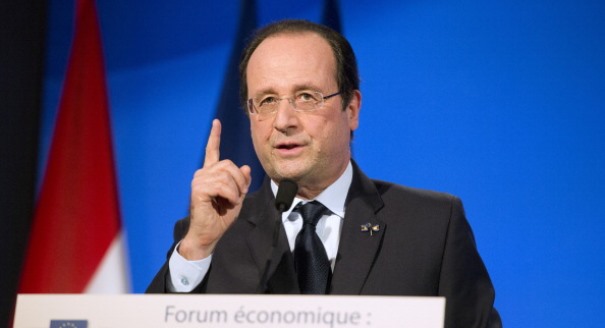
Indian and French policies are increasingly converging on ensuring stability in the Indian Ocean.
Source: CNN-IBN
As Prime Minister Narendra Modi on Thursday left for his 3-nation visit of France, Canada, and Germany, CNN-IBN’s Executive Editor Zakka Jacob discussed the key issues between India and France with panel of experts, including Carnegie’s Frederic Grare.
The discussion began with India’s potential acquisition of Rafale fighter aircraft from French manufacturer Dassault. Grare explained that while the deal has been in the works for years, it increasingly appears as though it will fall through. Even if it were concluded, Grare raised the question of India's capacity to absorb the technology transfers that it would entail. Grare also discussed the potential sale of French radar technology to India for use in the Indian Ocean, seeing it as an important aspect of Indian and French convergence on ensuring stability in the Indian Ocean. Finally, Grare commented on the progress of nuclear negotiations with Iran and the consequences for India, cautioning that “a framework is not a deal.”
Former Nonresident Senior Fellow, South Asia Program
Frédéric Grare was a nonresident senior fellow at the Carnegie Endowment for International Peace, where his research focuses on Indo-Pacific dynamics, the search for a security architecture, and South Asia Security issues.
Recent Work
Frederic Grare
Frederic Grare
Carnegie India does not take institutional positions on public policy issues; the views represented herein are those of the author(s) and do not necessarily reflect the views of Carnegie, its staff, or its trustees.

In any defense establishment, change is an ongoing process. However, despite the best of intentions, existing bureaucracies, bound by habit and years of socialization, have their limits in implementing transformative change.

Anit Mukherjee
As AI grows more sophisticated, as the supply chains that power it become more contested, and as access to frontier models becomes geopolitically charged, India must begin to ask a different set of questions. Not what applications it can build on someone else’s infrastructure but what the world needs.

Konark Bhandari

The Indian Ocean Region hosts one of the densest concentrations of subsea cables in the world. Yet, despite accounting for a significant share of global internet traffic, India’s participation remains limited.

Charukeshi Bhatt

How is AI reshaping space security, creating governance challenges, and where does international diplomacy stand today?


Tejas Bharadwaj, Almudena Azcárate Ortega

After the chill in ties between 2020 and 2024 that brought India–China relations to their lowest point in several decades, the two countries have engaged each other afresh. This paper argues that there are predominantly four imperatives guiding India’s approach to China, and they exist in an order of priority.

Saheb Singh Chadha