

Commentary
Balázs Jarábik
{
  "authors": [
    "Balázs Jarábik"
  ],
  "type": "commentary",
  "centerAffiliationAll": "",
  "centers": [
    "Carnegie Endowment for International Peace",
    "Carnegie Russia Eurasia Center"
  ],
  "collections": [],
  "englishNewsletterAll": "",
  "nonEnglishNewsletterAll": "",
  "primaryCenter": "Carnegie Endowment for International Peace",
  "programAffiliation": "",
  "programs": [],
  "projects": [
    "Eurasia in Transition"
  ],
  "regions": [
    "Eastern Europe",
    "Ukraine"
  ],
  "topics": [
    "Political Reform"
  ]
}
Source: Getty
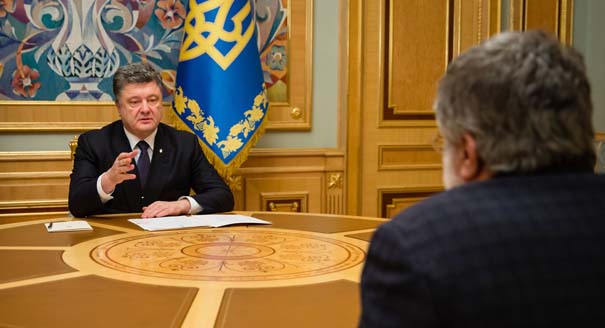
Ukrainian society—particularly sectors that pushed for greater accountability and transparency during the EuroMaidan Revolution—and Western governments, particularly the United States, are pushing Poroshenko to rein in the oligarchs.
As soon as there was a break in the fighting in the Donbas, Ukrainian President Petro Poroshenko turned his focus to the politics beyond the conflict zone. His main objectives are to establish a firmer grip on the government, prepare for local elections, and better oversee the reform process and the disbursement of Western aid.
To achieve these goals, Poroshenko is trying to reshape the existing contract between the Ukrainian state and the oligarchs. He and the oligarchs are under pressure from the West, Russia, and an increasingly radical Ukrainian public. After providing Kyiv a multi-billion dollar bailout, the West wants him to push ahead on difficult economic and political reforms as the country continues to face military threats from Russia. Parts of the population are growing restless as the war drags on, economic hardship grows, and it becomes increasingly clear that there are limits to Western financial assistance and the government’s ability to initiate real change.
Ukrainian society—particularly sectors that pushed for greater accountability and transparency during the EuroMaidan Revolution—and Western governments, particularly the United States, are pushing Poroshenko to rein in the oligarchs.
Yet, the president’s move to divest former Dnipropetrovsk Governor Ihor Kolomoyskyi from central power structures and large state enterprises—along with his threats against Donbas billionaire Rinat Akhmetov—were reactive moves, responding to the demands of an increasingly vocal and unhappy civil society backed by the West. Poroshenko’s standoff with Kolomoyskyi over state-owned oil and gas company UkrNafta was the first major public attack on oligarchic power.
Rinat Akhmetov’s recent effort to block the government’s electricity reforms by allegedly instigating a coal strike at his own coal mines to manipulate coal supplies was the second notable standoff between Poroshenko and an oligarch.
A final indication that the state’s relationship with the oligarchs is transforming is the fate of billionaire businessman Dmytro Firtash. Although an Austrian court rejected the American request for his extradition to the U.S. to face corruption charges, Firtash will return to Kyiv in a much weaker position than he was in under the Yanukovych regime.
Poroshenko’s attempts to strengthen his grip on power, defang the oligarchs, and demonstrate state power require him to balance competing interests amidst a shrinking pool of resources. Beyond “managing” the oligarchs, Poroshenko is facing political turmoil ahead on several fronts: he must sell the Ukrainian public bad news on the economy, the slow pace of reform, and the war, while maintaining popular support. He must simultaneously lead peace talks with heavily armed separatists in eastern Ukraine, while fending off their advances. He must placate various Western backers and integrate his country with western political structures, while not antagonizing Moscow any more than he already has.
However, the government’s effort to curb the oligarchs’ authority over state enterprises has not been persistent enough, especially because men like Kolomoyskyi and Akhmetov have the ability to mobilize a great number of resources to protect their interests. Poroshenko is well aware of the potential damage that oligarchs could inflict on him and his relatively weak government. For this reason, the Prosecutor General’s Office has opened up a number of court cases against certain oligarchs. It is unclear whether authorities will move forward with prosecutions, but given their selective nature, the effort appears to be a political strategy ahead of local government elections in October.
Meanwhile, as Poroshenko tries to renegotiate the state’s relationship with the oligarchs, Ukrainian society is under growing strain. Ukrainians have returned to a kind of 1990s-era “survival mode” in which people are left to fend for themselves. Parts of society have been traumatized by war; others have been radicalized, particularly the volunteer battalions who are on the front lines of the war and are unhappy with how the government has managed it.
A series of suspicious suicides and open murders of former government officials and pro-Yanukovych figures suggests a radicalization of society. The crime rate in Kiev has grown almost threefold since former President Yanukovych fled. Racketeering, armed robbery, car theft, and widespread fraud have become all too common. Whispers about a third Maidan have surfaced again.
Poroshenko, however, has proven himself to be a politician of compromise; he learned from his polarizing predecessors Viktor Yushchenko and Viktor Yanukovych that division is not a viable approach to governance. The main actors on all sides of the battle with the oligarchs must surely understand that a third Maidan might finish off the country for good. Although reshaping the contract with the oligarchs is an important goal, Poroshenko and his government must work on developing a new social contract with the population, which, after all, was the main objective of the Maidan.

Political analyst, former Slovak diplomat, and consultant specializing in Eastern Europe
Recent Work
Balázs Jarábik
Balázs Jarábik
Carnegie India does not take institutional positions on public policy issues; the views represented herein are those of the author(s) and do not necessarily reflect the views of Carnegie, its staff, or its trustees.

The war in Ukraine has demonstrated that India needs to establish a strong domestic space economy in order to weather geopolitical storms.
Konark Bhandari
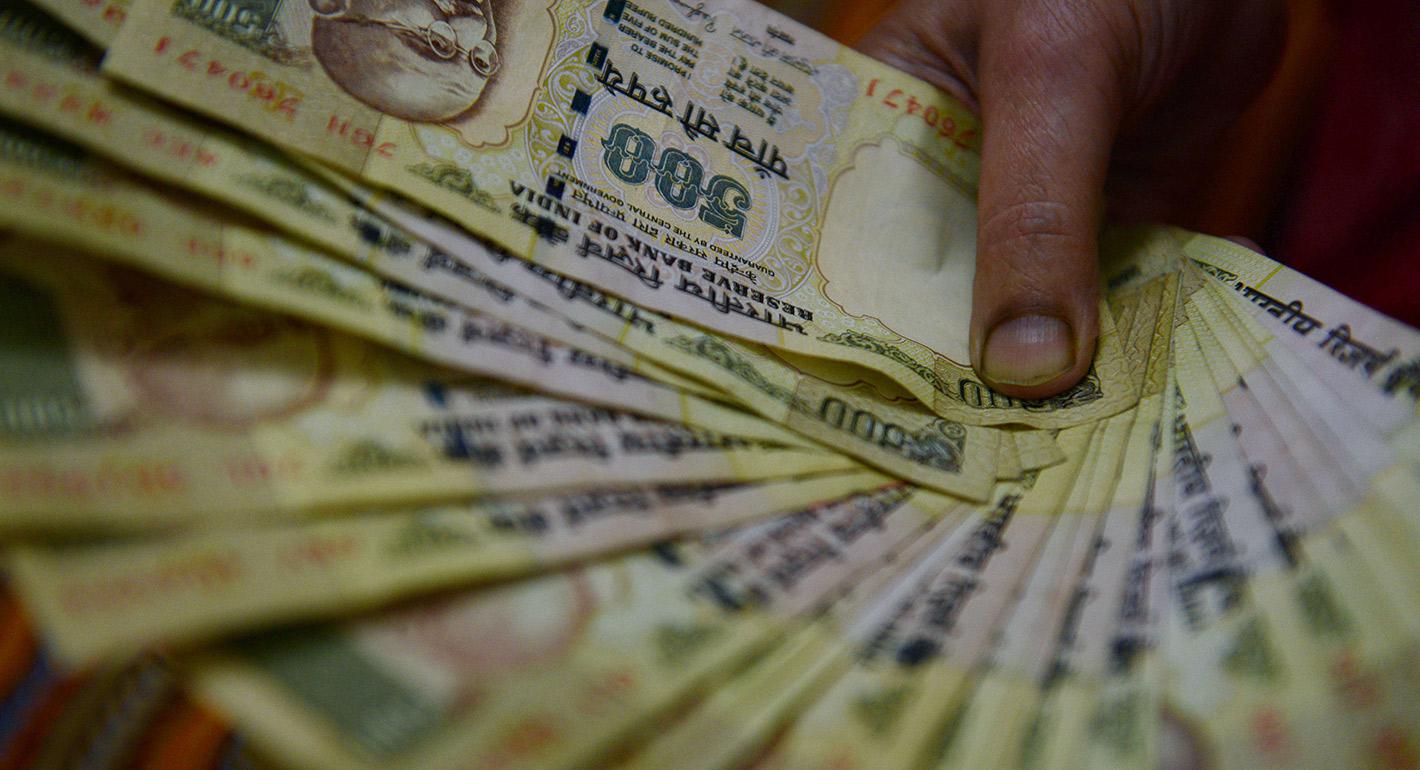
As India’s economy recovers from the coronavirus pandemic, Indian businesses need efficient financial structures to regain their ground. Key reforms to India’s Insolvency and Bankruptcy Code could fill these gaps.
Anirudh Burman

Access to cross-border data is an integral piece of the law enforcement puzzle. India is well placed to lead the discussions on international data agreements subject to undertaking necessary surveillance reforms.

Smriti Parsheera, Prateek Jha
After the coronavirus pandemic wanes, how will China’s reorientation of the Belt and Road Initiative to address global health concerns influence its relationships with South Asian countries?
Deep Pal, Rahul Bhatia
Early in the outbreak, government researchers forecast several high-risk scenarios that were downplayed or ignored in public messaging.
Gautam I. Menon