

Article
Thomas de Waal
{
  "authors": [
    "Thomas de Waal"
  ],
  "type": "commentary",
  "centerAffiliationAll": "",
  "centers": [
    "Carnegie Endowment for International Peace",
    "Carnegie Europe",
    "Carnegie Russia Eurasia Center"
  ],
  "collections": [],
  "englishNewsletterAll": "",
  "nonEnglishNewsletterAll": "",
  "primaryCenter": "Carnegie Europe",
  "programAffiliation": "",
  "programs": [],
  "projects": [],
  "regions": [
    "Caucasus",
    "Azerbaijan"
  ],
  "topics": [
    "Foreign Policy"
  ]
}
Source: Getty
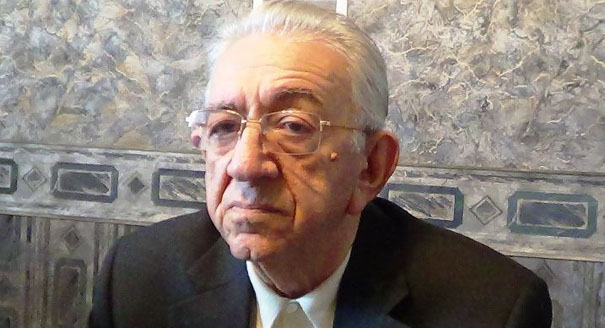
Vafa Guluzade was Azerbaijan’s leading foreign policy advocate in a very difficult period and part of the most promising initiative to resolve the Karabakh conflict. He has never been adequately replaced.
Vafa Guluzade, Azerbaijan’s best known foreign policy thinker, died last week at the age of 74.
There is not much reason to be nostalgic about Azerbaijan of the early 1990s. It was a failing divided poor post-Soviet republic that was losing its conflict with Armenia. Amidst that chaos, a few individuals shouldered the burden of putting the new country on the map. Vafa Guluzade stood out among them. A Soviet diplomat and Arabist, he volunteered to be the foreign policy brains of independent Azerbaijan’s very different first three presidents: Moscow loyalist Ayaz Mutalibov, nationalist democrat Abulfaz Elchibey and the veteran Soviet-era leader Heidar Aliev.
I first met Guluzade at a press briefing in 1995—this was an era when the country still had a more or less independent press. He was masterful. He took questions about the country’s turn away from democracy and said, “Of course we want democracy, but it’s not realistic to expect us to build democracy like in Paris.” Asked about the routing of the projected Western export oil pipeline, he said, “I want it to go through Armenia,” inviting the Armenians to compromise on the Karabakh conflict.
He was a diplomat of the finest sort, working for what he believed to be his country’s best interests, cultivating many different relationships, personally charming, building as many bridges as he could.
As it later transpired, at the time Aliev also delegated Guluzade to be his representative in secret bilateral talks with his Armenian presidential counterpart Gerard Libaridian. The two of them met in Europe, discussed how to resolve the most vexing issue—the status of Nagorny Karabakh—and struck up a good friendly relationship. This channel was probably the most promising initiative on the conflict but unfortunately it shut down with the OSCE Lisbon summit at the end of 1996.
Guluzade resigned from the presidential administration in 1999, but, stayed on good terms with the elder President Aliev, who called on him for advice. Under the presidency of the younger Aliev, he fell out of the inner circle and lost a role. In public he made strong and less than subtle attacks on Russia.
Now, the paradox is that, for all the massive resources it now enjoys and the dozens of embassies it has round the world, Azerbaijan has never again had such an astute diplomat as Guluzade. A diplomatic resolution of the Karabakh conflict is further away than ever and no creative thinking is allowed. Relations with the West have become purely transactional, as a crackdown on pro-Western voices in the country shows no signs of ending.
Even Foreign Minister Eldar Mammadyarov, who worked in Washington and used to have good connections in the United States, made a routine anti-American speech this week, accusing certain people of conducting “an anti-Azerbaijan campaign” under “the pretext of 'protection of human rights’.”
The magic touch of a Guluzade is badly missed.

Senior Fellow, Carnegie Europe
Thomas de Waal is a senior fellow at Carnegie Europe, specializing in Eastern Europe and the Caucasus.
Recent Work
Thomas de Waal
Thomas de Waal
Carnegie India does not take institutional positions on public policy issues; the views represented herein are those of the author(s) and do not necessarily reflect the views of Carnegie, its staff, or its trustees.

After the chill in ties between 2020 and 2024 that brought India–China relations to their lowest point in several decades, the two countries have engaged each other afresh. This paper argues that there are predominantly four imperatives guiding India’s approach to China, and they exist in an order of priority.

Saheb Singh Chadha

This piece argues that India’s central challenge is not managing a single flashpoint but resolving the underlying tension between expansion and institutional coherency of the BRICS grouping.

Vrinda Sahai

A partnership between India, a country of subcontinental size, and Africa, a continent of fifty-four countries, may seem asymmetric until one notes that both are home to nearly the same number of people—1.4 billion. This essay spells out the existing challenges to the partnership, its optimal potential, and the possible pathways to realize it over the next quarter-century.

Rajiv Bhatia

The India–EU Free Trade Agreement (FTA) is shaping up to be one of the most consequential trade negotiations, both economically and strategically. But, what’s in the agreement, what’s missing, and what will determine its success in the years ahead
Vrinda Sahai, Nicolas Köhler-Suzuki

Trump 2.0 has unsettled India’s external environment—but has not overturned its foreign policy strategy, which continues to rely on diversification, hedging, and calibrated partnerships across a fractured order.



Milan Vaishnav, ed., Sameer Lalwani, Tanvi Madan, …