

Commentary
Alexander Gabuev
{
  "authors": [
    "Alexander Gabuev"
  ],
  "type": "legacyinthemedia",
  "centerAffiliationAll": "",
  "centers": [
    "Carnegie Endowment for International Peace",
    "Carnegie Russia Eurasia Center"
  ],
  "collections": [],
  "englishNewsletterAll": "",
  "nonEnglishNewsletterAll": "",
  "primaryCenter": "Carnegie Endowment for International Peace",
  "programAffiliation": "",
  "programs": [],
  "projects": [
    "Eurasia in Transition"
  ],
  "regions": [
    "East Asia",
    "China",
    "Central Asia",
    "Russia",
    "Eastern Europe",
    "Western Europe"
  ],
  "topics": [
    "Economy",
    "Trade",
    "Foreign Policy"
  ]
}
Source: Getty
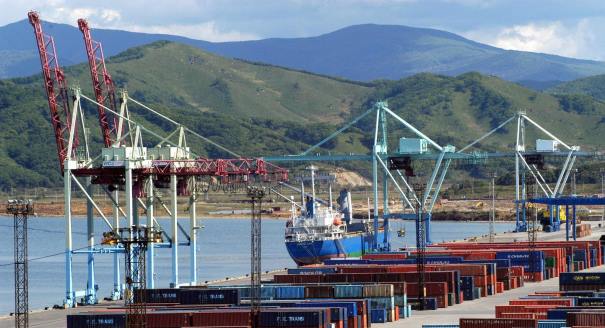
Following an initially cool reception, many former USSR republics have been lured by the sheer size of China’s investment in the One Belt One Road project, eager to capitalize on the wider initiative in line with their own domestic interests.
Source: Research Portal of the Hong Kong Trade Development Council
When Xi Jinping, the Chinese President, made his now famous speech in Astana [the capital of Kazakhstan] in September 2013, announcing the launch of the Silk Road Economic Belt, few post-Soviet leaders took notice. The language of the speech was too vague and the content of Xi's proposals too imprecise to create any meaningful response. As the project matured, however, more attention was paid in all 15 capitals of the former USSR republics.
Questions were raised, though, both about China's internal motivation and about the future routes. Chinese officials' general responses to direct requests and the frequently changing maps of the future routes (published by Xinhua, China's state-owned news agency) didn't offer much in the way of transparency with regard to the initiative.
At the March 2015 Boao Forum, the Chinese National Development and Reform Commission finally presented a blueprint of the One Belt One Road (OBOR) initiative, together with a declaration of its guiding principles. This, coupled with the establishment of the US$40 billion Silk Road Fund, saw the initiative taken much more seriously by officials and business communities across the post-Soviet space.The reaction of each individual state, though, was largely determined by three factors – the size and structure of their economy, their membership of supranational communities, such as the EU or the EEU (Eurasian Economic Union – Armenia, Belarus, Kazakhstan, Kyrgyzstan and Russia), and the level of expertise inside their respective governments and business communities.
When it was first mooted, Russia's reaction to the OBOR was mixed. Following the initial 2013 announcement, the Kremlin was reluctant to engage in any meaningful negotiation as to how Xi's initiative would coexist with the EEU, the pet project of Vladimir Putin, Russia's President. A number of people in Moscow, concerned over Russia's fading status as a regional superpower in Central Asia, regarded OBOR as an intrusion into Russia's sphere of influence. They, therefore, argued that the Kremlin should pressure the Central Asian states into not participating in the Chinese project. This kind of reaction was one of the major concerns among Beijing's Russia-watching community.
Chinese officials were clearly relieved when Igor Shuvalov, Russia's First Deputy Prime Minister, announced at the Boao Forum that the EEU was ready to cooperate with the OBOR project. He then personally undertook to negotiate a framework document with Chinese leaders on Putin's behalf.
On 8th May this year, during an official visit to Moscow, Xi and Putin signed a joint statement formally linking OBOR with EEU. The document pledged to create a "joint economic space" in Eurasia. China has officially recognised the EEU and has indicated its willingness to deal with this body rather than talk directly to individual member-states. Similarly, the Eurasian Economic Commission, the supranational body of the EEU, has now been mandated to start negotiations on a trade and investment agreement with China. The question of a free trade agreement with China – a sensitive problem for both Russia and Central Asian states given their high levels of protectionism – was declared a distant goal and effectively postponed to a later date.
For the Russian leadership, the agreement came as the result of painful internal discussions. In the end, the Kremlin concluded that the benefits of coordinating the EEU alongside the Chinese initiative outweighed the risks. It is now understood that it is inevitable that China will become the major investor in Central Asia and the major market for the region's vast natural resources.
The only way Russia can maintain its influence, then, is to recalibrate its role in the region to accommodate its own ambitions and Beijing's quest for raw materials, as well as the region's appetite for Chinese money. What the Kremlin is hoping for is a division of labour between Moscow and Beijing in Central Asia. In this grand scheme, China will be the major driver for economic development, while Moscow will remain the dominant hard security provider in the region through its Collective Security Treaty Organization.
The biggest problem now is the actual linking process. Moscow still sees it as a bureaucratic project and has created a team of officials, led by the Ministry of Foreign Affairs (MFA), to write the rules. The reality, though, will be more complicated as China has no masterplan for prioritising land-based routes to Europe and possibly wants to build them all simultaneously – partly in order to secure more projects for its stagnating domestic infrastructure industry. What the terms of the Chinese financial loans will be and how much Russian companies will be involved remains to be seen.
The first project, which both have sought to position as a consequence of linking the EEU and OBOR, is the construction of a high-speed rail between Moscow and Kazan. The Russian Railways initiated the project back in 2012, hoping for government money and a German contractor. In the wake of the Ukrainian crisis, the Railways changed tact and agreed a loan-for-contract scheme with the Chinese.
Another issue for Russia is its concerns that that land-routes through Central Asia and the European part of Russia will undermine the chances of the Trans-Siberian Railway becoming the major land link between the markets of Europe and Asia. As a result, Moscow will be pushing Beijing to include the Trans-Siberian Railway and the northern Baikal-Amur Railway as part of the OBOR project. At the same time it will looking for pledges to improve the infrastructure and regulatory issues regarding the ports of the Russian Far East. Vladivostok, for instance, was declared a free port this year by President Putin. Moscow hopes that Chinese investment, coupled with efforts to facilitate the required transit procedures, will strengthen Russia's position as a bridge between the East and West.
Belarus is also hoping to secure its own role in the project by emphasising (together with Russia) the strengths of the Customs Union, under which a cargo coming from China will need to cross just two customs borders (China/Kazakhstan and then Belarus/Poland) to get into the EU. Previously, Ukraine had some hopes of participating in OBOR, with former President Victor Yanukovich seeking to include Crimean ports in the scheme. Following Russia's annexation of the peninsula and the military conflict in the east of the country, however, Ukraine is now unlikely to be included.
Overall, the Central Asian states – the five "Stans" – may be most affected by the OBOR initiative. Kazakhstan will play an important role as three of the planned Silk Road routes are passing through the country. The Northern Route will be going through northern Kazakhstan, crossing into Russia, then proceeding to the EU either via Belarus or through the Baltic ports.
The Central Route, meanwhile, is intended to cross the Caspian Sea through the ports of Aktau and Baku and then continue to Turkey through Azerbaijan and Georgia. The Southern Route will go through Turkmenistan and then on to Iran. Astana was quick to realize the potential of OBOR and presented its own national infrastructure development plans ("Nur Zhol") as a part of the initiative that needs to be financed. Kazakh officials and entrepreneurs, however, do have a number of private concerns, particularly that China's dominance in all contracts will leave no place for local companies, as well as Russia's likely anxiety about its status and the role of the EEU.
Many of the other Stans have less to offer the OBOR and are, consequently, unable to lobby Beijing for participation in their domestic projects. There are two countries, in particular, which are unlikely to benefit from the OBOR initiative – Tajikistan, due to its worsening security situation, and Uzbekistan, due to the growing isolationism favored by its President, Islam Karimov. Among the Baltic States, OBOR has been most welcome in Latvia – a country that is the principal transit destination in the region, largely thanks to its combination of developed seaports and well-managed railways.
Above and beyond that, a number of problems exist outside of Russia' sphere of influence. A number of big players inside the EU, including both Germany and the Brussels-based European Parliament, haven't decided on their policy and regulatory standing with regard to OBOR-sponsored projects within the EU. The other concern is the EU's worsening relationship with Russia, which may lead to Moscow lobbying for the Baltic States to be bypassed by the OBOR initiative.
This article was first published on the Research Portal of the Hong Kong Trade Development Council (www.research.hktdc.com).

Director, Carnegie Russia Eurasia Center
Alexander Gabuev is director of the Carnegie Russia Eurasia Center. Gabuev’s research is focused on Russian foreign policy with particular focus on the impact of the war in Ukraine and the Sino-Russia relationship. Since joining Carnegie in 2015, Gabuev has contributed commentary and analysis to a wide range of publications, including the Financial Times, the New York Times, the Wall Street Journal, and the Economist.
Recent Work
Alexander Gabuev
Alexander Gabuev
Carnegie India does not take institutional positions on public policy issues; the views represented herein are those of the author(s) and do not necessarily reflect the views of Carnegie, its staff, or its trustees.

After the chill in ties between 2020 and 2024 that brought India–China relations to their lowest point in several decades, the two countries have engaged each other afresh. This paper argues that there are predominantly four imperatives guiding India’s approach to China, and they exist in an order of priority.

Saheb Singh Chadha

This piece argues that India’s central challenge is not managing a single flashpoint but resolving the underlying tension between expansion and institutional coherency of the BRICS grouping.

Vrinda Sahai

A partnership between India, a country of subcontinental size, and Africa, a continent of fifty-four countries, may seem asymmetric until one notes that both are home to nearly the same number of people—1.4 billion. This essay spells out the existing challenges to the partnership, its optimal potential, and the possible pathways to realize it over the next quarter-century.

Rajiv Bhatia

The India–EU Free Trade Agreement (FTA) is shaping up to be one of the most consequential trade negotiations, both economically and strategically. But, what’s in the agreement, what’s missing, and what will determine its success in the years ahead
Vrinda Sahai, Nicolas Köhler-Suzuki

On March 10, 2026, India’s Union Cabinet approved amendments to Press Note 3, a regulation that mandated government approval on all foreign direct investment (FDI) from countries sharing a land border with India. This amendment raises questions primarily about whether its stated benefits will materialize and if the risks have been adequately weighed. This piece will address the same.

Konark Bhandari