

Article
This piece argues that India’s central challenge is not managing a single flashpoint but resolving the underlying tension between expansion and institutional coherency of the BRICS grouping.
Vrinda Sahai
{
  "authors": [
    "Mikhail Krutikhin"
  ],
  "type": "commentary",
  "centerAffiliationAll": "",
  "centers": [
    "Carnegie Endowment for International Peace",
    "Carnegie Russia Eurasia Center"
  ],
  "collections": [
    "Inside Russia"
  ],
  "englishNewsletterAll": "",
  "nonEnglishNewsletterAll": "",
  "primaryCenter": "Carnegie Russia Eurasia Center",
  "programAffiliation": "",
  "programs": [],
  "projects": [],
  "regions": [
    "Russia"
  ],
  "topics": [
    "Political Reform",
    "Economy"
  ]
}
Source: Getty
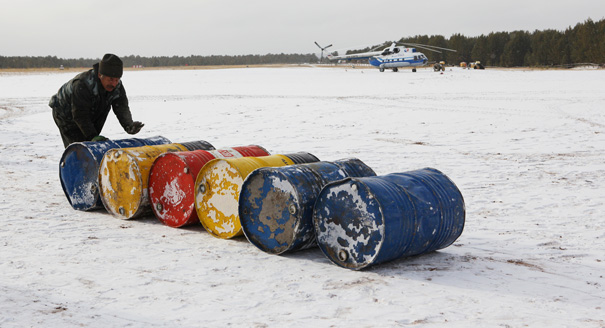
Russia’s oil and gas industry faces long-term systemic problems, even in the unlikely scenario that the price of oil rises sharply again. This has severe implications for the country’s economic prospects.
Russia has a long-term problem that it cannot avoid: a heavy dependence on oil and gas, amidst falling prices and ever bigger technical challenges for its inefficient energy industry.
Brent crude oil prices have edged up recently, but for the foreseeable future we can expect an average oil price in the range of 45 dollars. In September in Berlin, energy experts told me they expected the period of low prices to last until 2025.
The IMF is calculating that oil and gas revenues will contribute a mere 15 percent to the Russian national budget this year and that the country's GDP will fall by 3.4 percent. (Many Russian economists believe that the decline will be much more serious.) This comes even as the price of other key export commodities, such as steel and coal, is also falling.
In oil-importing countries, such as the United States, low energy prices are stimulating economic growth. But for oil-exporting countries, which have gotten used to years of plenty, this drop in prices is proving even more painful than previous ones.
In Russia, even a privileged company like Rosneft cannot obtain assistance from the National Wealth Fund and is warning that its production will fall. Lack of investment is forcing companies to cut spending; there are reports of workers being laid off.
The problem is not just that the ruble exchange rate tracks the oil price. Russia is so dependent on foreign technology and machinery (it comprises up to 70 percent of the equipment in the oil and gas industry) that all import substitution programs are doomed to fail, in the manner of the “modernization” program launched under the presidency of Dmitry Medvedev.
Years of high prices made the oil and gas industry especially corrupt. The dominant role of the state allowed government officials to initiate gigantic and incredibly wasteful projects, allocate hugely expensive contracts to their contractor cronies, and write off the losses at the government's expense.
These arrangements ran counter to a healthy profit-oriented business mentality and therefore necessitated the creeping deprivatization of Russia's oil and gas sector. Privately-owned efficient companies like YUKOS, Udmurtneft, TNK-BP, and ITERA gave way to the bloated bureaucracy of Rosneft.
In the gas market, this mentality created mass money-losing pipelines, such as Forces of Siberia, Altai, Turkish Stream, and Sakhalin–Khabarovsk–Vladivostok, and handed Rosneft and Gazprom a monopoly. Small independent businesses lost out and draconian laws prevented foreign investors from entering the country.
The forecast of long-term low oil prices deals a heavy blow to this corruption-driven system. The earnings of the bureaucrats who “regulate” the export of raw materials have declined sharply. International sanctions have deprived Russian companies and banks of long-term loans and access to cutting-edge technologies. Many people close to the regime and state coffers have taken a personal hit.
But the problem is bigger than this. Even if oil prices were to defy expectations and rise again, it would only postpone the collapse of this system. Russian oil production will continue to decline for other reasons. Low prices have accelerated the depletion of easily accessible oil deposits and made the exploitation of more challenging fields impossible.
In those oilfields that have yet to be exploited, around 70 percent of deposits are hard to recover. Some oil—in the Bazhenov Formation, for example—cannot be recovered at all, even though the government still categorizes it as a commercial project.
In Russia's official Energy Strategy the "conservative" scenario forecasts a decline in output from 526 million tons to 476 million by 2035. That already looks optimistic—but all can agree that Russia's supply of commercially viable oil is running out.
Gas from East Siberia is also falling victim to low energy prices. Efforts to give it to the Chinese at cost have failed, despite much official fanfare declaring the contrary. Demand for Russian gas in Europe is not rising. Production and export of liquefied natural gas (LNG)–which is insignificant in global terms–is flagging. The same is true of domestic consumption in Russia. Therefore, Russia's gas sector cannot promise any increases in revenue either, although it must be said that Gazprom's inefficient monopoly is a major factor in the decline.
Under these circumstances, there are two roads the Russian economy can take. The first involves a drastic overhaul of the system to bring it line with market principles, genuine privatization, the creation of a stable tax system, and a program to stimulate domestic and foreign investment, as well as small and medium-sized businesses. But this cannot be done without dismantling the current political system.
If Russia follows the second road, the government will need to mobilize people under dictatorial rule. Market principles will be abandoned, and the people will be asked to endure hardship in the name of vanquishing internal and external enemies.
The first scenario would prove exceptionally difficult during the time of transition but would eventually bring the country back to the fold of modern civilization with its market principles and relations. The second path would inevitably lead toward an economic catastrophe. The country would move from a situation of protracted crisis into something much more urgent, with dire results for both the authorities and the public.
Of course, there is also a third option: let the status quo continue and stand back as the system undergoes an ever-increasing decay. However, this merely postpones but does not eliminate the hard choice between the two alternatives.
Mikhail Krutikhin is a partner at the independent RusEnergy consulting agency
Mikhail Krutikhin
Carnegie India does not take institutional positions on public policy issues; the views represented herein are those of the author(s) and do not necessarily reflect the views of Carnegie, its staff, or its trustees.

This piece argues that India’s central challenge is not managing a single flashpoint but resolving the underlying tension between expansion and institutional coherency of the BRICS grouping.

Vrinda Sahai

On March 10, 2026, India’s Union Cabinet approved amendments to Press Note 3, a regulation that mandated government approval on all foreign direct investment (FDI) from countries sharing a land border with India. This amendment raises questions primarily about whether its stated benefits will materialize and if the risks have been adequately weighed. This piece will address the same.

Konark Bhandari

This piece examines India’s response to U.S. sanctions and tariffs, specifically assessing the immediate market consequences, such as alterations in import costs, and the broader strategic implications for India’s energy security and foreign policy orientation.
Vrinda Sahai

This paper examines the evolution of India-China economic ties from 2005 to 2025. It explores the impact of global events, bilateral political ties, and domestic policies on distinct spheres of the economic relationship.

Santosh Pai
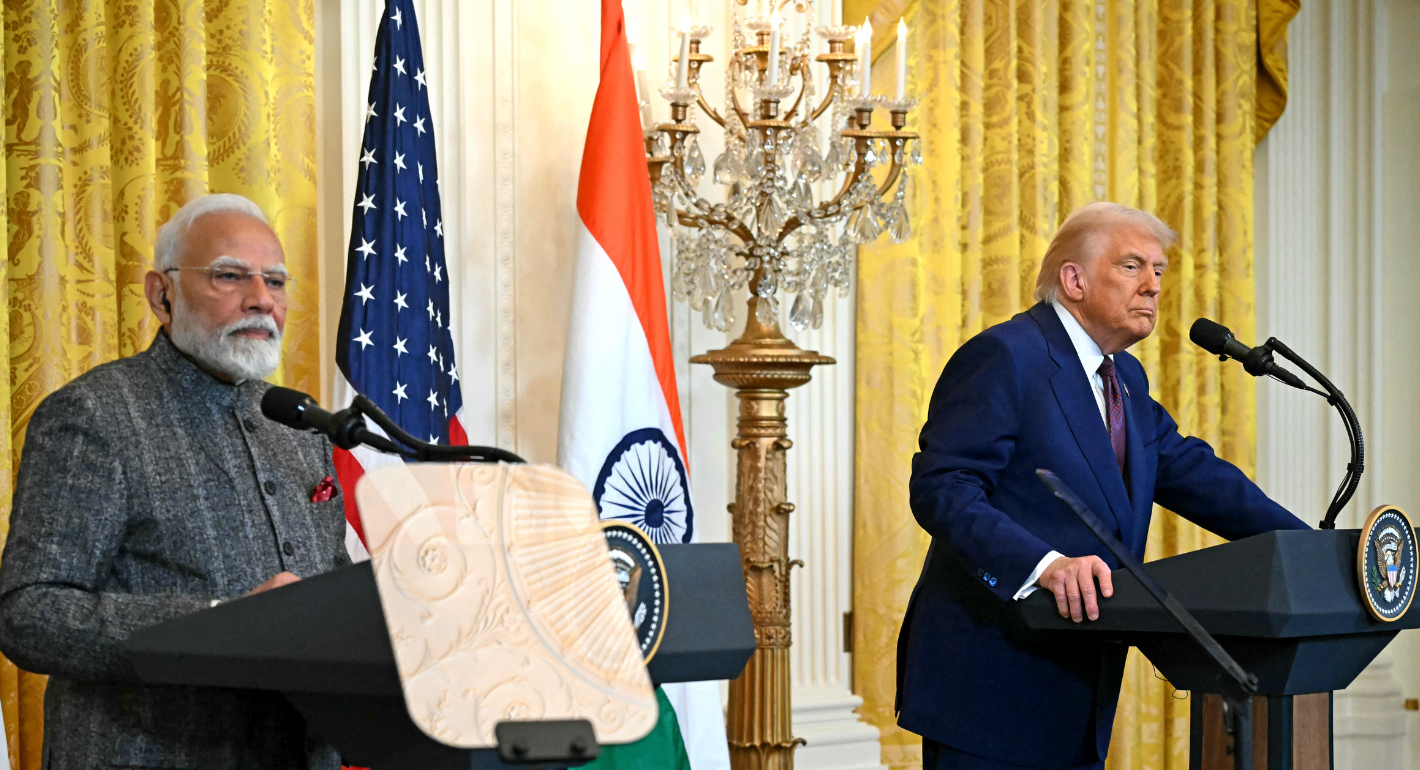
The India-U.S. relationship currently appears buffeted between three “Ts”—TRUST, Tariffs, and Trump.
Arun K. Singh