

Article
Marc Pierini
{
  "authors": [
    "Marc Pierini"
  ],
  "type": "legacyinthemedia",
  "centerAffiliationAll": "dc",
  "centers": [
    "Carnegie Endowment for International Peace",
    "Carnegie Europe"
  ],
  "collections": [
    "Turkey’s Transformation"
  ],
  "englishNewsletterAll": "ctw",
  "nonEnglishNewsletterAll": "",
  "primaryCenter": "Carnegie Europe",
  "programAffiliation": "EP",
  "programs": [
    "Europe"
  ],
  "projects": [],
  "regions": [
    "Middle East",
    "Europe",
    "Türkiye",
    "Western Europe",
    "Iran"
  ],
  "topics": [
    "EU",
    "Foreign Policy"
  ]
}
Source: Getty
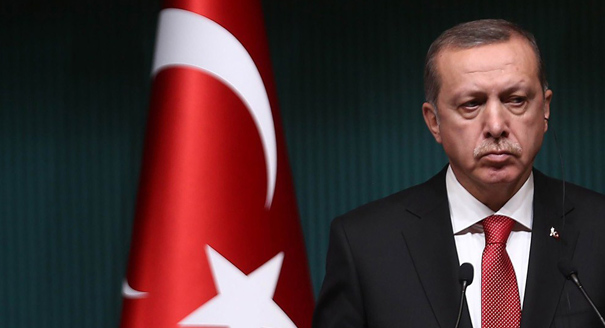
Given the war in Syria and other challenges in the Middle East, Turkey is hard for Europe to ignore.
Source: France 24
On October 4–6, Recep Tayyip Erdoğan was in Brussels for his first state visit as Turkish president. Given the war in Syria, Turkey is hard for Europe to ignore. It's a NATO member that's loudly against Russia's deployment on the side of Bashar al-Assad. The country has also taken in two million Syrian refugees. This comes with news that Russian planes violated Turkish air space, causing Turkey to scramble two F-16 fighter jets. How will events within Turkey impact the wider world?
Speaking to France 24’s The Debate, Marc Pierini was joined by Turhan Ozen, Member of Union of European Turkish Democrats, Allan Kaval, freelance journalist, Jana Jabbour, researcher at Sciences Po Paris, and Jasper Mortimer, France 24 correspondent in Ankara.

Senior Fellow, Carnegie Europe
Marc Pierini is a senior fellow at Carnegie Europe, where his research focuses on developments in the Middle East and Turkey from a European perspective.
Recent Work
Marc Pierini
Marc Pierini
Carnegie India does not take institutional positions on public policy issues; the views represented herein are those of the author(s) and do not necessarily reflect the views of Carnegie, its staff, or its trustees.

After the chill in ties between 2020 and 2024 that brought India–China relations to their lowest point in several decades, the two countries have engaged each other afresh. This paper argues that there are predominantly four imperatives guiding India’s approach to China, and they exist in an order of priority.

Saheb Singh Chadha

This piece argues that India’s central challenge is not managing a single flashpoint but resolving the underlying tension between expansion and institutional coherency of the BRICS grouping.

Vrinda Sahai

The ASML MoU with Tata Electronics is an indicator of how far the Indian semiconductor ecosystem has come. This ecosystem has been years in the making and represents real commercial logic.

Konark Bhandari

A partnership between India, a country of subcontinental size, and Africa, a continent of fifty-four countries, may seem asymmetric until one notes that both are home to nearly the same number of people—1.4 billion. This essay spells out the existing challenges to the partnership, its optimal potential, and the possible pathways to realize it over the next quarter-century.

Rajiv Bhatia

The India–EU Free Trade Agreement (FTA) is shaping up to be one of the most consequential trade negotiations, both economically and strategically. But, what’s in the agreement, what’s missing, and what will determine its success in the years ahead
Vrinda Sahai, Nicolas Köhler-Suzuki