
• Research
  • About
  • Experts
Carnegie India logoCarnegie lettermark logo
Technology
{
  "authors": [
    "C. Raja Mohan",
    "Aryaman Bhatnagar"
  ],
  "type": "other",
  "centerAffiliationAll": "dc",
  "centers": [
    "Carnegie Endowment for International Peace",
    "Carnegie India"
  ],
  "collections": [],
  "englishNewsletterAll": "",
  "nonEnglishNewsletterAll": "",
  "primaryCenter": "Carnegie India",
  "programAffiliation": "SAP",
  "programs": [
    "South Asia"
  ],
  "projects": [],
  "regions": [
    "South Asia",
    "Pakistan",
    "India"
  ],
  "topics": [
    "Economy",
    "Foreign Policy",
    "Security"
  ]
}

Source: Getty

Other
Carnegie India

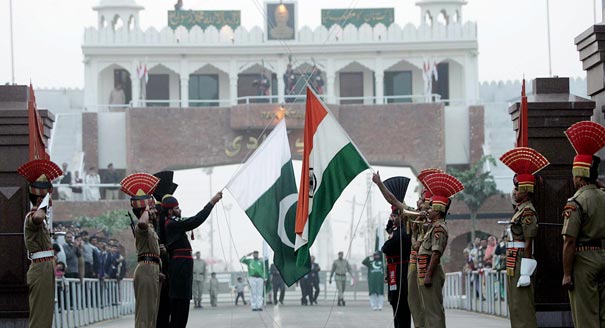
India-Pakistan Relations and Regional Stability

India and Pakistan have considerable scope to build on the various confidence-building measures that have been negotiated in the past decade and a half, especially in the areas of trade and economic cooperation.

Link Copied
By C. Raja Mohan and Aryaman Bhatnagar
Published on Feb 27, 2016

Source: National Bureau of Asian Research

This essay reviews the current state of India-Pakistan relations and examines the prospects for bilateral and regional cooperation between the two South Asian neighbors.

MAIN ARGUMENT

India and Pakistan have considerable scope to build on the various confidence-building measures that have been negotiated in the past decade and a half, especially in the areas of trade and economic cooperation. Greater economic engagement has the potential to generate interdependence that could help promote the normalization of relations. However, policymakers in both countries face familiar obstacles to a normal relationship—cross-border terrorism originating from Pakistan, differences over Kashmir, and entrenched domestic opposition to broadening engagement on both sides of the border. The inability of policymakers to separate progress in one field from differences in other areas has rendered it difficult to expand and sustain cooperation. More immediately, India-Pakistan relations are further complicated by the turbulent regional dynamic centered on Afghanistan. The drawdown of foreign troops after over a decade-long international presence in Afghanistan and the challenges of producing internal stability there will make the construction of a shared vision for regional cooperation elusive.

POLICY IMPLICATIONS

This essay offers the following policy recommendations for limiting conflict between India and Pakistan and expanding the scope for cooperation:

  • India and Pakistan need to find ways to sustain their resumed dialogue.
     
  • Trade and commercial relations, where quick advances are possible, should be isolated from differences in other fields.
     
  • An early restoration of the ceasefire agreement along the Line of Control and the international border in Kashmir will help arrest the further deterioration of the security environment and create the space for progress elsewhere.
     
  • India should take unilateral steps, wherever possible, to improve relations. It has taken such initiatives in the past—for example, in granting most-favored-nation status to Pakistan in 1996.
     
  • India and Pakistan should begin a dialogue on the future of Afghanistan.

This chapter is available on the National Bureau of Asian Research website.

Read Full Text

Authors

C. Raja Mohan
Former Nonresident Senior Fellow, Carnegie India
Aryaman Bhatnagar
EconomyForeign PolicySecuritySouth AsiaPakistanIndia

Carnegie India does not take institutional positions on public policy issues; the views represented herein are those of the author(s) and do not necessarily reflect the views of Carnegie, its staff, or its trustees.

More Work from Carnegie India

  • Commentary
    The PSLV Setback: Restoring India’s Workhorse

    On January 12, 2026, India's "workhorse," the Polar Satellite Launch Vehicle, experienced a consecutive mission failure for the first time in its history. This commentary explores the implications of this incident on India’s space sector and how India can effectively address issues stemming from the incident.

      Tejas Bharadwaj

  • Commentary
    AI Adoption Journey for Population Scale

    Connecting real-world AI use cases across sectors such as health, education, agriculture, and livelihoods can help policymakers, innovators, and institutions align around a shared goal. This article looks at a framework ensuring that AI works for everyone.

      Shalini Kapoor, Tanvi Lall

  • Commentary
    The Impact of U.S. Sanctions and Tariffs on India’s Russian Oil Imports

    This piece examines India’s response to U.S. sanctions and tariffs, specifically assessing the immediate market consequences, such as alterations in import costs, and the broader strategic implications for India’s energy security and foreign policy orientation.

      Vrinda Sahai

  • Article
    Revisiting the Usage of Refurbished Equipment in India’s Semiconductor Ecosystem

    This article looks at the progress of the Semiconductor Laboratory fab modernization plan based on publicly available documents, and potential learnings for future upgrades to government-owned fabs and India’s larger semiconductor ecosystem, especially regarding the use of refurbished equipment.

      Shruti Mittal, Konark Bhandari

  • Article
    Military Lessons from Operation Sindoor

    The India-Pakistan conflict that played out between May 6 and May 10, 2025, offers several military lessons. This article presents key takeaways from Operation Sindoor and breaks down how India’s preparations shaped the outcome and what more is needed to strengthen future readiness.

      Dinakar Peri

Get more news and analysis from
Carnegie India
Carnegie India logo, white
Unit C-4, 5, 6, EdenparkShaheed Jeet Singh MargNew Delhi – 110016, IndiaPhone: 011-40078687
  • Research
  • About
  • Experts
  • Projects
  • Events
  • Contact
  • Careers
  • Privacy
  • For Media
Get more news and analysis from
Carnegie India
© 2026 Carnegie Endowment for International Peace. All rights reserved.







