

Article
Thomas Carothers
{
  "authors": [
    "Thomas Carothers"
  ],
  "type": "other",
  "centerAffiliationAll": "dc",
  "centers": [
    "Carnegie Endowment for International Peace"
  ],
  "collections": [
    "Violence and Conflict",
    "Civic Activism"
  ],
  "englishNewsletterAll": "democracy",
  "nonEnglishNewsletterAll": "",
  "primaryCenter": "Carnegie Endowment for International Peace",
  "programAffiliation": "DCG",
  "programs": [
    "Democracy, Conflict, and Governance"
  ],
  "projects": [],
  "regions": [],
  "topics": [
    "Democracy",
    "Foreign Policy",
    "Civil Society"
  ]
}
Source: Getty
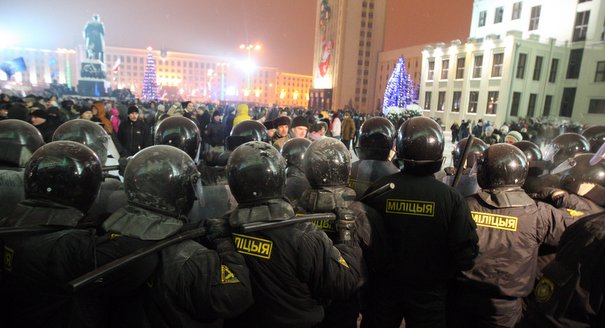
The troubling, even alarming trend of closing space for civil society around the world has a direct but not always recognized link to the large problem of state fragility.
The complex nature of state fragility impedes the search for effective policy responses. While a useful shorthand, state fragility spans a vast sweep of contexts, from troubling patterns of poor state functioning to complete state breakdown. Different indices of fragility produce differing lists of fragile states. The range of causal factors contributing to fragility is wide. Yet as international attention to fragility has increased in recent years, it has converged around at least one central common feature of fragile contexts – systemic exclusion – and one common prescription – encouraging inclusive governance.
Of course, exclusivity and inclusivity are themselves not simple concepts, each having its own multiplicities of meaning and interpretation. The adjective “inclusive,” for example, now appears almost everywhere in policy discussions in the development world, attached to any number of nouns as a polymorphous good – whether it is inclusive politics, inclusive governance, inclusive economics, inclusive states, or inclusive development. Moreover, inclusivity is not just about politics and economics – social and cultural inclusiveness is also relevant. For some analysts, democracy is key to achieving inclusive governing systems. For others, democracy is chronically riddled with patterns of exclusivity due to the tendency of elites to dominate democratic politics.
Understanding fragility through the lens of exclusion and inclusion highlights the important connection between fragility and the growing global trend of closing space for civil society. During the past 10 years, a startlingly large number of governments in developing and post-communist countries – by some measures more than 70 governments – have taken steps to curtail, sometimes drastically, independent civil society within their countries. They have done so through legal and regulatory measures restricting the ability of civic groups to organize and operate, extralegal harassment and intimidation, and political messaging that calls into question the legitimacy and authenticity of such organizations. A common element of governments’ efforts to close space for civil society is measures restricting foreign support for civil society and denunciations of such foreign support as subversive activity.

Harvey V. Fineberg Chair for Democracy Studies; Senior Fellow, Democracy, Conflict, and Governance Program
Thomas Carothers, a senior fellow in the Carnegie Endowment for International Peace’s Democracy, Conflict, and Governance Program, is a leading expert on comparative democratization and international support for democracy.
Recent Work
Thomas Carothers
Thomas Carothers
Carnegie India does not take institutional positions on public policy issues; the views represented herein are those of the author(s) and do not necessarily reflect the views of Carnegie, its staff, or its trustees.

After the chill in ties between 2020 and 2024 that brought India–China relations to their lowest point in several decades, the two countries have engaged each other afresh. This paper argues that there are predominantly four imperatives guiding India’s approach to China, and they exist in an order of priority.

Saheb Singh Chadha

This piece argues that India’s central challenge is not managing a single flashpoint but resolving the underlying tension between expansion and institutional coherency of the BRICS grouping.

Vrinda Sahai

A partnership between India, a country of subcontinental size, and Africa, a continent of fifty-four countries, may seem asymmetric until one notes that both are home to nearly the same number of people—1.4 billion. This essay spells out the existing challenges to the partnership, its optimal potential, and the possible pathways to realize it over the next quarter-century.

Rajiv Bhatia

The India–EU Free Trade Agreement (FTA) is shaping up to be one of the most consequential trade negotiations, both economically and strategically. But, what’s in the agreement, what’s missing, and what will determine its success in the years ahead
Vrinda Sahai, Nicolas Köhler-Suzuki
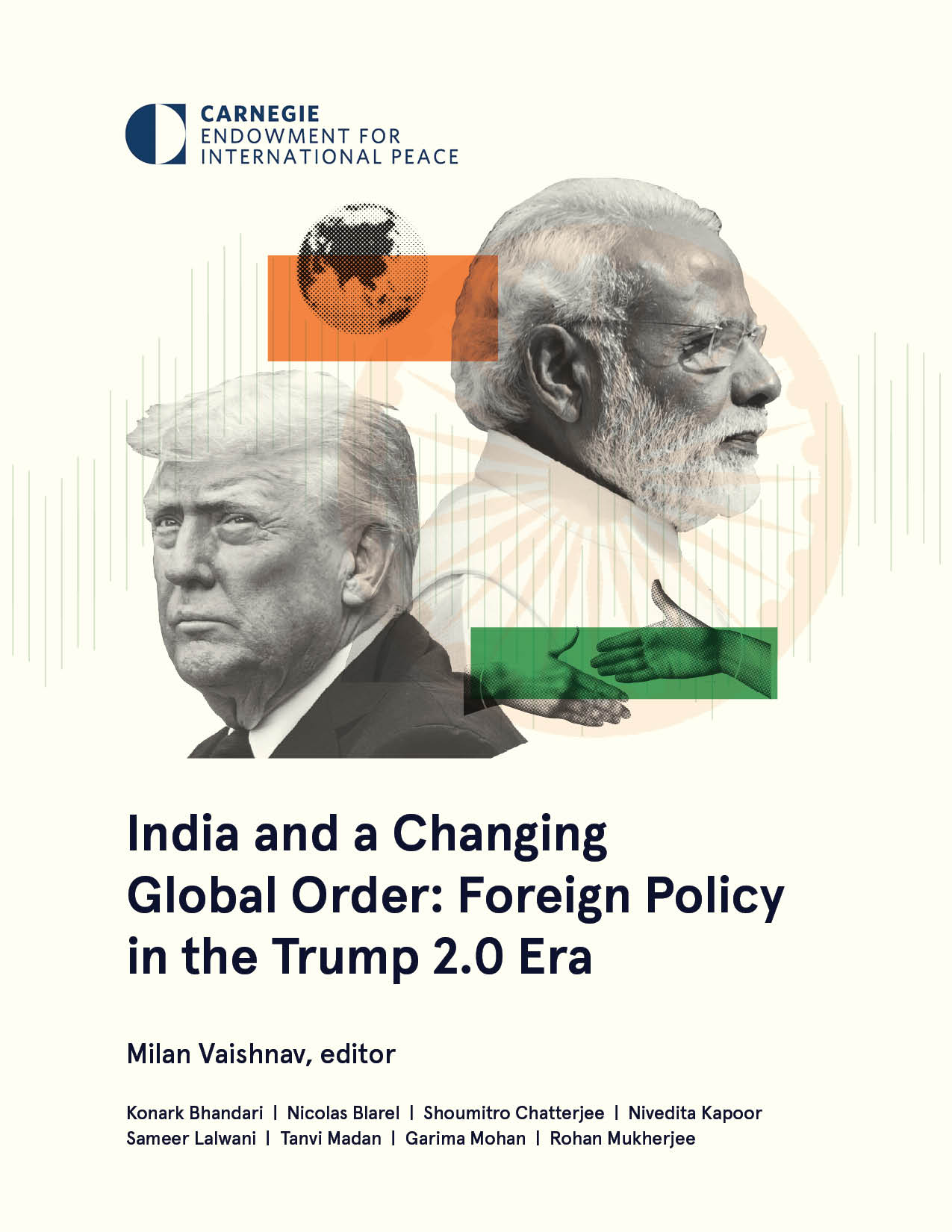
Trump 2.0 has unsettled India’s external environment—but has not overturned its foreign policy strategy, which continues to rely on diversification, hedging, and calibrated partnerships across a fractured order.


Milan Vaishnav, ed., Sameer Lalwani, Tanvi Madan, …