

Commentary
How is AI reshaping space security, creating governance challenges, and where does international diplomacy stand today?
Tejas Bharadwaj, Almudena Azcárate Ortega
{
  "authors": [
    "Fyodor Lukyanov",
    "René Nyberg",
    "Angela Stent"
  ],
  "type": "commentary",
  "centerAffiliationAll": "",
  "centers": [
    "Carnegie Endowment for International Peace",
    "Carnegie Russia Eurasia Center"
  ],
  "collections": [],
  "englishNewsletterAll": "",
  "nonEnglishNewsletterAll": "",
  "primaryCenter": "Carnegie Russia Eurasia Center",
  "programAffiliation": "",
  "programs": [],
  "projects": [],
  "regions": [
    "North America",
    "United States",
    "Russia"
  ],
  "topics": [
    "Foreign Policy",
    "Economy"
  ]
}
Source: Getty
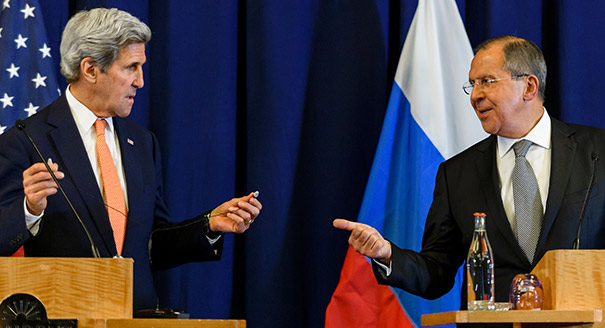
As the U.S. presidential election approaches on November 8, Carnegie.ru asked three experts, one in Russia, one in the United States, and one in Europe, to comment on the question: “Is the break between the Putin administration and the West permanent?”
Editor-in-Chief of Russia in Global Affairs
The New Emerging World Order will Decide
There is a central paradox in Russian-U.S. relations. On the one hand, they have become extremely personalized. On the other hand, their trajectory depends less on personalities than on repeating cyclical patterns.
The current conflict between Russia and the West is a logical result of the effort made after the end of the Cold War to forge a historically unprecedented deep rapprochement. As that effort did not work out, the pendulum has swung back to the other extreme.
We can now expect another swing toward the middle, though probably one with lesser force. But there is a difference this time. In the previous phase of rapprochement, Russia was supposed to adapt to a certain unipolar world order. Now, the future relationship depends on what influence and capabilities each side has at its disposal.
In other words, future Russian-U.S. relations will be defined less by bilateral issues than by the dynamic of the whole world order. The role of China, what happens in the Asia-Pacific region, events in the European Union, the situation in the Middle East—all these are not the context but the key determinants of the Russian-U.S. relationship.
Mutual antipathy between Moscow and Washington may end up reproducing a new kind of Cold War. But if that happens, it will be from mere inertia or because the two sides camouflage their inability to find answers to real problems by name-calling a familiar enemy.
The outcome of the November 8 presidential elections in the United States won’t significantly change things. If Hillary Clinton wins, the only positive thing is that she is considered so anti-Russian that any sign of moderation will be a big surprise. If Donald Trump becomes president, it will quickly become obvious that the problem’s systemic nature will render him incapable of improving relations with the Kremlin.
We must wish either eventual U.S. president to stay cool and restrained in their rhetoric– something which has become a rarity in America.
Former Finnish Ambassador to Russia
Economics Defers to Politics
What is permanent in this world or in international politics? The break in Russo-Turkish relations, which lasted just six months, is a striking example. So a change of administration in the United States offers a possibility for a fresh start or to try to find new openings. Despite the deep disparities in the current relations between Russia and the West, history is full of examples of how conflicts have been defused.
Ballistic Missile Defense (BMD) is one of the hardest nuts to crack. But, even though a legally binding treaty is unrealistic, I have witnessed Track Two talks on BMD that prove that certain crucial aspects can be agreed upon.
On Ukraine, the solutions are on the table. The option of keeping Donbas in the long run is corrosive, untenable and too costly for Moscow. At the same time, the region has become permanently estranged from Kiev. A clean separation from Ukraine seems more and more the only realistic solution. As for Crimea, a border change is possible, but acceptable only if agreed upon in a treaty. The hardest part for the Kremlin remains accepting Ukraine as the other heir of the medieval kingdom of Kievan Rus.
The biggest source of instability for Moscow lies in the South. The North Caucasus has been pacified but is still simmering. The shock waves from the war in Syria and Iraq are affecting the South Caucasus. Syria is basically a failed state and only the intervention of Russia saved the Assad regime from collapse. The return of Russia to the Middle East requires a political settlement, otherwise the war will eat up valuable resources and become a second Afghanistan.
There are plenty of reasons for the Kremlin to look for a settlement with the West, the most compelling ones being economic. But the record of the Putin administration shows that in the end, economics always defers to politics.
Director of Center for Eurasian, Russian and East European Studies at Georgetown University
Cooperation and Disagreement Can Coexist
Addressing the Valdai Club meeting on October 27, President Vladimir Putin criticized the United States and Europe for their policies toward Ukraine and Syria and for unlawfully imposing sanctions on Russia. But he pronounced himself ready to deal with the next U.S. president to resolve all difficult issues.
Relations between Russia and the West are worse than at any time since before Mikhail Gorbachev came to power. Recently, a Russian official claimed that the U.S. was committed to regime change in Moscow, and both Europe and the United States believe that Russia is interfering in their domestic politics.
Rhetoric about the possibility of nuclear war emanates from Moscow. While this is not the Cold War that existed prior to the Soviet collapse, the harsh, adversarial rhetoric and military posturing certainly feel like the Cold War without the channels of communication that operated then.
The experience of the past sixteen years suggests that Putin is a pragmatic leader willing to make deals if he believes they are in Russia’s interest. Hillary Clinton, while criticizing Russia, has not ruled out re-establishing high-level contacts if it is in the U.S. interest.
But what might the nature of the deal be? Putin set out three conditions recently: cutting back NATO troop levels to those before NATO enlargement; repealing the Magnitsky Act; repealing Western sanctions, and paying Russia compensation for its economic losses. These would probably be a non-starter for Washington.
But resuming talks over a U.S-Russian cyber agreement and restoring high-level military channels might be possible. Western relations with Russia have always been compartmented with elements of cooperation and disagreement coexisting. What is less clear is the Kremlin’s interest in improving ties prior to Russia’s own presidential election and beyond.
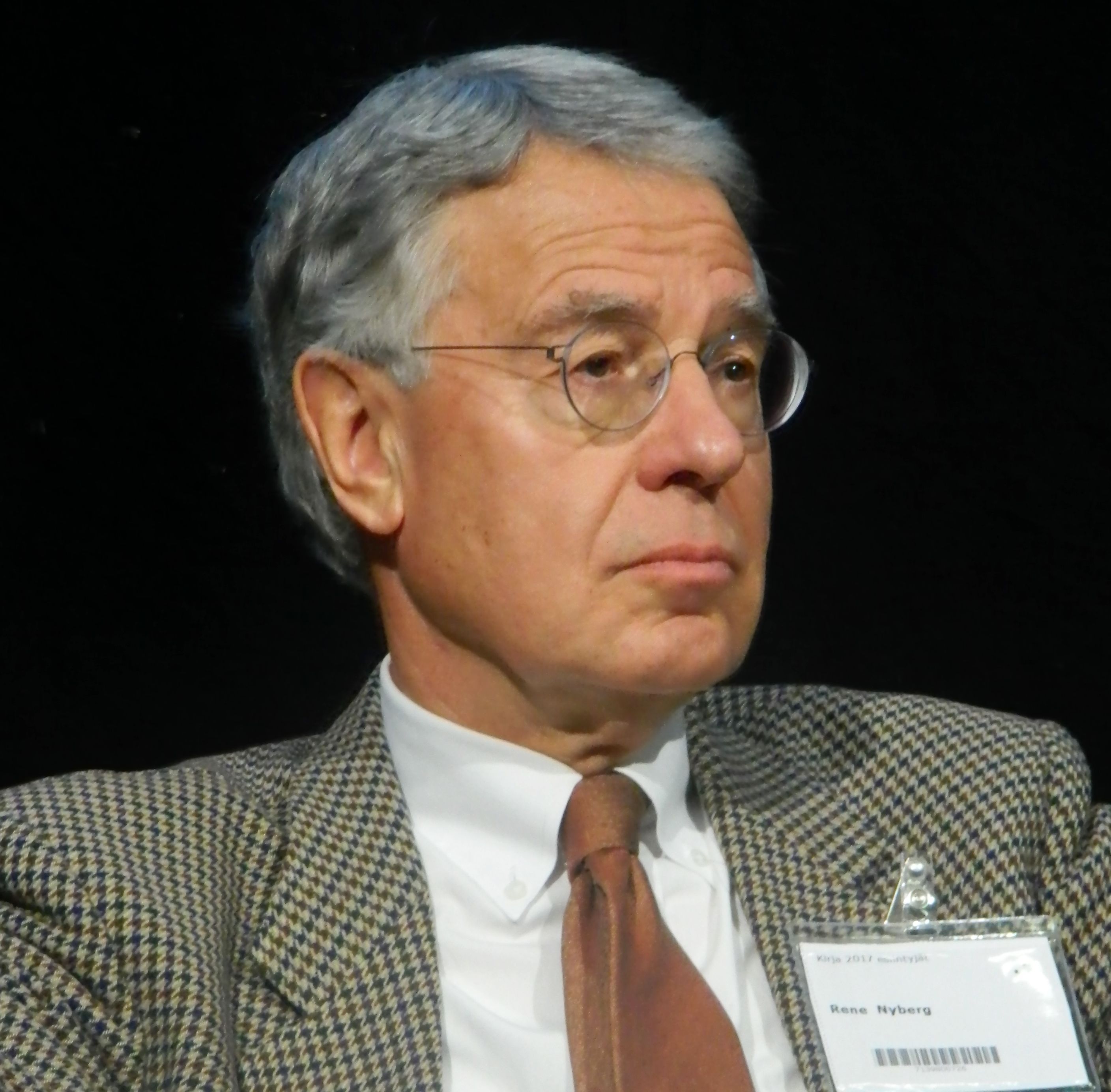
Former Finnish Ambassador to Russia
René Nyberg is the former Finnish Ambassador to Russia.
Angela Stent
Angela Stent is the director of Center for Eurasian, Russian and East European Studies at Georgetown University.
Carnegie India does not take institutional positions on public policy issues; the views represented herein are those of the author(s) and do not necessarily reflect the views of Carnegie, its staff, or its trustees.

How is AI reshaping space security, creating governance challenges, and where does international diplomacy stand today?


Tejas Bharadwaj, Almudena Azcárate Ortega

After the chill in ties between 2020 and 2024 that brought India–China relations to their lowest point in several decades, the two countries have engaged each other afresh. This paper argues that there are predominantly four imperatives guiding India’s approach to China, and they exist in an order of priority.

Saheb Singh Chadha

This piece argues that India’s central challenge is not managing a single flashpoint but resolving the underlying tension between expansion and institutional coherency of the BRICS grouping.

Vrinda Sahai

A partnership between India, a country of subcontinental size, and Africa, a continent of fifty-four countries, may seem asymmetric until one notes that both are home to nearly the same number of people—1.4 billion. This essay spells out the existing challenges to the partnership, its optimal potential, and the possible pathways to realize it over the next quarter-century.

Rajiv Bhatia

The U.S.–India semiconductor cooperation story is well-stocked with top-level strategic intent. What remains unresolved, however, are some underlying challenges that will determine whether the cooperation actually functions. Three such friction points stand out.

Shruti Mittal