

Q&A
Raluca Csernatoni, Sinan Ülgen
{
  "authors": [
    "Sinan Ülgen"
  ],
  "type": "legacyinthemedia",
  "centerAffiliationAll": "dc",
  "centers": [
    "Carnegie Endowment for International Peace",
    "Carnegie Europe"
  ],
  "collections": [
    "Turkey’s Transformation",
    "EU Integration and Enlargement"
  ],
  "englishNewsletterAll": "",
  "nonEnglishNewsletterAll": "",
  "primaryCenter": "Carnegie Europe",
  "programAffiliation": "EP",
  "programs": [
    "Europe"
  ],
  "projects": [],
  "regions": [
    "Europe",
    "Türkiye",
    "Middle East",
    "Western Europe",
    "Iran"
  ],
  "topics": [
    "EU",
    "Political Reform"
  ]
}
Source: Getty
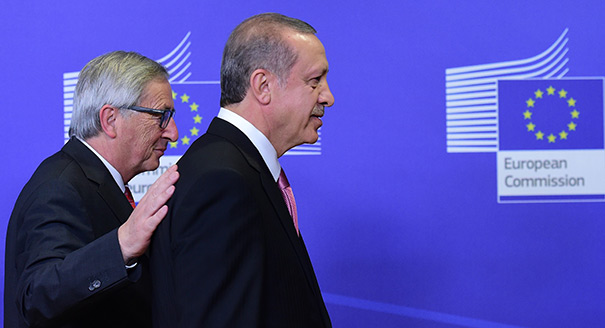
Turkey’s EU accession is not a realistic goal for the foreseeable future. Brussels should use this opportunity to redefine its relationship with Ankara according to mutual interests.
Source: Politico Europe
Suspending European Union membership negotiations would be the wrong signal for Europe to send Turkey. The move, set to be debated in the European Parliament, would eliminate what’s left of the EU’s leverage over Ankara and further erode the credibility of Turkish liberals, whose European-friendly narrative has already made them an endangered species.
The EU’s lawmakers are, of course, forced to react to the democratic backsliding of a candidate country. But they should be considering a variety of options instead of launching an attack on the core of the EU-Turkey relationship. The EU is now paying the price of the strategic blindness that has already led to a hollowing of its relationship with Turkey.
Despite starting membership talks in 2005, the EU has not officially tackled the issue of fundamental rights and freedoms in Turkey. The relevant chapter in accession negotiations remains blocked due to a dispute over Cyprus. The same is true for the chapter on the rule of law. In other words, even when Turkey was going in the right direction, the EU could not address these critical issues with Turkish policymakers. There is a direct line between this gross failure of engagement and the EU’s current situation, in which its only available counter measure is the nuclear option of ending accession talks altogether.
Given the current political constellation in Turkey and in Europe, where many countries face populist and anti-Islam movements, it may not be a good idea to continue with the pretense of Turkish accession. But breaking this bond without first devising an alternative is even worse.
Breaking off accession talks will endanger the EU’s refugee deal with Turkey. It would also stand in the way of a settlement in Cyprus, where negotiations broke down again this week. The EU and Turkey urgently need to envision joint solutions to evolving political and security challenges that will no doubt be accelerated by a Trump presidency. By breaking diplomatic bonds with Turkey, Europe would seriously undermine its own political agenda.
The EU-Turkey relationship is at a crossroads. But this moment of truth should not necessarily mean that the past should be disregarded. Europe should use this opportunity to create a new framework within which discussions about the relationship can be held.
That Turkey’s accession is not a realistic goal for the foreseeable future should be the starting point of this new discussion; but that acknowledgement should not be a punishment but an opportunity to redefine the relationship according to mutual interests: the refugee crisis, economic integration, counterterrorism and energy, to name a few.
The process of reshaping Turkey’s relationship to Europe — outside the auspices of EU accession talks — should involve non-governmental and non-political actors and should be given a more lenient time-frame to ensure the talks are not poisoned by the electoral cycles in many key European countries. Ideally, such an inclusive Turkey-EU debate would reach a set of principles that would underpin the nature of the future relationship, and governments would then be tasked with formalizing those expectations.
Turkey should not be forced out of its current relationship with Europe. To borrow Brexit terminology, Turkey needs a “soft exit” that leaves the door open for an amicable relationship. Anything else would be a mistake.

Senior Fellow, Carnegie Europe
Sinan Ülgen is a senior fellow at Carnegie Europe in Brussels, where his research focuses on Turkish foreign policy, transatlantic relations, international trade, economic security, and digital policy.
Recent Work

Raluca Csernatoni, Sinan Ülgen

Catherine Hoeffler, Sinan Ülgen
Carnegie India does not take institutional positions on public policy issues; the views represented herein are those of the author(s) and do not necessarily reflect the views of Carnegie, its staff, or its trustees.
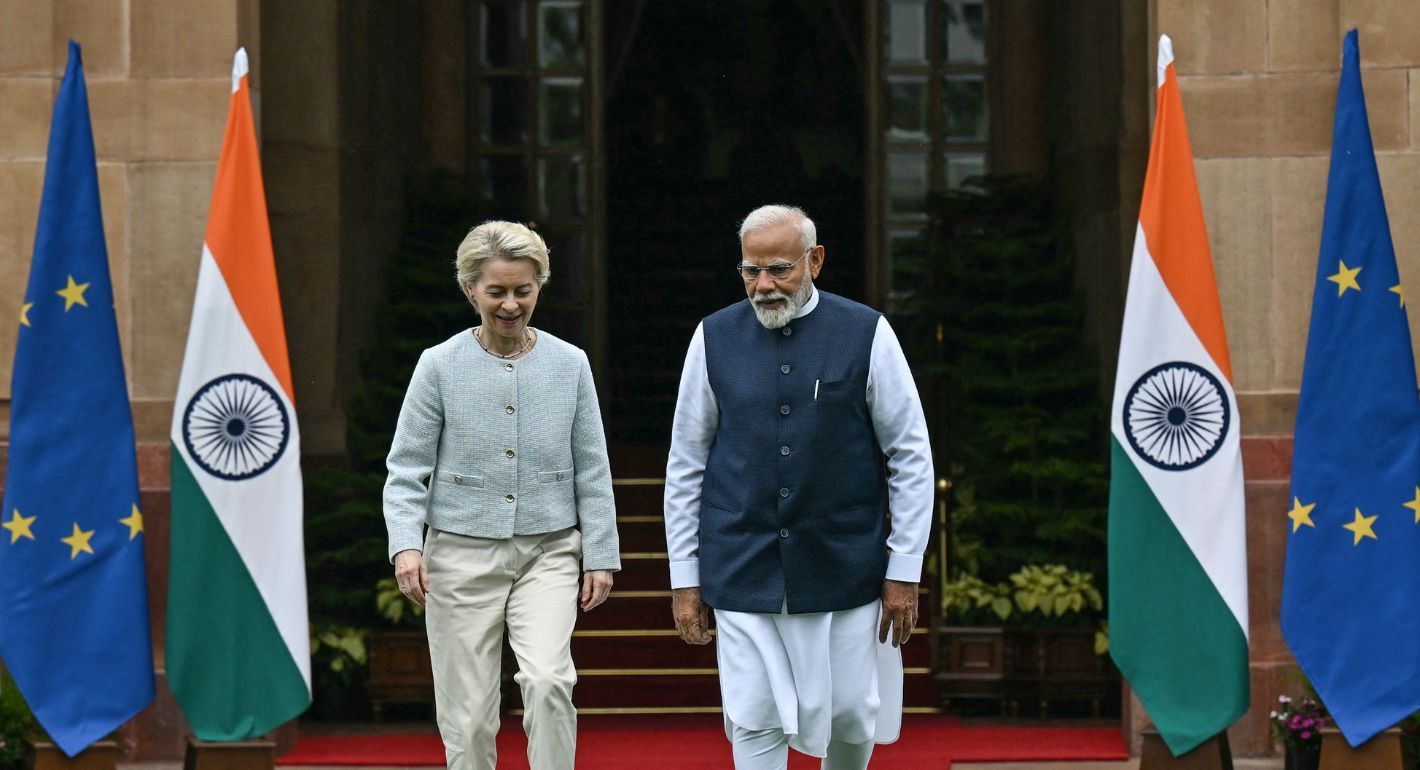
This article argues that the geopolitical circumstances have never been more conducive, not merely for the early conclusion of the free trade agreement (FTA) between India and the EU, but also for crafting a substantive and comprehensive strategic partnership.

Mohan Kumar

An Israeli response to Iran’s October 1 attack is imminent. The key question is of its intensity and potential fallout, both within Iran, in terms of nuclear security policy changes, and across the broader region. The coming days are likely to reshape West Asia irreversibly.

Gaddam Dharmendra

With monkeypox being declared a global health emergency, the WHO approach is an innovative and effective way to curb outbreaks of zoonotic diseases.

Shruti Sharma

In India, biotechnology has played an important role in helping stakeholders in academia, industry, and government develop new pandemic-related technology, from test kits to respiratory devices. But these biotechnology advancements can go further to strengthen India’s public health capacity.
Shruti Sharma

Unless the government can up its communications game, anti-vax movements could prolong India’s pandemic effects.
Shruti Sharma